
A very full issue of the New York Review of Books this time around (thanks, no doubt, to our young friend Sam's ever-increasing sway behind the scenes at that august establishment! Stand up and take a bow, Sam!), so let's start sorting the wheat from the chaff, shall we?
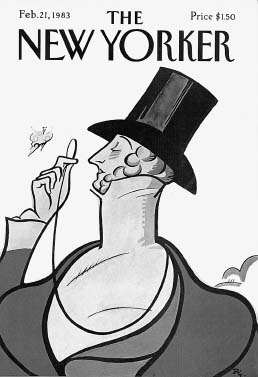
(The sorting can begin by one of your clever little marmosets finding me a visual of the COVER of this issue, something 30 minutes of tooling around the Web on my own failed utterly to do)
As I predicted, Jason Epstein's piece on Google's plan to create an enormous, unlimited virtual library garnered some heated responses in the letters page.
Google plans to digitally scan vast innumerable piles of books, to be available at the touch of a button to anybody with access to the Internet. The ruckus arises over copyrighted material - Google says it will offer only 'snippets' of such, presumably with readers able to pay them to see the whole work. Naturally, this has authors and bookstores in an uproar.
Law professors in an uproar too, apparently. Peter Friedman, an associate professor of law at Case Western, writes:
"Jason Epstein writes in 'Books @ Google,' that Google's creation of a searchable database of copyrighted texts without the permission of the copyright holders cannot constitute 'fair use' under US copyright law because the creation of such a database 'violates the provision of copyright law that forbids copying more than a brief passage.' There is no such provision.
Professor Friedman goes on from there, but that's where we here at Stevereads stopped and said, 'Yes there is. Dickwad.'
It's a well-known mental affliction, contracted mostly by lawyers and law professors, that leads them to believe their profession consists of sacred books locked away from the soiling gaze of the knuckle-dragging public. Alas for them, despite the level best efforts of the present administration, all American laws are matters of public record. If you've passed the fifth grade, you can look them up and READ them.
So: yes there is such a provision. Dickwad.
Equally frustrating is a little assertion tossed off in an otherwise excellent piece by Peter Green. He's reviewing three books on the archeology of Homeric Greece, and since he's a towering authority in the field and one of the smartest classicists alive today, the review is absorbingly good.
Except for this:
"Though the famous love affair between Catullus and Clodia Metelli ('Lesbia') is better documented than many other episodes in Roman history, there are still distinguished Latinists determined to treat it as fiction."
As Beepy would say, What the Eff?
This is probably as good a time as any to point out that Peter Green, despite having written a shelf-full of great histories and translations, is a bit of a nutjob. Not a nutjob, really, but ... well, shall we say 'stubborn in the holding of eccentric opinions'?
But even so, this one really puzzles. The history of ancient Rome prior to the death of Trajan is one of those subjects on which I can safely say I know as much as anybody in the world, and I'm telling you, boys and girls: there's absolutely NO 'documented' love affair between Catullus and Clodia. There's no surviving evidence they ever met. There's no evidence Clodia and Lesbia are the same woman. It's a pretty surmise alright, but 'documented'? I have no idea what Green is thinking.
Unless he's enough of a nutjob to consider passionate love-poems to be 'documents.' But that surely can't be - nobody in the world could be that dense.
And finally, it was density of another kind that kept cropping up in Larry McMurtry's review of Gore Vidal's latest memoir, "Point to Point Navigation."
On first glancing at the table of contents, I smiled: a wonderful match! Two excellent prose stylists, one patrician the other plebian, both outstanding historical novelists.
Then I read a bunch of other things in the issue and forgot about the symmetry. By the time I got to the review, I'd even sort of forgotten McMurtry was its writer. Instead, I just dug right in.
And almost immediately started snagging on the prose of the review itself. Some curious mental block prevented me from thinking of McMurtry every time this happened - instead, I was mentally cursing WHOEVER the editorial nobody was who could write like this:
"Gore Vidal has the looks of a prince, the connections of a prince, more wit than any prince I can presently recall, and a prose style that should be the envy of the dwindling few who realize that prose style matters, both for the glory of it and also because if one makes one's living mainly by the making of prose sentences, as Gore Vidal has, it's nicer if the sentences are strong, supple, and pleasing."
Geez. I'd have handed that back to a freshmen in high school.
OK, I thought, once I'd reminded myself that it was, in fact, McMurtry writing the piece. Anybody can find themselves in a rhetorical box canyon now and then. But it keeps happening:
"After the death of Barbara Epstein saddened this journal, I wrote a tiny tribute, along with many others.
None of these offerings is more painful to read than the dozen harrowing pages Gore Vidal devotes to the passing of his long, long companion, Howard Austen."
Again, geez. So McMurtry wrote a tiny tribute - and then wrote many other tiny tributes? So 'Gore Vidal' is a single nomenclature, never to be shortened to 'Vidal' (in the entire course of the piece, it never is ... the effect is hilariously and ironically Eucharistic)? So Howard Austen was really, really long?
After enough of this, I found it impossible to concentrate on the review AS a review ... at least, not a review of Vidal's - sorry, Gore Vidal's - new memoir (I'll have to look elsewhere for that, or perhaps bite the bullet and read it myself). Only belatedly did I realize what I was reading in this review, and the realization came with a little twist of pain:
This review is, quite unintentionally, the best tribute yet paid to the editorial skill of Barbara Epstein.