Showing posts with label reading. Show all posts

Tuesday, January 11, 2011

Katherine Powers!

Allow me to add my quick and completely enthusiastic 'Hear, hear!' to the interview my fellow book-blogger Eric Forbes just conducted with the mighty Katherine Powers (it's located here, and if you don't already have Eric's blog bookmarked, by all means do that while you're there).

Powers writes a bi-weekly book column called "A Reading Life" for the dear old Boston Globe, and in that column readers will always find three things: her formidable intelligence, her deep reading experience, and best of all, her utterly unpredictable eclecticism. She can open a column with a review of a new collection of Sumerian mythology and end up recommending her four favorite books on natural history, and the chain of causation will enchantingly sensible, link by link (the first of you who can parse the chain linking my examples will win ... wait for it ... a free book!). That eclecticism is the key to both the charm of her column and its longevity, and oddly enough, roamers who come to her words from the wilds of the Internet will find them very familiar. By using her own readerly sensibilities as her pole-star, she allows the focus of "A Reading Life" to wander all over her aesthetic landscape. In this sense, she's been book-blogging longer than any of us.

Let's take this last Sunday's column as a quick example, shall we? Her large subject is the 400th anniversary of the King James Bible, and just as I am myself, she's getting her share of galley copies of new and upcoming books commemorating that event. It's certainly a fruitful subject - it's certainly possible to argue that the King James has had a deeper and more pervasive impact on Western culture than any other book with the possible exception of On the Origin of Species, and on Western literature there is no rival that's even close. So you'd think quite a few of the books written specifically to celebrate the event would rise to the occasion.

Not so the two unfortunate new volumes she uses to open her discussion. "The entire book is written in this bland, annual-report flavored style, made all the more ludicrous by the majesty and grace of its purloined subject," she writes about one of them, and the other she characterizes as "an obeisance to the strange god of calculation." Hee.

In most other book columns appearing in great metropolitan newspapers, these condemnations (this is one of the most cheering aspects of Powers' column for me, and it's an aspect of book-writing I sometimes fear our non-Irish practitioners too often forget: book critics don't only praise - they also smite the wicked. Powers is a first-rate smiter when the mood strikes her)(like most veteran readers, she intensely dislikes having her time wasted, I suspect) would be followed by a longer notice of a new book she actually liked.

But not so a book-blog, which is what Powers has secretly been writing all these years! On the best book-blogs, the readers are blissfully in the hands of the blogger's reading acumen, not slaves to the New Release lists. Powers no sooner finishes politely stomping on the two new books before her than she pulls a quintessential blogging move by saying "but here's something on the subject that you really should read" - and then doing the written equivalent of jumping up and finding that one perfect book on her jam-packed shelves and proceeding to sing its praises even though it's not new and isn't the basis for a Robert Pattinson movie.

The book she picks this time is Adam Nicolson's entirely worthy God's Secretaries, about the diverse collection of men who were commissioned by King James I to do the epochal translation that James knew perfectly well was the main thing for which he'd be remembered. And in just the span of four paragraphs, she not only does the book justice but serves up a mighty effective recommendation in the process.

Which is exactly what we want from our best book-bloggers!

Friday, August 27, 2010

Writers, Readers, & Reptutations!

 Our book today is Philip Waller's massive, utterly delightful Writers, Readers, & Reputations from 2006, and it finishes off our little quintet of books about books this time around (I've read every such book that's ever been written – what can I say? Reading about reading fascinates me – and I'll get to all of them here sooner or later, but five is enough for now).

And boy, HOW it finishes things off! Waller's book is a stunning, almost overwhelming masterpiece. He's staked out the period of a “long” Edwardian era in England and completely, freakishly absorbed every last scintilla of information on his subject, which is nothing less than the whole world of letters during those years, from 1870 to 1918. He covers everything from writers' lives to reading tours to lending libraries to book groups to manufacture and distribution, and he does it all in such an winningly readable voice that you never feel crushed by the weight of his expertise. The pages fly by (all 1150 of them), and what emerges is a picture of the reading life of the Edwardian age in such pointillist detail that you can't help but wish we had similar volumes for every other era. That would be great, but I don't know where we'd find the scholars to amass the data, much less the writers to make it this engaging.

Two things mark this great book's strongest points: first, Waller has no particular pet theory to advance (he's mainly just interested in giving us as full an account as he can, in the liveliest language), and second, he's perfectly willing to let the writers of the time speak their piece at length – the book is full of great quotes, and they're given in full rather than in snippets. Here's the always-gloomy George Gissing on the perils of the literary life, for instance:
With a lifetime of dread experience behind me, I say that he who encourages any young man or woman to look for his living to 'literature', commits no less than a crime … Hateful as is the struggle for life in every form, this rough-and-tumble of the literary arena seems to me sordid and degrading beyond all others. Oh, your prices per thousand words! Oh, your paragraphings and your interviewings! And oh, the black despair that awaits those down-trodden in the fray.


It's amazing how many different facets of the literary life Waller tracks down and shows to us in full detail. There are long, engrossing chapters on every aspect you could think of, including an amusing set-piece on authors as fashion-plates:
Jerome K. Jerome attracted [publicity] by wearing and old tweed cap, Keir Hardie-style, to offset an immaculate frock coat. This was scarcely big-league stuff. Nor was Bret Harte's trick of commanding a daily buttonhole from a Piccadilly florist, sent in a little box to him wherever he occasioned to stay. For a really booming statement, it was necessary to behold Mark Twain in his gleaming white suits. Equally magnificent, Wilde invented himself as an exquisite- or harlequin, Theordore Watts-Dunton preferred to call him … A 'great fat oily beast', thought Edith Somerville, who met him in 1888. This was only marginally more flattering than 'the great white slug' proposed in the same year by Lady Colin Campbell …


And Waller also makes some real contributions to a more fair study of the literary landscape, giving us long digressions on best-selling authors of the time who've now (in almost every case very deservedly) fallen into permanent obscurity. The foremost of these hindmost is surely novelist Hall Caine, whose insipid water-balloon books outsold everybody twice over and made their author a very, very rich man. Whenever I feel tempted to despair at the popularity of author like Stephen King or James Patterson, I remind myself of writers like Caine – and Waller could have settled for merely reinforcing the reductions of readers like me. But instead, he digs deeper and presents a better, more fleshed out portrait of the man and his counterparts. It wasn't until I first read this book that I learned Caine used a chunk of his fame and money to aid Jewish refugees of Tsarist oppression, for instance. Doesn't change the fact that the man's novels are junk, but it certainly makes him more interesting.

And what about book-reviewing, you must know I'd ask? Yep – the subject is fully covered (and in a gratifyingly early chapter) in all its heights and pitfalls, from log-rolling to the ever-popular topic of how authors (and later their publicists) can stack the odds in their favor when it comes to wooing reviewers:
Authors were not without means to influence the reception of their work, although Trollope's Lady Carbury, by sleeping with a reviewer, in The Way We Live Now, must be considered extreme. The complimentary copy system was increasingly favoured. The Society hostess Lady Dorothy Nevill, who had known Bulwer Lytton in his best-selling prime, noted in 1906: 'I always feel sorry that he never gave me his novels; in those days authors were not nearly so generous as they are to-day, when books are showered in all directions – more given than read.'


Writers, Readers, & Reputations is what's known in my immediate circle as a 'Steve book' – meaning it's so long and densely researched that I'm likely the only person in a hundred mile radius who'd every consider reading it, much less read it, bookmark it, and annotate it for sheer pleasure. My circle tends to groan when they see me toting around a 'Steve book,' because they know I'm not only going to read such tomes but also recommend them, and they consider that an impossibility (years ago, in response to such a recommendation about a very interesting book on Britain's King George I, an exasperated companion blurted out, “That's an entire year's reading for me! One year, reading nothing but that big, ugly, boring book!”)(I thought it best not to point out that the original German version was much better than the translation).

But impossibility or no, I do indeed recommend Writers, Readers & Reputations! Yes, it's formidably big – but it's also scrupulously, reliably enjoyable, one of the best books on books I've ever read. It's worth a year, if it comes to that.

Thursday, August 26, 2010

Letters to Alice!

Our book today is 1984 novel Letters to Alice on First Reading Jane Austen, and the blurbs it garnered at the time (including an unsigned but adulatory little column the book review section of a newspaper in Gottingen, of all places) are s true today as they were back then: whatever else it might be, this is a first-rate book about books and reading.

That 'whatever else it might be' alludes to the fact that this is an epistolary novel comprised of exchanges between young college-age Alice and her middle-aged novelist Aunt Fay, so there's quite a bit of bleed-through from Weldon's own life, and as usual with this resolutely third-rate author, the reader is constantly forced to wonder how much of that bleed-through is intentional and how much of what they paid good money to buy and read is just more or less spontaneous riffing. Despite the shelf of novels to her credit, Weldon has never to my knowledge chosen to work at her craft. The result has been a body of fiction suffering from what we might call the Munro Syndrome: lots of stuff happens, 'the end' is stamped a few times onto the bolt of cloth as it spews out of the machine, and absolutely nothing memorable whatsoever is produced.

Letters to Alice is an exception and a delightful book – but even here, the lively writing takes frequent detours into being insipid or torturous, before returning to its better nature.

The plot, such as it is, can be easily guessed: Alice has gone off to school to study Jane Austen (among many predictable other names), and Aunt Fay has many, many opinions to share – about Austen, for instance:
It is idle to complain that Jane Austen lacked a crusading zeal. With hindsight, it is easy to look at the world she lived in, and say she should have. What she didn't seems to me more valuable. She struggled to perceive and describe the flow of believes that typified her time, and more, to suggest for the first time that the personal, the emotional, is in fact the moral – nowadays, of course, for good or bad, we argue that it is political.


But also about lots of other things, from the whole of the Western canon to the quiet little curse of the writer's life:
Writing is an odd activity – other people have occupations, jobs; the writer's life is work, and the work is the life, and there can be no holidays from it. If the pen is not working, the mind is thinking, and even as you sit and watch [TV] the unconscious ponders on. Even in sleep you are not safe: dreams pertain to life, and life to dreams, and both to work. There can be no time off, no real diversions, because wherever you go, you take yourself; and no pure experience, either, unsullied by contemplation, or by the writer's habit of standing back and observing what is going on – which writers will vehemently deny they do, because it sounds passionless and calculated, but is not.


But even so, problems crowd around the edges. Divorce that last passage from the spirited truths it's conveying and you'll see the biggest of those problems: Weldon simply cannot write good English prose, not for more than an isolated line at a time. This lack is of course no bar to fantastic literary success – but it's awfully inconvenient if an author is shooting for more. Weldon's ambitions to be taken seriously as a novelist have always been evident, and the number one obstacle to those ambitions is that she's never had much talent as a writer. It's funny how that works.

There's talent aplenty in Letters to Alice, however – here the joys and odd disappointments of reading, the thrill of book-hunting, and the pleasures of simply chatting with a fellow reader are all on triumphant display. I myself dearly love a good bookish snail-mail correspondence (some of you will have shared one with me and may attest that I'm fairly good at it), full of titles and authors and the give-and-take that happens when two lifelong readers butt heads. There's quite a bit of that here, mainly embodied on both sides by Aunt Fay, who does all the talking and most of the summarizing of other people's letters. She also gets in some choice wisecracks (one of Weldon's most reliable gifts):
Your mother reads books on tennis, I know: I doubt she's read a novel since an overdose of Georgette Heyer made her marry your father. Books can be dangerous.


Books can indeed be dangerous, and they – and their authors – can disappoint. But this one doesn't – you'll love it.

Wednesday, August 25, 2010

Comfort Found in Good Old Books!


Our book today is George Hamilton Fitch's 1911 volume Comfort Found in Good Old Books, a collection of the author's most popular book columns from the old San Francisco Chronicle. It's a collection the author never thought he'd make in quite the way he made it, but books are often like that. Fitch was a minor institution at the Chronicle and well-respected as a thorough-going example of what used to be called a “book man.” His columns regularly drew appreciative letters from readers, and publishers regularly sent him boxes of new releases and catalogs of forthcoming titles, in the hopes he'd choose to review them. And he often did (under his own name and pseudonyms, a curiously persistent practice in certain circles of literary journalism), but always striking the typical Edwardian note of worry that the modern world of streetcars and dry-cleaning was crowding out the eternal verities.

Even in that less skeptical age, his readers could be forgiven for wondering how much of this, after decades of repetition, was just empty cant. Possibly Fitch himself wondered. Then in 1910 his young son Harold suddenly died, and as Fitch wrote (in an eerie, heartbreaking echo of Theodore Roosevelt), his “death has taken the light out of my life.” No father and son could have been closer – best friends, near-constant companions, like minds, companions in adventure – and no loss more devastating.

True to form (a blogger at heart, long before their like was conceived), Fitch wrote about this tragedy soon after it happened, and he wrote about something else, too: it turned out that once the white-hot chaos of immediate loss had uncramped him, he actually did turn to those eternal verities for consolation. He turned to books, and not just any books but some of the greatest classics of the canon, the very works he'd always told people would be their most reliable comforters in times of trouble. He turned to them with his heart broken into a thousand pieces – and they did indeed comfort him. His note of surprise is audible – and understandable; it always surprises you, the first time it happens.

He'd thought his loss irreparable:
Now that this perennial spirit of youth is gone out of my life, the beauty of it stands revealed more clearly. Gone forever are the dear, the fond-remembered holidays, when the long summer days were far too short for the pleasure that we crowded into them. Gone are the winter walks in the teeth of the blustering ocean breezes, when we “took the wind into our pulses” and strode like Berserkers along the gray sand dunes, tasting the rarest spirit of life in the open air. Gone, clean gone, those happy days, leaving only the precious memory that wets my eyes that are not used to tears.


But only weeks later, he was able to report to his readers that the gospel was true in all its particulars: not only will reading the best books make you a better person, it will gift you with friends who are always there, always supportive, always themselves.

Naturally, readers wrote in by the hundreds. They offered their own stories, their condolences, and most of all, they asked Fitch to talk about which books had saved him. There sprang from those letters (and, one imagines, a deep sense of gratitude) a series of brief glimpses of some of those redemptive classics – glimpses Fitch then collected into a book that sold in huge numbers on both coasts for the better part of two years.

It wasn't just the origin story that was irresistible to readers. Through long practice and a wonderful open mind, Fitch had always been a book-reviewer well worth reading. He combined a strong set of guiding beliefs (he was a devout Christian) with a wide knowledge of his subjects, and he was also careful to present that history in a way his readers would find both enlightening and entertaining. In fifteen short chapters, he turns to a small handful of enduring classics – the Bible, Shakespeare, the Arabian Nights, St. Augustine, Don Quixote, Boswell's life of Johnson, the Rubaiyat of Omar Khayyam, Milton, etc. - and first tells his readers something about them, then offers his thoughts, as here about Bunyan's Pilgrim's Progress:
The miracle of this book is that it should have been written by a man who had little education and small knowledge of the great world, yet that it should be a literary masterpiece in the simple perfection of its form, and that it should be so filled with wisdom that the wisest man may gain something from its pages. Literary genius has never been shown in greater measure than in this immortal allegory by the poor tinker of Bedforshire.


Or here, on Dante:
In all literature nothing can be found to surpass the influence of this poem of Dante's, struck off at white heat at the end of a life filled with the bitterness of worldly defeats and losses, but glorified by these visions of a spiritual conquest, greater than any of the victories of this world.


Readers back then (as now) very much valued this tone of adoring certainty, and even in his grief Fitch could no more lose that tone than he could float in mid-air. Readers also valued Fitch's ever-present practical suggestions as to formats and editions, and he can't resist making those suggestions even in the middle of his mourning:
Many editions of The Imitation of Christ have been issued, but for one who wish to make it a pocket companion, non is better than the little editions in The Macmillan Company's Pocket Classics, edited by Brother Leo, professor of English literature in St. Mary's College, Oakland. This accomplished critic has written an excellent introduction to the book, in which he sketches the life of the old monk, the sources of his work and the curious controversy over its authorship which raged for many years. Buy this inexpensive edition and study it, and then, if you come to love old Thomas, get an edition that is worthy of his sterling merit.

Fitch always believed that cultivating the habit of reading was one of the cheapest and most incredibly worthwhile things a person could do for themselves. He was right, of course. But his other oft-proclaimed belief – that books could literally save you when pain threatened to blot you out – is something he only really learned through awful need. Maybe that's the only way to learn it; it's certainly the way I did. And time and time again since then, it's proven true. When I lost the best friend I'd ever have or am ever likely to have, a week later I first began to feel returned to the world by reading the endless prattle of a dear old companion, a diary entry about how he went to St. Paul's churchyard to inquire about how his book-binding was coming along, how his Chaucer was progressing but wasn't really neat enough for his liking, how he gave a few pointers to help out, how he had to remember to go to the clasp-makers and have clasps and embosses ordered to match the set …

It was the first time I'd smiled in a week.

The best, least foreseeable detail as far as Fitch is concerned is that his own advice has grown to enclose him: I turn to his book often, when I need my rudder righted a little.

Thursday, August 19, 2010

The Joy of Books!

Our book today is Eric Burns' The Joy of Books, and it underscores a point I've made before: the most curious thing about good reading is how little good writing there is about it. Not that Burns' book is bad – not thoroughly bad, not bad straight through. But its subject sometimes brings out the very worst in him, as it tends to do in virtually every person who sits down to write about it (present company, I trust we can agree, excepted). Burns had a career as a journalist before he paused to woolgather this book, and not just any journalist but a readable one – a very small coterie! But the watchwords of that earlier profession – concision, incision, revision, derision, those sorts of watchwords – were blithely abandoned when he decided to collect a book of musings about What Reading Means To Me.

They always are. I've got a long shelf full of books written in the 20th century about the specific situation of being in love with reading (somehow, I can't imagine such books existing at the end of the 21st century – can anybody really love reading electronically? Even if they can, the 'long shelf full' will be gone, replaced by a file list … as long as your electric bill is paid, that is, and provided your provider doesn't decide to reach out and yank stuff off your device for legal, quasi-legal, or the-hell-of-it reasons), and virtually all of them bear no resemblance to the writing their authors did prior to tackling that subject.

One of the problems is that, like Burns, most of these authors wait too long. Burns writes from his fifties, with two kids and most of his career behind him. He talks about how revivifying reading is for him, but The Joy of Books is as maudlin an act of nostalgia (playin' stickball and watchin' Uncle Miltie make their dutiful appearances, and endless childhood summers are invoked) as a leisurely stroll through yellowed old photo albums. That always happens in books like this: their ostensible purpose is to praise the way books stay vital and effective in our mental lives, but their end effect is to make them seem like just another much-missed feature of a simpler, now-vanished past. At one point in The Joy of Books, Burns watches his young son settle under a tree and commence reading Peter Pan (a childhood favorite of Burns', naturally), but there's no joy of reading in the description – instead, watching the boy blow on a blade of grass or climb around in the tree before settling to read, Burns is clearly just missing his own boyhood, not thrilling to the fact that his kid is about to read a great little book.

So what's wrong with a little nostalgia, you might ask? Not much. But there's quite a bit wrong with a whole freakin' LOT of nostalgia, especially when it's combined – as it always is – with willful credulity. The combination prompts Burns to arias like this:
If, as Ezra Pound has said, literature is “news that stays news,” why are Flaubert and Balzac on the front pages of newspapers, Hardy and Dickens not on the covers of magazines, E.B. White and Truman Capote not on the tips of tongues where reasonable men and women congregate? Why not Anne Tyler on “Nightline,” “20/20” looking clearly at John Le Carre, “48 Hours” devoting at least that much time to Doris Kearns Goodwin?

When a former newsman assumes a lachrymose tone of writing and asks idiotic questions like that, you know one thing for certain: he's too busy setting up straw men to even think about what reading really does, or is, or can be (the straw man Geiger counter is always the summoning of a definition from “Webster's Collegiate Dictionary” - it's to be abhorred as a sure sign that the writer in question is mainly just yammering; Burns does it only three times in The Joy of Books).

There's some good, fun stuff here, of course – Burns can be an interesting common-touch writer, as when he laments the fleeting riches that afflict most of the literary world (then or now):
Maybe a writer can finagle a $30,000 advance for a book, but it will take him so long to write that his hourly rate works out to about the same as the guys who stuff the rodent remains into all-beef hot dogs. Maybe a magazine will pay him $2000 for an article, but by the time the check is in the mail. His is $3000 overdrawn at the bank and too depressed to start his next piece. Maybe a women's club will cough up $500 for a luncheon speech, but the chicken will be tough and the vegetables limp and in the question-and-answer period the ladies will find out that he and John Irving got drunk together one night after a seminar they were conducting on the future of the novel in the post-literate society and will hound him unmercifully for insights on Garp.

And he has the good sense to conclude his book with a list of books – lists of books, no matter whose, no matter where, are always good things. But for the most part, The Joy of Books is yet another misfire, yet another failed volume on the long shelf of books that are allegedly trying to anatomize this thing that gives us all so much pleasure. And maybe that's the problem: real books don't give pure, simple pleasure, and real readers don't look for it from the books they read … books are active company, sometimes joyful, yes, but sometimes aggravating or unsettling. Readers actively engaged in the daily grip of reading (as opposed to warmly, fuzzily remembering readin' under the tree down by the crick) wouldn't have it any other way.

Still, fair warning to Burns: if I ever get around to writing my own book on reading, I'm swiping his title just the same. Despite everything, I like its simplicity.

Monday, July 05, 2010

Under the Covers with Paul Marron: Velvet Haven!

This is Paul Marron, a funny, articulate, down-to-earth guy with a pointy nose, a nasal voice, a limited but effective cooking repertoire, and a fine ear for music:


As you can see, he’s a good-looking young guy, but it’s only when you widen the frame and get him to take his shirt off (the latter being, it must be admitted, not particularly difficult) that an important extra point begins to dawn on you: Paul is rather gorgeous, in a well-sculpted, compact kind of way.


Paul himself must have realized this fairly early on, and it gives rise to a bit of irony: that this somewhat private, old-fashioned, and oddly shy guy (his sporadic attempts at blogging virtually scream ‘I really don’t much want to do this’) would make a very good living taking his clothes off and posing for pictures of his chiseled cheek-bones, his shapely shoulders, and most of all, his astounding abs. Readers of romance fiction can recognize those abs as quickly (and as fondly) as they recognize their own children, because Paul has appeared on innumerable paperback covers over the last few years.

Although the real-life details of his day-to-day are probably endearingly prosaic, Paul leads a vigorous double life as the characters in all these books, so it seems only natural (aesthetically and, um, otherwise) to peek in from time to time on those alternate adventures, just to see how busy the other Paul is keeping himself.

We could start anywhere, really (and not necessarily in romance – he’s popular on sci-fi covers too, as we shall see). At any given time in every bookstore in the United States, there are at least a dozen covers featuring Paul in one pose and costume or another. 2010 will see at least 50 such covers, and 2009 was the same way, with this one set of cheekbones magically morphing onto cover after cover.


So let’s start with Paul the magical being – in this case, code-named Bran, a prince of the otherworldly Sidhe (those of you who’re familiar with Celtic mythology need not get your hopes up, though) in Velvet Haven, the first book of Sophie Renwick’s “Immortals of Annwyn” series, issued as a trade paperback this year by Heat, a not-particularly-scholarly imprint of Penguin. Bran is described several times in the book as a handsome devil, and there’s Paul on the cover, flexing in leather pants and a leather vest-cape that looks like something his employers at Undergear would sell with a straight (well ….) face, plus a gigantic tattoo of a type Paul himself is perhaps a bit too squeamish (or is it sensible?) to inflict on his own body.

Paul is a bit of a jerk in this book, but perhaps with cause. It turns out he’s been cursed by Cailleach, his cool drink of water co-ruler back in the mystical realm of Annwyn, and the curse is just the type romance writers love to think up: he will never find true love, but his mystical powers will be energized by lots and lots of raw, passionate sex. David Copperfield never got that in his contract, but I bet he wishes he had.

So Paul is bitter – at Cailleach, at the evil twist of fate that has imprisoned his brother in stone for centuries, and at mortals in general, whom he despises even though they provide him with his magical Viagra. And when the ritually-murdered bodies of fellow Sidhe keep turning up in the mortal world Bran now calls home, he naturally suspects Cailleach of some further treachery – or perhaps the treachery starts with Suriel, the fallen angel who prowls the perimeter of the novel and steals every scene he’s in. Suriel is clearly playing his own game, and he can be refreshingly diabolical, as in the scene where he saves the badly-wounded Bran and then makes an inventively scientific threat when Bran refuses to do as he says:
“I wouldn’t make a deal with you if my last breath depended on it.”

Suriel laughed and stepped on his arm harder, making him scream inside. “So much pride,” he said. He clicked his tongue as if he were chiding a child. “It’ll be your downfall, you know. You’re not in Annwyn, King. You’re among mortals. And you know what mortals love? They love knowledge, science. They hunger for it. And wouldn’t you make a nice little science project for the doctors at the hospital.” He jerked his thumb over his shoulder. “Imagine what they would say once they started examining you, system by system.”

In the distance, Bran could see the big blue square with the large white H. “You blackmailing son of a bitch!”

OK, so Paul isn’t at his most articulate in Velvet Haven (nor his most poetic – at one point, in mid-coitus, he informs his bedmate “you fuck like a nymph”; even when the reference can be checked, it’s not the sort of thing a girl likes to hear right at that moment), but there’s a very good sense of word-rhythm on display in that center paragraph and many other such paragraphs in this smutty, smutty book. Renwick might not be able to show this novel to her mother (and if she can, I’d like to meet the woman), but she can hold her head up in the company of her romance author peers.

The key to the mystery in this book seems to be the mortal woman Mairi MacAuley, a knockout nurse with psychic powers (it’s all a bit much to take in, and it’s to Renwick’s credit that she never slows down and explains it all for more than a sentence or quick paragraph here and there – the story takes off running, and we get filled in on the bare minimum of exposition we need to keep up; science fiction and fantasy authors routinely pooh-pooh the romance genre, but Renwick unfolds her created world with a skill and control that most of those sci-fi authors couldn’t muster for all the gold-pressed latinum in the quadrant) who falls in love with Bran and may hold the key to lifting his curse.

Or at least providing him with lots and lots of acrobatic sex. Velvet Haven isn’t exactly a raunchy piece of straight-up porn – there’s too much plot for that, and the book’s two most interesting characters, Cailleach and Suriel, don’t even come within bodice-ripping distance of each other – but hoo boy, Paul gets several extended (so to speak) erotic workouts in the course of the book, including one climactic (so to speak) episode during which he’s tightly manacled.

And naturally in the course of the book (which very much has a first-chapter feel to it, intimating more “Immortals of Annwyn” books to come) Paul learns to un-harden (er, that is, soften) his heart and care for this mortal woman, despite his previous strictly dietary relationship with he species.

The archangel Gabriel puts in an appearance (he gets the worst of a verbal exchange with Suriel, as does everybody else), and the full extent of Cailleach’s villainy is gradually revealed. Paul doesn’t exactly end up happy at the end of the book, but that’s to be expected: although in real life he has an extremely infectious smile, happy endings don’t really match up well with the force-10 pout he’s got going on this book’s cover.

Will Paul find true happiness in his next adventure? I’ll keep you posted.

Monday, November 24, 2008

Lend an Ear!


Listen up, all you Silent Majority who read this blog o' mine: recall that Open Letters Monthly is having it second-ever public reading tonight, and you're all invited!

The line-up will include a poet, a history professor, and a windbag - so there's something for everybody! It's also a rare chance to catch OLM editors away from their writing-desks and ready to mingle their fool heads off, and who would want to miss that?

The fun starts at 7 this evening at the Brookline Booksmith in Coolidge Corner, so clear your evening and come one, come all to celebrate Open Letters and have a happy, chatty evening with lots of happy, chatty people before your grim, grudge-fest Thanksgiving descends upon you!

Thursday, February 28, 2008

A Lily Pad reminder!


Just a reminder for those of you who don't frequent the Open Letters Blog: this coming Saturday, at 7:30, all of us at Open Letters will be throwing our One Year anniversary party/reading at the Lily Pad in Inman Square, Cambridge - three of our most promising freelancers, Joshua Harmon, Sommer Browning, and Adam Golaski, will be reading from their works, and more importantly - more historically! - all three Open Letters editors, suave, alluring John Cotter, deep-voiced and rampantly likeable Sam Sacks, and your very own Stone Cold Super-Hottie, moi, will be making an exceedingly rare joint public appearance and speaking! Admission is free and would be cheap at twice the price! Come enjoy the elevated discourse - and stay for the wine and cheesy bits!

Hope to see you all there!

P.S. And while you're checking out the Open Letters Blog for any pertinent details I might have left out, be sure to read Sam Sacks' delightfully pointed 'micro review' of the new Russell Banks novel - it might save you some money!

Tuesday, November 27, 2007

Heresy in the Penny Press!


Who among us (certainly who in the extended community represented here at Stevereads) could help but feel his blood run cold upon seeing the cover of the latest Newsweek?

There is imp-faced Jeff Bezos, founder of amazon.com, holding up his latest assault on book-reading discrimination, a paperback-sized gadget called the Kindle. And the accompanying headline? 'Books aren't dead (they're just going digital).' The story is called 'The Future of Reading' by Steven Levy, and its interior subtitle goes like this: 'Amazon's Jeff Bezos already built a better bookstore. Now he believes he can improve upon one of humankind's most divine creations: the book itself.'

We here at Stevereads realize that such things are more often than not added by copy-writers, but even so: it's rare to have an article-writer's status as a whore so openly announced before the piece has even started. And what follows amounts to little more than a five-page advertisement for the Kindle, which represents the next generation in electronic reading devices designed to supplant the humble book as the means by which readers read.

But even before we get to the piece itself, we're objecting: Bezos hasn't built a better bookstore - he's designed a better book catalogue. You can only find there what's presented to you, or what others have found before you. There are no quiet nooks at amazon.com where you can take yourself away and give a not-quite-randomly chosen half-dozen books equal crack at winning the honor of being the one you take home. Nowhere on amazon.com will you find any book not connected to the one you came in seeking. And needless to say, nowhere on amazon.com will you find anything equivalent to the amiable, challenging, guiding expertise of professional book-clerks. Your barren alternative online is little better than the baying of the mob. This is not a better bookstore - this is no bookstore at all but an electronic shopping-hub. There's nothing wrong with that, but let's not confuse our terms.

And none of this changes the fact that the Kindle, or something like it, may very well represent the death of the book as we've known it these five hundred years.

It fits neatly in the hand. It runs for 30 hours on one battery-charge. Its font-size can be changed according to the ocular shortcomings of the reader. Electronic marginalia can be made. Thousands of volumes can be kept on the one gizmo. It costs $400 right this moment, but it'll cost $50 by the time this post is made public. It could very well catch on in a way its previous electronic brethren have not.

The reason it will, if it will, is simple: the American public has seldom been stupider than it is today. More than half of them never pick up a book in adult life; a full third of them couldn't actually read it if they did. These numbers grow worse every year, and they spell the doom of the American Republic even if nothing else changes (since America is incomparably more powerful than any other nation on Earth, that doom will come from within, through despotism, rather than from without, through barbarian invasions). The members of the moneyed classes who still tell themselves they're 'book people' will sign up for a Kindle for one (non-bookish) reason and one (non-bookish) reason only: through it, the latest James Patterson bestseller will cost you $9, not $25.

Yep, that's right: The latest James Patterson thriller, Ashes, Ashes, We All Fall Down (he's got to be the only writer alive whose career will end the instant he runs out of childrens nursery rhymes)(and the irony that such a simplistic writer would utilize such rhymes is surely unintended), the latest oh-so-serious ghost-written campaign autobiography, A Promise to Promise, the hit self-empowerment tract, You! You're the Best! Go for It! - if you want to (so to speak) read any of these, you can download them instantaneously for less than half the price it would cost you to buy them at your local Barnes & Noble the day before you take your flight to Bangladesh to bilk the brown natives out of some huge amount of money they didn't know they had a right to. In short, since you yourself are evil, why in Hell shouldn't you buy your 'books' in as evil a manner as possible? And now, why shouldn't you read them in such a manner, busily, on the go, angrily, eminently distractable (the Kindle allows for in-breaks for the latest headlines from Google News, or Perezhilton.com, or the latest footage of a cat masturbating himself on Youtube - because, as we all know, reading can be so fucking boring after the first, like, fifteen pages or so), and most of all conveniently? Convenient because you haven't actually picked up a book in fifteen, twenty years - you learn everything you need to learn (although that word should be accompanied by quotes, since you aren't in fact interested in anything that doesn't directly affect your wallet) from an LED screen. And more importantly - most importantly for this particular debate, and in terms of humanity in general - through an LED screen whose use is paid for by a not-at-all disinterested mercantile third party. In other words, in the pristine new world Bezos promises, the 'books' are being 'provided' by the corporations that stand to profit most from the distribution of their wares. Of bookselling itself, the actual task of putting the right book in the hands of the right person, Levy's article is silent.

Instead, we get lots of quotes from Bezos (Levy has the effrontery to characterize Bezos as one of the aforementioned 'book people'), things like "Books are the last bastion of analog," and "This isn't a device, it's a service." Bezos seems incapable of opening his mouth without a soulless irony spewing out, as when he says of books "Why do I love these physical objects? Why do I love the smell of glue and ink?" It's like if Phil Sheridan had rhapsodized about the glories of Indian culture while his soldiers were destroying village after village.

But Bezos can be ignored, despite the enormity of the evil he's doing; his motivation is plain and simple greed (a word that never occurs in Levy's piece), and so he is contemptible but dismissible. But either his device will catch on or the next one will, and the changes it will unleash are not to be underestimated. The entire world changed when the printing press became practicable - changed in ways that even now, six hundred years later, we perhaps do not fully understand. If there's to be a second such revolution, the effects will be no less profound.

Levy takes stabs at various of these changes (inevitably, he paints pictures of deserted bookstores, "lonelier places, as digital reading thrusts us into an exciting - and jarring - post-Gutenberg era"), but he stresses one above all others: that widespread electronic reading and publishing will change what reading and especially writing are. As Levy gleefully puts it, company's coming.

Books will no longer be complete when their author writes them. They'll no longer be complete when their author wrangles with a good editor to get them in finished shape. No, in the brave new world whose threshold we cross, every reader will have the potential to change what they read, because the whole process will be electronically open. Writers will post their thoughts on each chapter as they're writing it, and readers with knowledge - or even opinions - on the subject matter of that chapter will be able to chime in and perhaps change the final product. And that 'final' isn't final either - authors will have the ability to go back into their books and change anything they like, forever fine-tuning and tinkering, like Leonardo Da Vinci carting the Mona Lisa around with him for years, never fulfilling his contract, never selling it, changing it by minuscule changes whenever the whim struck him.

Levy writes about this new era of transparency with the exuberant enthusiasm any whore feels for the john who's paying the day's way. He's talked to people, you see:

"Talk to people who have thought about the future of books and there's a phrase you hear again and again. Readers will read in public. Writers will write in public. Readers, of course, are already enjoying a more prominent role in the literary community, taking star turns in blogs, online forums and Amazon reviews. This will only increase in the era of connected reading devices. 'Book clubs could meet inside of a book,' says Bob Stein, a pioneer of digital media who now heads the Institute for the Future of the Book, a foundation-funded organization based in his Brooklyn, N.Y. town house. Eventually, the idea goes, the community becomes part of the process itself."

We speak for ourselves here (although we know without asking that Beepy whole-heartedly agrees), but we speak it nonetheless: the very idea of this is awful, just awful. We want no truck with writers so feckless they need the rabble's aid in their endeavors - what would Flannery O'Connor have said? Or Jane Austen? Or Tacitus? Writers absent themselves from felicity a while - that's exactly what we want writers to do. Levy writes as though the 11,000-year-old divide between writers and readers were one more pathetic artificial analog construct, to be swept away in the face of the Top Ten objections Anne-Marie of Elksbone Michigan has to Anna ("We almost have the same name! LOL!") Karenina's death.

This is the essential flaw of the whore's article, just as it's the essential flaw of the alleged book-lover Jeff Bezos' new gizmo. Music is an arrangement of notes in sequence - it can survive transmutation into any medium that can produce the physical sounds of which it's composed. Visual images - be they pictures, movies, or what have you - require lightwaves and receptive eyeballs and that's all ... they don't require pigment, or canvas, or cathode rays. They might have required those things to come into being in the first place, but not afterwards: the Mona Lisa doesn't need you to buy a trip to France.

Likewise reading - marks on a contrast of whiteness can be conveyed in any number of media and count as reading. Website people read, if this is what constitutes reading;; even wretched bloggers (surely the lowest of the low - we here at Stevereads have nothing but a kind of amused pity for them) read, if this is all that's required.

Seeing images, yes. Hearing music, yes. And reading text, yes. But not viewing paintings, for which of course there can be no digital counterpart, nor either experiencing live music, for which electronic media can offer no succor. And especially not reading books - reading, yes, but not reading books. Because it's no more possible to say 'Books aren't dead - they're just going digital' than it is it say 'Bodies aren't dead - they just not alive!'

Reading, yes, but not reading books. For all that the satanic Bezos gets wrong, there's one thing he gets right: he says the essential thing about books is they disappear. And so they do: they are our essential companions, silent, self-sufficient, always ready. We roll over them in bed, we scribble all over them (sometimes in successive chronological order, as we reread both the book and our old comments), we stick things in between their leaves, we invest them with histories - where we found each volume, what we paid for it, who was with us at the time maybe - and when we're done with all that, we pass them on, just as we take them, eagerly, hand to hand. The ones we keep with us comfort us with their familiar, silent serried ranks on our shelves - a totally impractical use of space, true, but how bare, how uninhabitable the room would be without them! They aren't storing the data of their contents - they are inextricably bound up in it. A $500 satellite-dependent liquid-screen 30-hour-lifespan handheld device locked into the stock of an internet booksite ... it's not only laughable to think such a thing could be a 'better' book, it's vaguely obnoxious to do so.

Which isn't to say this new Kindle gizmo or something like it won't succeed in supplanting the book - but when it happens, it won't be because books failed the ongoing march of technology ... it'll be because the reading public failed books. Not all the reading public, naturally - not the real readers, who'll always know themselves and each other - but the huge cresting tide of page-turning idiots who've always made sure Tom Clancy outsold Gilbert Sorrentino. Unlike in all past eras, that majority of non-reading readers now has the power shutter bookstores and eradicate the very idea of a backlist.

We here at Stevereads urge everyone reading these words to fight this usurpation of the few by the many. Don't let the Kindle - or anything like it - start a bonfire of the vanities. This thing is not the future of books - it's the killing of them. It and its exponents must be forcibly rejected, mowed under like crabgrass, in favor of a future in which there are still bound and printed books. That we write in. That we lodge $1 bills in. That we write our hearts into. That we then ill-advisedly lend to the unreturning unworthy. We live in our books, and we should fight all attempts at eviction.

Wednesday, July 18, 2007

The Uncommon Reader


Our book today is a little delight we here at Stevereads never dared to hope we'd encounter: "The Uncommon Reader," a novella by Alan Bennett, the English national treasure and author of "The History Boys." The thing appeared in virtually unaltered form in the London Review of Books some months ago, and although we here at Stevereads saved it and photocopied it and assiduously handed it around, we thought we'd be dealing with clumsy xeroxes forever. But lo, here it is, bound as a neat little booklet of its own.

The story is classic Bennett in its beguiling simplicity of plot: owing to the mischief of her dogs, the Queen discovers one day that the palace is regularly visited by a 'travelling library' of a type that was once popular in rural America. Her Majesty feels a little awkward and so borrows a book. And what follows is a sweet, wondrous little story: the Queen gradually comes to love reading.

At first she must snatch time in between her official duties, but bit by bit, she works more and more reading into her days in exactly the same wayall book-people do. In this endeavor she's aided by Norman, the smart young man she met at the travelling library and who, for the first part of the book, acts as her text-procurer and overall amanuensis. Bennett handles their relationship with his customary pitch-perfect ear for dialogue, as in the wry passage in which the Queen assesses her strengths in the least likely of venues:

"'Do you know,' she said one afternoon as they were reading in her study, 'do you know the area in which one would truly excel?'
'No, ma'am?'
'The pub quiz. One has been everywhere, seen everything, and though one might have difficulty with pop music and some sport, when it comes to the capital of Zimbabwe, say, or the principal exports of New South Wales, I have all that at my fingertips.'
'And I could do the pop,' said Norman.
'Yes,' said the Queen. 'We would make a good team. Ah well. The road not travelled.'"

Anybody who's read Bennett's always-engrossing diaries knows him to be a diehard reader himself, and in "The Uncommon Reader" he distills some of his thoughts about the process of reading itself. In doing this, he has the perfect foil in the person of Her Majesty:

"The appeal of reading, she thought, lay in its indifference: there was something undeferring about literature. Books did not care who was reading them or whether one read them or not. All readers were equal, herself included. Literature, she thought, was a commonwealth; letters a republic. Actually she had heard this phrase, the republic of letters, used before, at graduation ceremonies, honorary degrees and the like, though without knowing what it meant. At that time talk of a republic of any sort she had thought mildly insulting and in her actual presence tactless to say the least. It was only now she understood what it meant. Books did not defer."

The Queen's newfound love of reading creates consternation in those around her, who are unused to any changes in the living institution she represents. And the most flustered by the change? Why, the dogs of course, little tyrants that they are:

"Indulged and bad tempered though they were, the dogs were not unintelligent, so it was not surprising that in a short space of time they came to hate books as the spoilsports they were (and always have been).
Did Her Majesty ever let a book fall to the carpet it would straightaway be leaped on by any attendant dog, worried and slavered over and borne to the distant reaches of the palace or wherever so that it could be satisfyingly torn apart. The James Tait Black Memorial prize notwithstanding, Ian McEwan had ended up like this and even A.S. Byatt. Patron of the London Library though she was, Her Majesty regularly found herself on the phone apologizing to the renewals clerk for the loss of yet another volume."

Bennett is also shrewd in assessing what kind of a reader the Queen would be - that, for instance, she would have a hard time empathizing with the minute social distinctions that abound in Jane Austen. Broader subjects too get examined in this wonderfully insightful way:

"Feminism, too, got short shrift, at least to begin with and for the same reason, the separations of gender like the differences of class as nothing compared with the gulf that separated the Queen from the rest of humanity."

Bennett doesn't forget his dramatist's duties - even in a hundred pages, he manages to serve up for the reader lots more humor, palace intrigue, a happy ending, and a surprise twist at the end that will have the reader clapping. We here at Stevereads encounter entirely unsuccessful novels that ramble on to five or six hundred pages - this little book should stand as quietly eloquent proof of what a sure craftsman can do with a lot less space.

Thursday, October 05, 2006

Open forum: re-reading!


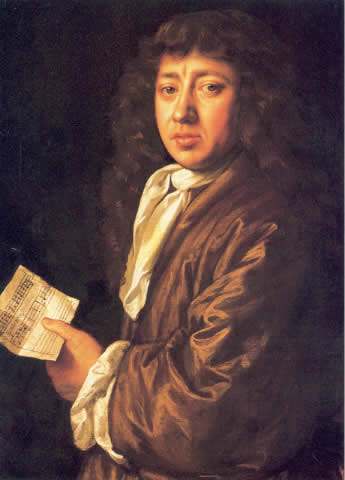
The other night, in the midst of my ceaseless toil blogging on behalf of all you ungrateful little guttersnipes, I took a brief half-hour's respite by dipping into Pepys.

The half hour grew to two hours before I even thought to look up at the clock, so subsumed was I in the hustling world of Pepys, in the squirrel-rushings of his thoughts, in the marvelous portrait he paints of his whole world, shifting with his inimitable idiosyncrasy from the most mundane details of daily life to the most important goings-on of court and country ... and all of it told with that chatty, totally human voice. Two hours fled like a snatch of dream.

And it got me wondering, as I so often do, about the whole act of re-reading books. A sizeable portion of all the reading I do is re-reading, and yet I've never been able to quite define what it is we DO when we re-read a book.

Some books are so complex and crammed that re-reading is virtually a necessary componant of enjoying them at all. Who entirely grasps Tale of Genji the first time through, or Vanity Fair, or Gravity's Rainbow? And certainly five or ten years between readings brings a very different US to the books we read once before - allusions that went over our heads the first time are now caught and savored.

But what about those books we re-read not only once but repeatedly? Further understanding a book you read once before makes perfect sense ... but how to explain re-reading a book you not only understand completely but quite often know virtually by heart? What's going on, when we're doing that?

I have a regular stable of authors I revisit in this way. Pepys. Chaucer. Ariosto. Kipling. Arthur Conan Doyle. Wodehouse. Herodotus. And of course more than any of them Horace. Almost every serious reader I've ever met has a comparable list, often broken up into specific needs, like we were talking about medicines in a cabinet ('so and so when I'm depressed, so and so when I need to forget the world,' etc).

So I'm opening the question to the assembled hordes of stevereads fans, especially the die-hard readers out there! How do YOU explain this thing we all do, this thing that after enough times can't really be called 'reading' in the normal sense of the word? Is it the intersection of reading and religion, or is it just creepy and compulsive?

And, of course: give me YOUR perennial authors/books. I know some for some of you but not all for all, so feel free to list 'em all!

Sunday, August 06, 2006

Beginnings

Openings stink, because they've always been done better. No matter what you write, 'In the beginning' and 'Call me Ishmael' are already taken, and anything you write is going to sound crappy by comparison. A good beginning will both draw you in and tell you nothing, so this will not be a good beginning. I have six beginnings now, taken at random from some of the books most recently snagged in my great trawling net.

From John Mortimer's autobiographical volume Clinging to the Wreckage:

The distant past, when I was acting my solo version of Hamlet before the blind eyes of my father, duelling with myself and drinking my own poisoned chalice or, further back, when I was starting an English education, with balloons of boxing-gloves lashed to end of white, matchstick arms, grunting, stifled with the sour smell of hot plimsolls which is, to me, always the smell of fear, seems clear as yesterday. What are lost in the mists of a vanising memory are the events of ten years ago.

From Son of the Morning Star, Evan Connell's great account of Custer and the Battle of Little Bighorn:

Lt. James Bradley led a detachment of Crow Indian scouts up the Bighorn Valley during the summer of 1876. In his journal he records that early Monday morning, June 26, they saw the tracks of four ponies. Assuming the riders must be Sioux, they followed those tracks to the river and came upon one of the ponies, along with some equipment which had evidently been thrown away. An examination of the equipment disclosed, much to his surprise, that it belonged to some
Crows from his own command who had been assigned to General Custer's regiment a few days earlier.

While puzzling over this circumstance, Bradley discovered three men on the opposite side of the river. They were about two miles away and appeared to be watching. He instructed his scouts to signal with blankets that he was friendly, which they did, but for a long time there was no response. Then the distant men built a fire, messages were exchanged by smoke signal, and they were persuaded to come closer.

They were indeed Crow scouts: Hairy Moccasin, Goes Ahead, White Man Runs Him. They would not cross the river, but they were willing to talk.

Bradley did not want to believe the story they told ...

From John Rechy's novel City of Night:

Later I would think of America as one vast City of Night, stretching gawdily from Times Square to Hollywood Boulevard - jukebox-winkling, rock-n-roll moaning: America at night fusing its darkness into the unmistakable shape of loneliness.
Remember Pershing Square and the apathetic palm trees. Central Park and the frantic shadows. Movie theaters in the angry morning-hours. And wounded Chicago streets ... Horrormovie courtyards in the French Quarter - tawdry Mardi Gras with clowns tossing out glass beads, passing dumbly like life itself ... Remember rock-n-roll sexmusic blasing from jukeboxes leaning obscenely, blinking manycolored along the streets of America strung up like a cheap necklace from 42nd Street to Market Street, San Francisco ...

From a slim history called The Republican Roosevelt:

So much of Theodore Roosevelt is comfortably familiar. There are the teeth, the famous intensity, the nervous grimace, impelling leadership, physical courage, mortal fervor - sometimes frenzy. There is the falsetto exhorting the troops at the base of San Juan ridge: "Gentlemen, the Almighty God and the Just Cause are with you. Gentlemen, CHARGE!" They did, of course, and then conquered. There are the busted trusts, the outdoor, life, the nature fakirs, simplified spelling, rivers discovered, lions felled. There is the host of Armageddon dividing the Republican Party with revivalist abandon. Like pages out of G.A. Henty - vivid, seemingly ingenuous. But Henty is now little reopened, and Roosevelt is more often remembered than reread.

From Jacques Barzun's scalding jeremiad God's Country & Mine:

The way to see America is from a lower berth about two in the morning. You've just left a station - it was the jerk of pulling out that woke you - and you raise the curtain a bit between thumb and forefinger to look out. You are in the middle of Kansas or Arizona, in the middle of the space where freight cars spend the night and men drink coffee out of cans. Then comes the signal tower, some bushes, a few shacks, and - nothing. You see the last blue switch-light on the next track, and beyond is America - dark and grassy or sandy, or rocky - and no one is there. Nothing but the irrational universe with you in the center trying to reason it out. It's only ten, fifteen minutes since you've left a thriving town, but life has already been swallowed up in that ocean of matter which is and will remain as wild as it was made.

From Pete Dexter's harrowing novel Paris Trout:

In the spring of that year an epidemic of rabies broke out in Ether County, Georgia. The disease was carried principally by foxes and was reported first by farmers, who, in the months of April and May, shot more than seventy of the animals and turned them in to the county health officer in Cotton Point.

The heads were removed, wrapped in plastic, and sent to the state health department in Atlanta, where eleven were found to be rabid.

There is no record of human beings contracting the disease - the victims for the most part were cattle - although two residents of an outlying area of Cotton Point called Damp Bottoms were reportedly bitten.

One of them, and old man known only as Woodrow, was found lying under his house a day later, dead. He was buried by the city in a bare, sun-baked corner of Horn Cemetery without medical tests and without a funeral.

The other was a fourteen-year-old girl named Rosie Sayers, who was bothered by nightmares.


Not all from my favorite books, but all excellent in their ways, and how'm I to know WHAT my ways should be, this being my very first blog under my own name? There are half a dozen scattered around the Internet under names and personae not my own, lovingly crafted in the way one lovingly crafts fiction. But this one will be more or less straightforwardly me, and how does one write an introduction to oneself?

This blog will be primarily about what-all I read from day to day. There'll be a large number of digressions, many an allusion, and quite a few screeds. If you're looking for sports ruminations or daily gossip updates on Jake Gyllenhaal, you should probably look elsewhere.

I read enormously. More than you do. This is especially relevant to you 20-somethings out there who may have wandered here, because your demographic pegs you at believing that nobody in the whole world has, in fact, read more than you have (I'll be appending the rest of your demographic outline, just so you know I know who you are). I have.

I read books, magazines, periodicals, web-pages, newspapers, comic books, and obituaries. I read an average of five hours a day, and on the weekends that number sometimes doubles. And I read really fast, especially when I'm interested in the subject matter (I'm interested in many subject matters). You shouldn't get defensive at any of this; in fact, you should view it all with relief. Think of me as an expert scout (though I'd like a better name than Hairy Moccasin! Maybe instead I could be You Gonna Finish That?), out-riding far ahead of your plodding supply-train, sending back accurate and reliable reports on all your different choices of terrain. You can rely on me, and what's more: I'm eager to help.

I can't help you if you insist that you've already read everything (this is mainly directed at the aforementioned 20-somethings, although I've met many and many a Bennington grad considerably older than that with the same asinine failing). Mind you, I understand it: to the very young, admitting ignorance is an almost physically painful thing - that's why teaching them can be so tricky. But here in our private cyber-communion, away from the like-whatever peer pressure of your unwashed brethren, you've just got to drop the pose, or we won't get anywhere together. The one of you out there who's moderately familiar with the Confessions of St. Augustine won't know anything at all about the science fiction of Keith Laumer. The one of you with a passing familiarity of the Justice League will be entirely ignorant of the Russian Revolution. Here in the privacy of these blogs, all I want you to do is admit your weaknesses.

I have far fewer weaknesses, because I've been reading voraciously in a wide range of subjects for very, very much longer than you've been alive. This gives me an unbeatable edge in experience, but it still leaves me slack-jawed in wonder at all I don't know. A week doesn't go by when I don't learn the existence of some book whose author or subject matter scream that I SHOULD have known about them a long time ago. When I encounter a blank spot on my own canvas, I'll promptly admit it and ask questions of those who know more. I want you all to do the same. Only knee-jerk pretension would prevent it, so don't bring that here.

So that's my beginning, I guess. Sounds pretty ornery, and I AM pretty ornery - but only when it comes to people boredly drawling out great one-liners like "It was like Leigh Hunt meets punk rock" and then admitting, under heated cross-examination, that they know nothing about either Leigh Hunt or punk rock, that they a) just liked the sound of the juxtaposition and b) were hoping to SOUND like they knew everything about those two things, and lots more besides.

When it comes to readers - happy, endlessly inquisitive readers with open minds and long memories and pencils in hand, well, I'm not ornery at all. They're my favorite people, which is why I work in a bookstore. And even the pretentosauri I've been railing about have a germ of that reader inside them! I'd like to believe everybody has a germ of that reader inside themselves.

What I'd like foremost for this little blog-ring is to give that reader plenty of food and drink.

I'll be writing about books, comics, magazines, dogs (including my own two, Malin Mohr the good one and little Lucy the very, very bad one), and whatever else crosses my mind. I hope you find some of it interesting, and I hope you tell me if you do.

I have lots of material to import, but cutting-and-pasting is tedious for somebody as tech-illiterate as I am. So I'll be doing it piecemeal and complaining about it the whole time. This is all for now, though. Welcome.