Thursday, August 17, 2006

mystery beast!


In this morning's paper there was a small piece of news from Turner, Maine: it seems that the mystery beast that had been attacking dogs and making weird noises at night was hit by a car on the highway and its body left to rot, food for crows.

Residents around Turner had long been complaining about this marauding mystery beast. One woman who saw it said, "It was evil, evil-looking. And it had a horrible smell I will never forget."

The oddest thing about this morning's notice was the fact that wildlife officials haven't even bothered to go and LOOK at the body. The flesh might be all gone, but come on! The bones might still be there! If you were hit by a car in boonies Maine, wouldn't you want somebody to come and poke your remains with a stick?

I, for one, would be curious to know just what the Hell this mystery beast was.

Tale of Two Summers


It's like I was telling my esteemed colleague Ty the other day - teen novels are often sharper than adult novels, because teen novels are pitched to the most unforgiving audience in the known world: teenagers who actually read. They can sense stupid artifice and plot boondoggling a mile away, and they can't stand, utterly can't stand, being talked down to.

Writers who respect that can end up writing really, really good books - books that are so lancingly smart and sharp and wry that they bear only an insulting comparison to most contemporary fiction aimed at adults.

Adults (present company excepted, of course) have learned to settle for less, or rather for MORE - more redundant dialogue, more extraneous padding, more ridiculous plotting. Some of this is peer pressure - nobody wants to STAY the creepy-smart outcast after high school. And maybe part of it is traditional, since society tends to say 'adult' novels will be hefty three-deckers with loads of subplots.

Which isn't to say there isn't tremendous enjoyment to be taken from such immensities. My friend Beepy is currently crawling her way through Middlemarch (when she's not playing pornographic video games or drunkenly phoning people late at night, that is) and loving every sentence of it.

No, my main point here is that any smart, self-respecting teen reader would be bored shitless by A.S.Byatt.

Of course, such an audience comes with its own dangers. Namely, if you suck, they'll heap scorn on you and walk away. You're not really given the luxury of screwing up. They want the goods.

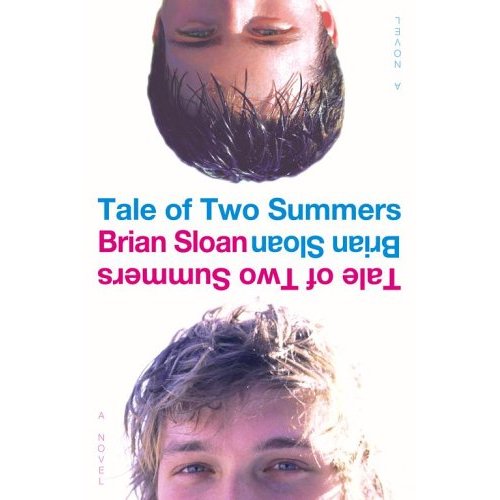
I read a teen novel last night (I think I'll read a few in a row, to cleanse my palate after Bully Boy) called A Tale of Two Summers by Brian Sloan. It's about two best friends, Hal (who's gay) and Chuck (who's straight), who spend their first summer apart when they're fifteen. Chuck goes to theater camp (the straight one's into musical theater, get it?), while Hal stays at home and goes to driving school. They decide to chronicle their 'tale of two summers' in a blog.

Yes, this is the world's first blog-novel.

Both of them have romantic adventures - Hal with a dreamy French pothead, Chuck with a girl from theater camp - and absolutely no detail is left out. The book virtually drips with spooge, and I'm not sure what the aforementioned sharp, smart teen would make of that. The author clearly means his sexual frankness as a good thing, a way of being upfront with his readers. But one can be forgiven for doubting whether ANY teenage boy, gay or straight, would put half of this stuff in a blog that could be read by anybody.

Actually, that's the main hurdle in teen fiction: believability. There's nothing more cringe-inducing than a 20-something writer ineptly mimicking the patois of teenagers (ulp). Better by far to avoid patois altogether, but many authors - Sloan included - just can't seem to resist giving it a try.

So Sloan's book is full of OMGs and LOLs and OC references, and most of them are cringe-inducing. His two teen bloggers sound like two fifty-year-old Broadway theater-queens. I'd bet Sloan thinks he can get away with that because one of his characters is gay and the other is, well, a theater queen. But it fails more often than it succeeds.

Their two summers feel inconsequential and contrived (never moreso than when, in need of some tension at the book's climax, the author hauls in TORNADOES. Geez). This is made worse by the steady allusions made to a New Year's party the year before where Hal came out to (and tried to make out with) Chuck - I wish the author had chosen to dump the blog-format and simply write that story.

I can't stand it when I think the author has chosen to tell the wrong story about his characters. Seems to be happening a lot in this blog....

There's some moving stuff, even so. An argument scene between our two main characters half-way through the book is very well done, and the writing is never anything less than peppy. But I couldn't recommend anybody buy this thing in hardcover, and it alone certainly didn't cleanse my palate.

Maybe tonight. I'll keep you posted.

Wednesday, August 16, 2006

twelve!


Welcome to the family, Ceres, Charon, and Xena!

Travel tip #1: try to stay as far away from Earth as possible

Tuesday, August 15, 2006

books, books, books!


It's been slim pickings on the new book front this week.

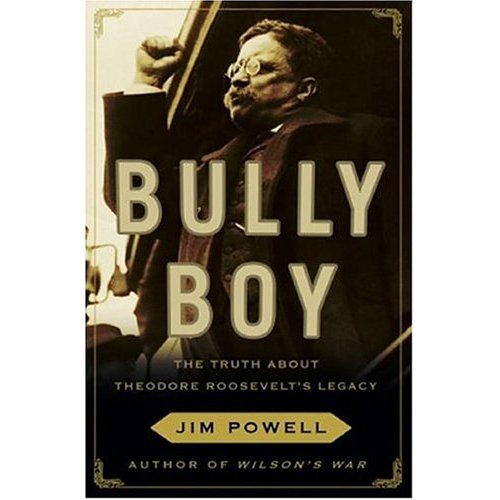
I read Jim Powell's book Bully Boy, which purports to be about Theodore Roosevelt. The author purports to be writing a kind of expose on how the 'real' Roosevelt was a darker, more ruinous figure for his own time and ours than the popular presidential mythos would have us believe.

I confess, it took me two whole chapters to see this book for what it is: a political TRACT, not history. Something sweaty and slightly crazed. Instead of being sold in bookstores, it should be handed out on subway platforms by sandalled young people whose parents think they're at the library.

It shouldn't have taken me that long (what can I say? It's been hot) - Hell, the chapter titles alone give the game away, consisting as they do of what lawyer-folk like to call leading questions.

Why did Roosevelt want to enter other people's wars?

Why did Roosevelt brag about 'trust busting' that harmed the American consumer?

Why were Roosevelt's 'conservation' policies wasteful and destructive?

When did Roosevelt stop beating his wife?

OK, that last one was mine, but you see what I'm getting at. If that sort of sophomoric nonsense were being spoken aloud, Jack McCoy would long since have lept to his feet and barked out "Your Honor!"

The book is riddled with ... well, I hesitate to call them errors, since that implies a black-and-white thing that can be fixed should there ever be, Gawd help us, a second printing. The book has plenty of those too, mind you, but the main thing it's choked with is a fog of partisan zeal - like when you're talking with a young Republican on your dorm floor and you suddenly get that sickening feeling that no ACTUAL discussion is happening at all - that the beads of cold sweat on their upper lip aren't there because they're fully engaged in the debate, they're there because your young friend hugely, overwhelmingly wants to send you to a death camp RIGHT NOW for what you're saying.

The book is a screed, and like all screeds political or otherwise, it DOESN'T CARE if its own underpinnings are distorted, unjust, or plain old false.

There's something like that on every page. The author went into his book with the theory that Theodore Roosevelt was an evil president, a war-monger, an enemy to the working classes, and the architect of all that's wrong with American society today. Basically, Powell's blaming Teddy Roosevelt for Vietnam. Yeesh.

If enough of you loyal readers raise the cry for me to page-by-page demolish this piece of crap, I'll do it. Your humble scribe is at your disposal, of course. But absent that acclaim, I just don't think it's worth it - the book isn't nearly GOOD enough to warrant dismantling.

Alas, the same can be said for Michael Cox's forthcoming novel The Meaning of Night. Well, not exactly the same - it's not a piece of crap, by a long shot. It's a big Victorian historical thriller, complete with Latin chapter headings and a liberal sprinkling of footnotes (a cutesy-poo literary fadlet given wide parlance by David Foster Wallace and recent cachet by the otherwise-delightful Jonathan Strange & Mr. Norrell - let's pray this book is its death-gasp), and its publishers are clearly holding their breath until the first reviewer uses the term "sumptuous."

But for all that it's not a bad book, although far overlong and full of itself, and with dialogue that's often tin-eared. If it ever comes out in a mass market-sized paperback, it'll be easy to recommend it to all of you as a slightly lighter-weight alternative to a very similar and hugely better book, Ian Pears' An Instance of the Fingerpost. But until then, you won't be missing much if you stick to re-reading Sherlock Holmes.

There WAS a good experience among the disappointments, however, and it came as a surprise to me. I read Mark Helprin's Freddy and Fredericka and really liked it, despite the fact that I haven't liked Helprin's last few books at all. I almost passed on this one completely, but a friend lent me the trade paperback, and I read - at first warily, and then gulping down the pages.

The book is a long piece of satire on the state of modern royalty, and I was expecting the operative word would be 'long' - but I didn't find it so. Instead, I found an endlessly energetic, very, very smart and almost consistently hilarious book. Helprin spares his titular royals no embarrassment, no imbecility, no fiasco .. but still, after very few pages, you get the distinct feeling that he LIKES them, certainly in spite of themselves.

And the dialogue (Helprin's age-old weakness) sparkles for long stretches, I thought. The royal couple go incognito to America, and at one point they're posing as dentists, of a sort:

"We're dentists," Fredericka blurted out. After all, that was what it said in the capsules.
Knowing this could lead to trouble, Freddy clarified Fredericka's answer. "Not for people, though," he said, holding up his right index finger.
"Not for people? For what then?" A long silence followed.
"Crocodiles," Freddy finally said. He seemed to think about it in awe.
"Crocodiles?"
"It's mainly periodontics."
"Is that true?" D. Popcorn's hands fell at his sides.
"There are tens of thousands of crocodiles in the South, where we come from. They have a lot of problems with their teeth, and they have a lot of teeth - a lot of teeth."
"But there are no crocodiles in America."
"There aren't?" Freddy asked.
"No, just alligators."
"Oh," said Freddy. And then, turning to Fredericka, "You mean all that time, all those years, we've been working on alligators, and we thought they were crocodiles?"
"What's the difference?" Fredericka asked.
"I have no idea," Freddy answered.
"Whatever they are, they make nice bags and belts," Fredericka continued. "Did you know that Bunny, the middle daughter of the Duchess of Trent, has a speedboat with crocodile upholstery? Or alligator, I don't know."
"How do you get them to the point where you can safely work on them?" Dr. Popcorn asked. "I can't even do that with a lot of my own patients."
"I guess you shoot them," Freddy said nonchalantly.
"To anaesthetise them."
"To kill them."
"You do periodontics on dead alligators?"
"Alligators or crocodiles, whichever they are."
"What for?"
Freddy was hard-pressed to think of an answer. "We're animal lovers."
"But you shoot them."
"We have to. They're terribly vicious. They can swallow a Corgi in the blink of an eye."


Not everybody's cup of tea, I know (especially 500 pages of it), but I found this stuff delightful, and I very much liked all the subtle strands of sadness and sentiment Helprin works into what is mostly a rollicking good farce. I can't for the life of me think of who I would recommend this book to - it will appeal neither to fans of modern fiction nor, strictly speaking, to fans of historical fiction. But I'll keep it in the back of my mind in case I meet a true reading omnivore like myself (it's possible my friend Beepy would like it, but since she only reads about a page every three days, it would represent five years of effort for her, so I probably won't mention it).

I felt like shopping for books today, but for some unknown reason, I didn't feel like HIKING to do so. So I put on my togs and went up West Broadway to the Goodwill (got panhandled along the way, but a perfectly healthy young woman with a big meal currently digesting in her belly - she said "sir, can you spare some change so I can pay for my prescription?" I almost laughed in her face. I almost said, "Missy, I was raised in a mean-spirited, incredibly manipulative Irish Catholic family; you're gonna have to do a LOT better than that to get any guilt out of me").

On West Broadway, we've got a good book selection at the Goodwill. The only worker there who spoke English told me they get around 150 books a week, but most of their customers are there to buy clothes, so the book section has a healthy amount of titles.

There's something oddly satisfying about buying books at a Goodwill. Maybe it's the total randomness of the selection, far more hit-or-miss even than a used bookstore. Or maybe it's the welcoming atmosphere of the West Broadway branch, where all the families and old ladies seem to know each other, where the jokes are sassy and rapid-fire, and where the parents for once don't have to worry about affording all the stuff their little kids pick out.

Or maybe it's the fact that this is unquestionably the last stop on the spin cycle for these books. This is where they end up when NOBODY else wants them, and there's nothing theoretical about their fate should they not be bought: the Dumpster is RIGHT THERE, in plain sight of the bookshelves. Every time you buy books there, you're making your own little Schindler's list.

Every time I go there, I start off browsing in silence. But gradually the books become aware of me, and they sense that being bought by me is one of the very best things that can happen to a book - I'll either loving read, annotate, and care for the book myself, or I'll find it a carefully-vetted home. So they start clamoring, and it's heartbreaking to hear. "Pick me, pick me - don't leave me here, you're my only chance!"

I heard that from many books today, none louder than an old Mentor paperback called The Essential Erasmus - still in excellent condition, no underlining or highlighting, 75 cents. But I left it behind, because a) I, of course, already have a copy (Erasmus being one of my favorites) and b) I couldn't in a million years find anybody who'd be even slightly interested in receiving i as a gift.

I left a lot behind, for variations on those reasons, and it struck me as it always does: you could stock a very good bookcase for $15. All of Sherlock Holmes. The Proud Tower by Barbara Tuchman. The Persian Boy by Mary Renault. Michael Shaara's The Killer Angels and Larry McMurtry's Lonesome Dove. All of Jane Austen. Cervantes. Ibsen. Greek tragedies. Nature books like the great Watchers at the Pond. Dictionaries, dictionaries of quotations, The Lord of the Rings and Plato.

Today I bought a fat trade paperback of Hedrick Smith's wide-ranging extremely companionable The Power Game, about how politics in Washington DC used to be done (before the present administration's new rules, of course) - one of the few political books I can stomach, mainly owing to its author's puckish writing ability. I also bought a sturdy trade paperback of Konrad Lorenz' King Solomon's Ring, mainly for two reasons: 1) I wasn't absolutely sure I owned a copy, and 2) even if I did, for 75 cents I'd get to read his wonderful, near-perfect essay about men and dogs, "The Covenant," before I passed it on to somebody else. And lastly I bought a mass market copy of an edition of Shakespeare's sonnets from 1969 that made me smile because the doubleted and ruffed young man and woman on the cover illustration look like they stepped out of an off-broadway production of "Hair."

Three worthy books, plucked from oblivion, for 2 bucks and change.

So give your local Goodwill a try! I'm not saying they're all as good as this one (strong in the memory is an ill-fated trip Sebastian and I once took to the big Salvation Army store on Route 1 North - a dank and horrid place where even the books had bad body odor), but you never know until you go look.

a bookworm reads the morning paper


I woke up this morning to the sound of gentle rain falling outside the floor-to-ceiling glass doors next to my bed. I stretched and ordered my two stunning Alsatian warhounds, Leni and Blondi, to patrol the perimeter of my estate while I read the morning paper.

A bad morning for dogs, it was immediately clear. In Boston, a 4-year-old boy was scratched in the face when I pit bull jumped on top of him. The boy wasn't bitten, and the pit bull was gone when police arrived - I dread a pogrom, but this probably won't provoke one.

And on I-495, a TRUCKLOAD of PUPPIES died when their tractor-trailer caught fire. That's pretty freakishly sad news to start the day.

Fortunately, the rest of the paper largely cheered me.

A delicate peace seems to be holding in the Middle East.

No heat waves are in the offing.

No friends of mine showed up in the obituaries.

And it's Ben Affleck's birthday! The big lug has made life very hard for those of us who believe in his acting ability, but maybe 2006 will start to change that. If he's really good - or, dare I hope it, great playing George Reeves in "Hollywoodland," who knows what kind of career revival might not be possible?

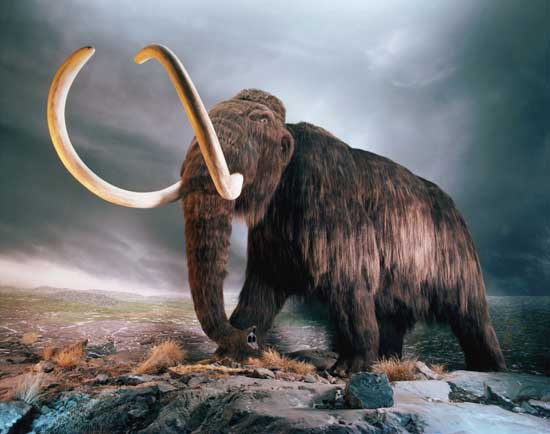
True, the Red Sox lost ... but on the plus side, we've got FROZEN WOOLLY MAMMOTH SPERM!

And having read the words FROZEN WOOLLY MAMMOTH SPERM, you just know that somewhere real close by you're going to read the words JAPANESE SCIENTISTS, right?

Yep, Japanese scientists are champing at the bit to inseminate unsuspecting elephants with prehistoric mammoth jizz - presumably to re-create mammoths for a viewing public.

These scientists are a) batshit crazy b) encouraged by their success with frozen frog-sperm, and c) apparently the only people left on Earth who haven't seen "Jurassic Park."

I can't comment on the viability of the proposed mammoth-resurrection (my scientific acumen stopped around the whole alchemy craze), but the thing I noticed about this morning's story was the way Western society has incorporated the phrase 'Japanese scientists' into the lexicon as something quite distinct from scientists who happen to be Japanese.

No, 'Japanese scientists' has come to stand for something else entirely. They're always out there, on the frontier, creating paranoia because YOU NEVER KNOW WHAT THE FUCK THEY'RE UP TO.

An electronic book with magical pages? Carnivorous butterflies? Flatscreen TVs with smell-o-vision? Edible plastic? Head transplants? Frozen woolly mammoth sperm?

"I heard Japanese scientists already HAVE something like that..."

They're the way we've all found to incorporate an element of science fiction into our daily lives. The Victorians believed there was life on the moon. The 1950s and 60s were hip-deep in UFO mania. And today we have those nutty bastards, Japanese scientists, with their liquid cars and their cybernetic dogs and their frozen woolly mammoth sperm.

Saturday, August 12, 2006

inner, outer people! focus!


It's been pointed out to me that I've once again referred to myself as 'old' and 'ugly' ... leading me to the conclusion that some of you STILL haven't grasped the concept of an inner self! Sometimes, usually before I've tooted my daily mound of blow, I get a little down on myself and use less than praising terms - but whenever I do that, I'm ALWAYS referring to my inner self. My outer self, carefully and narcisstically sculpted through long, lonely hours at the gym, is, as you can see, beyond reproach. So can we stay clear on the concept, people? Geez.

a bookworm reads the morning paper

And four things jump out at him:

1. Kelly Richardson has written a book, "Violation! The Bitchings of a Boston Meter Maid." Kelly herself is smart, sharp, and funny (the same can be said for her ex-husband and her son) - it stands to reason her book will be too. It's self-published now, but here's hoping this little profile - and the article in the Herald - will bring her to the attention of a Boston publishing house.

2. Former TV host Mike Douglas died. You just won't know how vapid and ass-kissing today's crop of professional hosts - from Oprah to Leno with the possible exception of Letterman - are until you've watched the Holy Trinity of the 70's, Merv Griffin, Dinah Shore, and Mike Douglas. If any 'best of' DVDs ever come out, Netflix the Hell out of them.

3. A New York appeals court UPHELD the legality of random bag-searches on subways. Even though such searches are PATENTLY ILLEGAL. So, to all you New Yorkers out there reading this: if a cop orders you at random to produce your bag for searching, DON'T COMPLY. Quietly, politely, steadfastly REFUSE. Remind the cop that searches require probable cause. They require a REASON, even a POSSIBLE reason. Tell the cop that he's going to have to physically subdue you in order to search your bag. Do this even though it will land you in jail and seriously derail your day. Do this even though it will land you in jail and seriously derail your day. It sucks, but it's the only way.

4. Gunter Grass has admitted to having been a member of the Waffen-SS. Grass has written some powerful books, books that are gifts to all humanity. Nevertheless: None of us must ever buy another Grass product again as long as we live. He has a new book coming out soon - don't buy it, don't review it, don't borrow it. Walk across the room, take his books down off your shelf, and quietly throw them away. No doubt the admission was wrenching for him personally, but the Waffen-SS wasn't a boy's club - it was utterly impossible to join it without knowing what it was and BELIEVING in it. So we must have nothing more to do with Gunter Grass.

Superman and In the Penny Press


Well! Never let it be said Steve isn't open-minded, and never underestimate all the good stuff that can come your way if you keep your mind open.

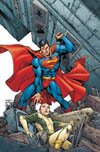
As loyal readers will recall, I violently detested Superman #654, the first issue of the Kurt Busiek/Carlos Pacheco run on the title. It seemed not to know what in Hell its ass was doing from one panel to the next. I had only grim hopes for #655.

But "Cold Comfort" was great - all the elements so barely visible in the previous issue came together perfectly here.

Maybe it's the fact that Pacheco's artwork has settled down and is in peak form. Everybody's still way to skinny, but that's a minor quibble - almost all the artwork is magnificent. I especially love the gorgeous grace he imparts to Superman in flight.

And the writing seems more stable too, with great results. Lana Lang's presence is much more fully explained, and Doctor Llewellyn's exposition about the origin of the issue's new villain (who looks like he stepped right out of Resident Evil, and who, I predict, won't end up being a villain at all) is intelligently produced.

The issue's only glitch is a darkly horrible one: what if Superman, a character you've loved for seventy years, while in his secret identity as Clark Kent ... reads BAD BOOKS? Superman reads - and likes, albeit luke-warmedly, John Sandford novels? Please, please let it be a plot by Lex Luthor ...

In the Penny Press

It's an odd thing, being old and ugly while reading a magazine like Esquire, which is so aggressively aimed at power-suited testosterone-drenched business school gearhead morons. The magazine manages to deliver a good dozen pages a month of real quality, funny and thought-provoking - but to get at those pages, you have to dodge slalom-like past ads for cigars and articles about banging babes.

So imagine my surprise when that dichotomy showed up in the oddest, least-expected place. In the middle of the latest issue, there's the regular feature 'The Esquire 10,' in which ten things are shamelessly hawked to the disposable-income horndogs turning thet pages.

I expected to skip through it pretty quick, especially since Item #1 was a pair of something called 'the Atomic Snoop Daddy Alpine Skis.'

And then it happened, right there at #5! The San Domenico Palace Hotel, in Siciliy - where I have actually stayed, during my long stretch of residence outside Taormina. It made me smile - I'm guessing almost all the idiot mogul-shredders reading this issue OWN most of the over-priced gimcracks on the rest of the list, but I wonder how many of them have slept in the San Domenico?

Elsewhere in the issue, there's the second part of Scott Raab's series on the rebuilding of Ground Zero - a series I can only presume will be the building-blocks of a future book. The article itself was interesting from front to back - which, given the leadenly boring subject matter, is a tribute to Raab's winning way with words.

Speaking of winning ways with words, there's always Esquire's greatest secret weapon, the Answer Fella (in fact, his way with words is so unfailingly nimble and funny that I suspect he's not a fella at all).

In this issue, his most entertaining question is this: Why is David Hasselhoff so popular in Germany?

It's a lobbed softball, I grant you, but even so, the reply is so good it warrants quoting at length:

"Hmmmmm ... the guy's a stiff of an actor, an awful singer, and a staggering shvantz who managed to sever a tendon in his arm while shaving, and yet a nation of humorless, overcompetent technocrats endowed with a vast heritage of great literature, gorgeous music, and murderous evil has embraced and enriched him. Beats the heck out of AF"

a vast heritage of great literature, gorgeous music, and murderous evil ...

Hee...

And onward:

"Natalie Marshall, president of David Hasselhoff Online, a poor stranger to historical irony, mentions his 'Christian attitude' and the 'marching tone' of his songs as factors in his appeal and cites his live rendition of the song 'Looking for Freedom' at the Berlin Wall on New Year's Eve 1989 as the moment he was forever clasped to Deutschland's stony bosom."

a poor stranger to historical irony ... Hee ...

An item in the letters page was so out of left field it jumped out at me:

"I inhaled the State of the American Man issue in less than two hours. It shocks me that I have no problem identifying men - FDR, Anthony Burgess, and, much to my father's dismay, Iggy Pop - to pattern myself after" writes Hilary Crowe of Tampa Florida .. an odd and joyful little note of hope that I thought would appeal to my young friend Sebastian, who's a big fan of Anthony Burgess and sometimes despairingly wonders if anybody else on the planet READS him anymore. If Sebastian ever needed to travel more than ten or fifteen feet from his nearest Starbucks in order to have impromptu lusty sex, he could book a ticket to Tampa in the serene expectation of a warm welcome.

But by far the best thing in the issue - its amazing, heart-wrenchingly beautifuly grace note, is Tom Chiarella's short essay "How to Give a Eulogy,"

I've given more eulogies than any of you reading this, and yet I read Chiarella's piece in rapt mental silence.

If I can decipher a linking or pasting method that allows it, I'll give you all access to the entire essay (which can also be obtained by buying the issue, of course), which is so honest and sharp no excerpt can do it justice. But in the meantime, let me quote the piece's ending, at which Chiarella is talking about delivering the eulogy for his dear friend Mary. During the delivery, he hits an awkward silent spot, works the crowd past it, and writes:

"Even so, I wanted to cry just then. That's one of those surprises that comes when you give a eulogy, one of those things you prepare for but do no expect. But I had more to read and more that I owed Mary. I took a deep breath then, and I did the thing everyone does after someone they loved has died.
I gathered myself. And I decided to proceed."

Over in the Atlantic, things turned out every bit as bad as Sebastian had warned me. Tucked back in the books section, there it was: Christopher Hitchens' frothing, jibbering screed about President John Kennedy.

Hitchens hasn't been at his best for a few years but this piece makes the sad reality all too clear: the syphillis has reached the brain.

Utterly impossible, even for somebody as mean as I am, to know where to start dismantling this semi-delirious stream-of-consciousness nocturnal emission of stale envy.

He calls 'Camelot' "the fouth-rate Lerner and Lowe musical" - but unlike every other Lerner and Lowe musical, 'Camelot' has not one single bad or even boring song ... something you can't even say about "Guys and Dolls."

Then there's the sad fact that Hitchens, whatever the strengths and weaknesses of his arguments, has degenerated to the point where he can produce sentences like this:

"In spite of much boorishness and demagoguery - partly undertaken to conceal the increasing lack of confidence that the USSR and the Communist movement felt after his own 'secret speech' concerning the crimes of Stalinism - Krushchev was, probably no less than his eventual successor Gorbachev, a man with whom, at a minimum, business could be done."

'increasing lack'? 'probably no less'? 'eventual successor'?

And lest you think this is an isolated gaff:

"Perhaps even this spell is now not too strong to be broken."

I'm sure it need not be pointed out to any of my faithful readers that neither of these sentences is, technically, English. Extra ironic, that they should crop up over and over in a putative expose of a man who never wrote an inelegant line in his life.

I loved the Kennedys, warts and all. To my admittedly anachronistic mind (not necessarily wrong, for all that), they are the true inheritors of ancient Rome's first families, or the wealthy merchant-princes of the Renaissance: when a family's generational wealth is assured, some turn to public service even though it might lead to personal death and tragedy.

But you don't have to love the Kennedys to hate this sordid piece of gymnasium-envy (I won't say that if Jack or Bobby were still alive they'd punch Hitchens in the nose for this piece, but I sure as Hell felt like it). It's an offense just on its own slim merits.

And the offense that bugs me the most?

Well, you all know me. I know as much about the Kennedy administration as anybody (I have my reasons, and they have nothing to do with Boston, Irish, or Catholic). I read pieces like this with an admitted proprietary element. And the thing that bothers me most about Hitchens' latest piece is the recurring implication that JFK's medical treatments for his back-pain led him to be a Howard Hughes-style deranged drug addict in the Oval Office. Like this:

"At practically all material times, the Galahad of Camelot was pumped full of drugs that affected his mental and physical ability ..."

At another point JFK's referred to as "too crazed with dope." Sigh.

Heavy sigh.

It's been forty years, but even so: there should be plenty of witnesses out there, plenty of people who've shared a dinner with the man, or many - plenty of people who've TALKED to the man, often for nights on end. They're not all dead - they're out there. They can attest to the fact, not the loyalist assertion but the FACT, that never at any point - not once, not ever at any point, did ANY of them, even his sworn enemies, get even the faintest impression that he was even slightly fogged, let alone 'crazed' ...

Hitchens calls for 'us' to finally lay to rest all the illusions regarding Camelot and JFK. But there's been a dark counter-Camelot set of illusions attached to JFK all along, right from the start, and it's time for Hitchens to lay them to rest as well: JFK the sex-crazed cowboy drug addict - a creature who couldn't have been elected President with all the Kennedy money in the world, a creature who couldn't have INSPIRED anybody at all, let alone an entire generation.

It's tough, I know. It's tough to see all the stuff they have - great looks, better than average intelligence, impeccable style sense, impenetrably close family relationships, huge wealth - it's tough to see all that and give them anything else. Hitchens obviously finds it impossible, dumpy thing that he is. But this sad little piece of his is much more a commentary on him than it is on the Kennedys.

Also, as a kind of p.s., Hitchens, true to form for obstinate drunks, still refuses to admit a tiny error: it's not Galahad, ya moron. Galahad doesn't appear in "Camelot."

Wednesday, August 09, 2006

In the Penny Press!


As some of you may know, I'm a big fan of the novels and short stories of James Tiptree, and I'm grieved there will be no more. I think the novel "Up the Walls of the World" is on of the best of the genre (see my Top 50 list, when I get around to posting it), and if anything, the short stories are even better.

The most amazing extra-literary thing about James Tiptree was, of course, that he was Alice Sheldon. That fact wasn't known to the science fiction community at large for many years, during which sci-fi magazines and conventions teemed with rumors about who exactly this person was, sending in one fantasic short story after another from a Post Office box in Washington. I have a very long history of writing under psuedonymns myself, so I consider this great fun.

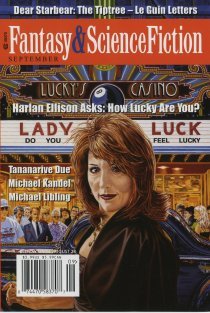
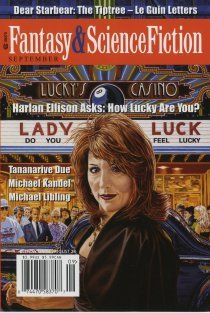
Imagine my delight, then, when the latest issue of Fantasy & Science Fiction published a long collection of letters to and fro between Tiptree and Ursula LeGuin, another giant of the genre, who had at the time no idea that Tiptree wasn't a man.

The collection, "Dear Starbear: Letters between Urusula K. LeGuin and James Tiptree," edited by Julie Phillips, is the only bright light in what was otherwise an utterly wretched DESERT of an issue, stuffed from stem to stern with groaningly awful short stories and puerile book reviews. When Gardner Dozois, in his introduction to the latest "Year's Best Science Fiction," urges sci-fi readers to subscribe to the monthly magazines in order to save them from oblivion, he perhaps forgets that first the magazines in question have to NOT SUCK.

But OH! WHAT a bright spot! The letters between these two are near-perfect examples of all that snail-mail correspondence could be, in its 600-year-long heyday. Of course, it doesn't hurt that the two women in question are steeply, roastingly smart - the letters scintillate with wit, depth, and most of all the kind of effervescent playfulness that bubbles up uncontrollably when two people find that 'click.'

I've been actively pursuing friendships with humans for a very long time, and that process of 'clicking' mystifies me as much now as it ever has. Even after all this time studying it, I can honestly say I only know four things about it: 1) it has nothing to do with shared background, intellectual capacity, or interests, 2) it is giddyingly joyful to feel, perhaps adult life's sweetest pleasure, many times sweeter than 'falling in love' (anyone who's experienced both will attest to that), 3) It doesn't necessarily lead to sober, life-long friendships, and 4) Its disappearance can never be predicted, and that disappearance hurts like hell.

LeGuin and Tiptree very much 'click' in these wonderful letters, and they clearly both realize it.

I thought the best bits were when either writer, comfortable in the privacy of their correspondence (the perennial guilt of reading letter-collections is that you become a guilty party in the rupturing of that confidentiality), feels free to riff on their peers in the sci-fi community.

Imagine my delight when Tiptree writes this about Philip K. Dick, so revered by all the twenty-somethings I know who only like him because they're too snobby to descend to reading ACTUAL science fiction:

"And Dick ... I know precisely what you mean, he's a mass of flaws that spell out JACKPOT. A sort of total dogged naivete, the language creaking and jerking so you can't believe it, any ten-year-old would know better - like a magician with muscular distrophy, you see the pigeons lumping around in his sleeves and the thousand silk scarves on the floor - my god, can he have the nerve to go on with this? - and yet it works. Like you, I shall firmly maintain that that thing hopping around on the floor is positively NOT an escaped rabbit - until it's recognized that he's done something unique&grand&lovely&nutty. Or until somebody comes along & does it better."

(And before any of you aforementioned 20-somethings pipes up that Tiptree is kinda sorta PRAISING Dick in the above passage, let me cut you off with a pro-active SHADDUP. Tiptree is roundly damning the man's writing ability, which is all I'm talking about and all YOU should be talking about. If you're reading somebody because you think he's 'counter-culture' or would piss off your parents, if you're reading him for those reasons DESPITE the fact that he's a crappy writer, then you're an idiot who's doing a disservice to the entire endeavor of literature)

Reading these letters, entirely engrossed in their ongoing story, I was on the edge of my seat to learn if Tiptree actually tells LeGuin that he's a man, and if so, does it explode their correspondence? And sure enough, he DOES tell her his huge bombshell - that he's Alice Sheldon - in a singularly brave letter that closes by hoping they can still correspond.

And LeGuin's answer has to be one of the coolest (and you all know how I hate that word) things I've ever read:

"Dearest TREE,
oh strange, most strange, most wonderful, beautiful, improbable - Wie geht's, Schwesterlein? sorella mia, sistersoul! Do you know what? I don't think I have ever been SURPRISED before. Things have happened but when they happen one thinks Oh, of course, this had to Be, etc., deep in my prophetic soul I Knew, etc. - but not this time, by God! And it is absolutely a delight, a joy, for some reason, to be truly absolutely flatfootedly surprised - it's like a Christmas present!"

Delightful.

If by some serpentine chance Julie Phillips should ever stumble upon this little blog: please! Give us more Tiptree letters! He maintained spirited correspondences with half the leading lights of sci-fi in the 70s, surely there's a lot more out there? I, for one, am now distantly hoping for a Collected Letters of Tiptree...

The other periodical on our radar today is the latest issue of Vanity Fair, which I bought mainly for the article about the relationship between the two Presidents Bush.

The first frickin paragraph of the article makes it clear, however, that the writer got no further than front-gate security with either man. The article is consequently full of bootless speculation and manufactured musings by fictitious 'old friends of the family,' and honestly, who needs to read THAT?

Fortunately, the issue had lots and lots of other good stuff in it, including, amazingly enough, a very enjoyable piece on the season's fashion shows in Milan, written by the talented - and very openly gay - actor Rupert Everett. Considering the fact that Everett is also extremely handsome, sending him on a backstage junket to MIlan seemed like sending Linda Tripp to do a back-kitchen piece on Wendy's, but - mirabile dictu - it works.

The reason is that Everett is actually a pretty talented and zingy writer, a fact I should have remembered, since I very much enjoyed his novel "Hello, Darling, Are You Working?"

The article is called "Lips Together, Knees Apart," and here's my favorite little bit, culled from very many very good little bits:

"So who is the Jill Sander man? Did I want to be him, or what can he do for me? Is he a lesbian? The little black suit I'm wearing from the store is heavy and tailored. The short jacket feels like a corset, but the effect is clean and simple and I feel like a Swedish journalist. The clothes on the catwalk are minimalist, boxlike, and boyish - narrow trousers and big shoes, beautifully made in black and beige, with bright-colored Pakamacs and jerseys, but there is no mystique in the narrow leg of the trouser. At least not for a man. The very minimalism seems to reduce masculinity to limp adolescence, and, almost as if to make this point, the models file down the catwalk listless and shell-shocked, a Zoloft generation of schoolboys on the way home from an act of violence."

The breezy fun of this proved a needed tonic against the grim tidings in the rest of the issue (contrary to what magazine-snobs reflexively think about Vanity Fair, at least half of every issue is thought-provoking, grim stuff - say what you want about Graydon Carter, but he's clearly instructed his editors to pay for good meaty stuff to balance out all the frangrance ads he needs to pay the bills ... although no grace-note is possible for putting Kate Moss on the cover and making mention on the inside of the 'tabloid-storm' that descended on her last year; um, she was caught snorting coke ON FILM ... it's not like anything 'descended' on her at random)

By far the most wrenching of these grim pieces is Michael Bronner's examination of the U.S. Air Force's minute-by-minute response to the events of the morning of 9/11. Bronner was given access to the tapes from the Northeast Air Defense Sector for that morning, and several of the people involved spoke to him on the record.

The resulting picture - of competent, well-intentioned professionals caught completely off guard - ends up being quietly harrowing.

As you're reading along and these people encounter one possible hijacking on their screens, go through the (to us, in hindsight) torturously slow process of discerning that it's not a safety drill, then encounter ANOTHER hijacking .... and then a THIRD ... and then a FOURTH ... you practically want to weep right onto the page.

The central character to emerge from all of this is Lieutenant Colonel Kevin Nasypany, general commander on the 'ops floor' during the crisis, and someday, when CGI technology allows any images of any actor to play any part, a movie will be made from this article, and Nasypany will be played by a 48-year-old Robert Duvall, and if computer programs can win Oscars, he'll win one. Nasypany comes off as just about the best kind of guy the US could have hoped to have in that worst of all situations (and it's not just Bronner's take on things; the article provides a link to actually hear some of the tapes - at vf.com, of course).

The article closes with this:

"When I asked Nasypany about the conspiracy theories - the people who believe that he, or somebody like him, secretly ordered the shootdown of United 93 and covered it up - the corners of his mouth began to quiver. Then, I think to the surprise of both of us, he suddenly put his head in his hands and cried. "Flight 93 was not shot down," he said when he finally looked up. "The individuals on that aircraft, the passengers, they actually took the aircraft down. Because of what those people did, I didn't have to do anything."

I have as much fun with 9/11 conspiracy theories as the next person, but I think I'll be a little hesitant next time, after reading that.

The shortest piece in the issue was by William Langewiesche, VF's new foreign correspondant. As some of you may know, I'm a huge fan of Langewiesche, consider him to be one of the finest freelancers out there (along with Scott Raab, of course) - which is why this piece, "Baghdad is Burnin," was a little disappointing. Maybe it was just the subject matter, but to me it felt a little strident and provisional.

One part struck me especially:

"The history [of America's attempts to install a functional democracy in Iraq] now seems long, though it is short: having overthrown the regime without a plan on how to govern, and having reeled back from the ensuing chaos, the United States set up a traditional colonial authority, headed by an American proconsul, Paul Bremer, that was intended to rebuild the country, improve the physical infrastructure, establish the rule of law, eliminate corruption, install a capitalist economy, and generally Americanize Iraq before gradually handing it over, years hence, to a sovereign democratic process. There was at first no rush. But, for complex reasons - including simply that we live in a post-colonial era - the United States soon turned out to be a poor colonial master."

I'll bet those of you who know me can just guess what I think of this, right?
America turned out to be a poor colonial master not because we live in a post-colonial era but because America never set out to COLONIZE Iraq. Instead, America did what it always does, this weird, lethal ... what? I don't even know what to call it - armed wishful thinking? Violent wait-and-see? The entire situation in Iraq - regardless for the moment of whether or not it should have been created in the first place, a separate question - could be entirely SOLVED in six months if America decided it actually wanted to COLONIIZE Iraq.

And none of this business of eventually, years hence, turning the country back over to its native inhabitants. The only reason anybody today thinks that's the necessary end-note of colonialization is because it happened repeatedly to the British in the 20th century. But it happened to the British because they couldn't PREVENT it - tough to crush uprisings in New Delhi when you're living on US Army dried milk back at home. If colonizing powers CAN keep their colonies, they bloody well WILL (just ask my friend Pepito about the history of his own beautiful homeland of Puerto Rico, with special emphasis on who the island's CURRENT "colonial master" is).

The model here shouldn't be glam-rock England. It should be Rome under the Antonines. The process is very simple.

You perceive a foreign country as a threat to you. It helps if this threat goes hand-in-hand with that foreign country HAVING something you want. Iraq sits on rich oil fields. Parthia sits on rich silk routes from the East. Nobody ever fights a pre-emptive war with Ethiopia.

You send in your troops and cast out the country's ruling elite. You install, as Langewiesche says, a proconsul. You give him, of course, control over your occupying forces, otherwise who's GOING to control them?

Then you do some simple things: you install your own countrymen in ALL higher governmental offices. You of course, OF COURSE don't allow ANY of your conquered subjects to hold positions of any power whatsoever (because, as any 5-year-old can reason out, they hate you and will use whatever power they have to hurt you).

Since you'll be faced initially with inevitable local insurgencies, you impose martial law and a strict curfew - the Romans always madee it sunset - immediately. You put up posters everywhere with one simple declaration: any infration, however small or explicable, will be punished by death. No more than fifteen executions later, there will be no infractions.

NO free assembly of more than three people. No free commerce. No free press or television. No marriages or procreation among the natives, on penalty of deportation. All males between the ages of 15 and 60 must report to the nearest military base every morning for work detail. Work detail would consist of that 'rebuilding the infrastructure' Langewiesche mentions. Restoring the shattered economy would be the responsibility of the proconsul and his officials, and their understanding would be the same as a Roman proconsul's: make it happen, make it happen fast and well, get the country up and running again, or we'll sack you, panel a jury to sue and ruin you, and maybe, in the worst of cases, lop your head off and give somebody else the job. As long as you, personally, get to keep a part of the taxes you raise, there'll be no shortage of volunteers.

And that's the way it stays. No handing back anything to anybody. The winners run the place, and insurrections are answered with punitive thoroughness.

But then again, maybe Langewiesche is right - maybe we DO live in a post-colonial age. Even though the process I just described was absolutely standard for 6100 years of human history, there's no doubt in my mind that it would be met with international howls of protest if America tried to implement it in Iraq tomorrow. And the weird thing is, the people howling the loudest would probably be the Iraqis themselves, even though under Roman occupation they're no longer bargaining for basic food on the black market, no longer living in fear of the next bomb going off, no longer losing their husbands and wives and children on a daily basis.

People are odd. It's a strange, blind-feeling time, when history offers no answers. Equitable discussion and shared power obviously isn't working in Iraq, and yet every single one of you who just read my alternative probably thinks I'm a crackpot for even suggesting it. Strange.

Still, the important thing to remember is that all this deep thought was sparked by an article in Vanity Fair! So stop being a playah hatah and read my trollings of the NEXT issue with an open mind!

Tuesday, August 08, 2006

An Iiad, An idiot


Last night I read Alessandro Baricco's new novel "An Iliad," translated from the Italian by Ann Goldstein. The book was written for a live-recitation held in Rome and Turin in the fall of 2004. Before he gets down to his actual writing, Baricco offers up some opening remarks. Here's one of them:

"I removed all the appearances of the gods. As we all know, the gods intrude quite often in the Iliad, to direct events and sanction the outcome of the war. They are probably the aspect of the poem most extraneous to a modern sensibility, and often break up the narrative, diffusing a momentum that should rightly be palpable. I wouldn't have removed them if I'd been convinced they were necessary. But - from a storytelling point of view, and only that - they aren't. The Iliad has a strong structure of human agency that emerges as soon as the gods are sidelined. Behind every action of a god the Homeric text almost always cites a human one that duplicates the divine gesture and brings it, so to speak, down to earth. However much the divine exertions transmit a sense of the incommensurable so familiar in life, the Iliad shows a surprising obstinancy still, in endowing events with a logic that has man as the ultimate actor. If, therefore, the gods are banished from the text, what remains is not so much a godless and inexplicable world as a very human story in which men live out their destiny as if fluent in a ciphered language whose code they know almost in its entirety. In sum: taking the gods out of the Ilad may not be a useful way to gain an understanding of Homeric civilization, but it seems to me a very good way of bringing into relief the essentially human story obscurred by the metaphysics of its age, retrieving the story and thus bringing it into the realm of contemporary narrative. As Lukacs observed, the novel is the epic of a world deserted by the gods."

Ah, the sweet warbling tones of the late-summer boob (biggicus boobicus) in full throat!

And as usual with first-water boobery, it's difficult to know where to start the ass-kicking.

OK, my credentials first, for those of you who don't know them and may be interested: 1) I can read ancient Greek, 2) I've read every English translation of the Iliad ever published and a half-dozen or so unpubished (fond memories, dear Arthur, dear Theo, and most of all dear Edith), and, perhaps more to the point, 3) I myself have written, as previously mentioned, a novel of the Trojan War, "Troy War," the weird, violent, cross-eyed black sheep among my far better-behaved fictional offspring.

In short, I know Baricco's putative subject at the very least as well as he does himself

So where to start?

Perhaps with the decision itself. Simply put, if you remove the gods from the story, you haven't told 'an' Iliad, you've told NO Iliad.

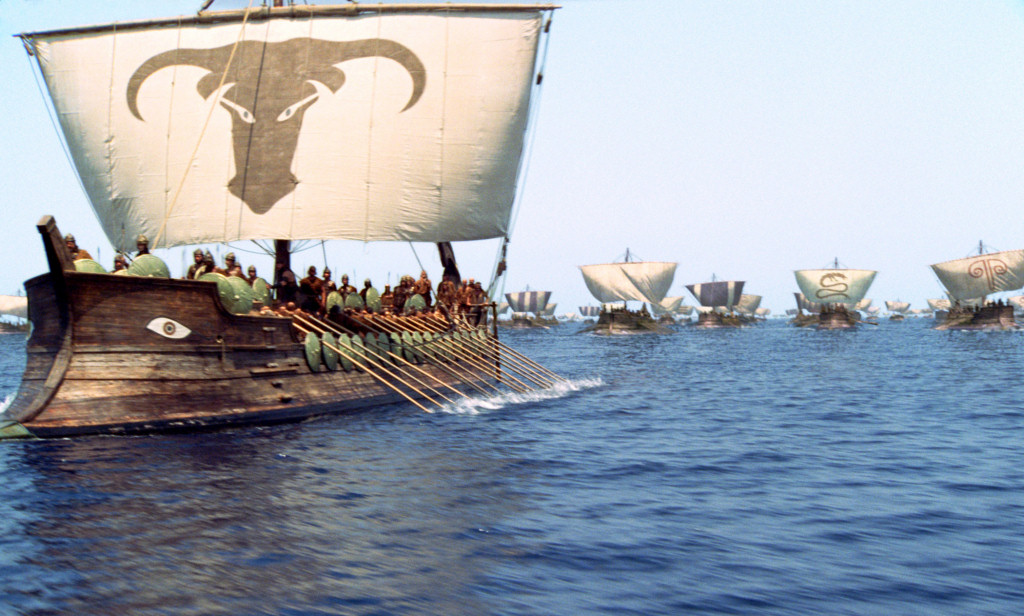
What you've told is the story of the Trojan War, which is a different thing. Some historical version of the Trojan War really happened (or more probably several smaller versions) - we have the pottery, the shipwrecks, and of course Troy itself. That's a different story to dramatize. For instance, I choose to think of Wolfgang Peterson's movie "Troy" as a dramatization of that historical context, which is the trick I use that allows me to LIKE it so much. But if you call your book 'an Iliad' and then remove the gods, you're lying to your audience.

But it isn't a mere choice of title that shows Baricco's boob-plumage in such drastic light. Just look at how many things are WRONG with that passage I quoted!

The gods DON'T, for instance, 'sanction' the outcome of the war - some of them do, and some of them don't. They aren't all-powerful puppet-masters: they're deeply, passionately INVESTED in the war.

And what about that business of them 'probably' being the aspect of the poem 'most extraneous to a modern sensibility'? If Baricco bothered to turn on the news, he'd see that a belief that the gods directly involve themselves in human affairs - and prompt all kinds of weird behavior - IS the 'modern sensibility.' Religious strife has made one-half of the world a hellhole for the last six years, and here in America, we have a religious zealot in the White House, claiming to get his war-mongering inspiration from his deity.

And what book can Baricco possibly be reading, if he thinks the actions of the gods in the Iliad DIFFUSE momentum? In every single instance where they appear, the gods in Homer do nothing but RATCHET UP the tension. They don't 'break up' the narrative - they're an integral part of it.

And how can Baricco say the gods aren't necessary from a storytelling point of view? If you 'sideline' them, you have to explain why some characters magically vanish in front of thousands of witnesses, why other characters heal overnight from serious wounds, etc.

Baricco is right that Homer usually provides a parallel human explanation for lots of god-acts. But he completely misses the point of WHY Homer does this, of the EFFECT it has: it's meant to show the reader that gods and humans are inextricably INTERTWINED in the war.

And what about that insane egotism of maintaining that removing the gods from the story 'retrieves' it, saves it from being 'obscurred'? I'm sure that 600 years of readers (not to mention all those rubes in the 6th century b.c.) would be alarmed to learn that all this time they've been reading a BAD BOOK. Thank Gawd Baricco came along to RECTIFY Homer!

The arrogance is as astounding as it is boneheaded.

I SHOULD have been sufficiently warned by that little disclaimer ... I shouldn't have gone on and read the book itself. But of course I did, and it's thumpingly dull. Not just because the gods are gone - nope, it's just a lifeless Cliffs Notes extended summary of the Iliad. He'd have BENEFITTED from a few narrative-obscurring gods.

Baricco says in his introduction that his Italian radio broadcast of "An Iliad" was a huge success. Says people sat and listened for hours.

The really bad news in all this? His next project is "Moby-Dick."

Monday, August 07, 2006

inner, outer beauty


Some of you have commented on the fact that in some of my posts, I refer to myself as 'ugly,' when even a casual glance at my photos reveals me to be what the kids these days (by which I mean MYSELF, ulp...) refer to as a 'stone cold hottie.'

The reason for this is spiritual.

I was, of course, referring to those miscellaneous dark inner islands of spiritual, existential ugliness that reside within us all, hottie or otherwise. St. Augustine had ripped abs.

johnson's little girls


Several well-wishers have responded already to this new endeavor of mine, and there's been a common thread running through them all: shaddup, ya freak.

Well, not that extreme, but something similar. People have felt overwhelmed (the word was used by four different people, so I'm taking it to be representative). This is, I guess, understandable; I sleep very little, and during every single last second of the time when I'm awake, I'm 'on.' No computer games. No lounging around 'recovering' from work. This tends to produce a lot of verbiage, and in the initial stages of this new thing I'm doing, I gave the prospective reader very little in the way of Sherpa-guiding.

So I'll now be making separate entries for separate subjects, whether it be several in one day or not. Today, at least right now, it's books and digressions. Later tonight, or tomorrow, it might be comics, or the newspaper, or magazines, or more books. I hope this makes things easier on both of us.

And, as usual, I whole-heartedly encourage all of you reading this to MAKE COMMENTS. Please, feel free to RESPOND to anything you read here.

Anyway, here's what I have to say about books:

Randall Woods' biography of Lyndon Johnson was a very odd reading experience last night - it's a weird Jekyll-and-Hyde kind of book. On the one hand, it's prodigiously researched, with page after page after page of meticulously documented sources from a staggering variety of sources. On the other hand, it's almost comically poorly written. Woods tries for a breezy, in-the-know tone and always ends up sounding like and over-informed moron. Like when, in the book's conclusion, Woods refers to Ralph Ellison as "the celebrated black intellectual" for all the world as if he doesn't even KNOW that Ellison wrote a rather famous novel. There are slang expressions in every other sentence, some of which are already stale, and despite the research on hand everywhere, you come away from the book feeling certain Johnson himself, had he read it, would have said "Sheeeeit, that boy don't know what he's talkin' about."

The defect is made all the more glaring because much more than half of Woods' book is concerned with Johnson as President, and I couldn't help thinking about Robert Caro's eventually forthcoming volume on that very subject. Thinking about that, and salivating, since Caro is every bit the researcher Woods is but matches his library-work with a prose style that's nothing short of magnificent. His previous two volumes on Johnson, great as they were, will almost certainly be left in the dust by his next one. True, we the faithful will have to wait until 2009 to read it, but surely, surely, we don't need another LBJ book until then?

As for Steve's own personal take on the man, well, my loyal fans among you (you know who you are) will be able to intuit it pretty accurately: he hated the Kennedys, and he hated them for the worst, most venal, ignominious reason: personal envy. They had money, he came from nothing. They had looks (feel free to Google him). The country loved them (that might have changed, if JFK had lived failed to stop Vietnam from happening, but he WOULD have stopped it, had said many times over that he would and when he would and how he would - the difference being that he didn't give a damn if Congress loved him, whereas Johnson craved the approval of every special-interest hawk he ever met). And there was something just a bit unseemly about the sheer SPEED with which he had himself sworn in, before JFK's body was even cold.

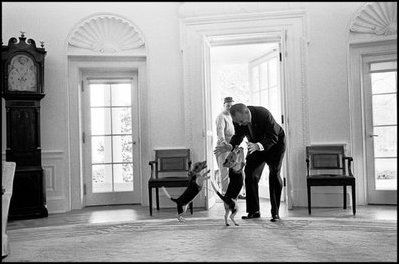
Mitigating factors? A BIG one, in the Stevezone: he adored his dogs, placed their welfare well above his own even when he as President ... and those dogs, as all the world knows, were beagles.

I've seen well upwards of three million photos of dogs in my life, and I tell you honestly: the one I'm including of Johnson and his girls is one of the purest distillations of the sheer, mutual JOY dog-lovers can feel I've ever seen. So you gotta give the man credit for that.

Sunday, August 06, 2006

dead friends, live friends, fried fish

29 July 2006

COMICS

Here are the latest cullings from my arch-nemesis Pepito's Pile of Poo:

Spectre #4 "Dead Again" by Will Pfeifer and Cliff Chiang

OK, well, this isn't really poo. It's good stuff, in its plodding way (and despite the fact that even the all-powerful Spectre looks GAY in a goatee)(and except for the fact that comic book writers shouldn't be allowed to toss off references to the Bible... the Spectre tells his human host that all attemts to punish sinners collectively instead of one at a time haven't worked, giving as one of his examples Sodom and Gomorrah, except that this is the main example of when it DID work, since we're explicitly told that the entire place is corrupt except for Lot and his family). So here's a tip of the sombrero to Pepito for sticking with the title long enough for it to get good.

Blue Beetle #5 "Secrets" by Keith Giffen, John Rodgers and guest artist Duncan Rouleau

OK, well, this isn't poo either - this title is in fact growing on me, despite my oft-repeated objection to this stupid, racist tactic DC employs, bumping off a third-string character and then stuffing a minority into the character's britches (the Hispanic Wildcat, yeesh, or the Black Firestorm, or, gawd help us, the Chinese Atom ... or, come to think of it, the Black Spectre) - it's patronizing and belittling not only to the minorities involved (and in case one of you Smartie Arties out there points out that my above reference to 'sombrero' in connection with Pepito could be considered belittling, I say this: shaddup. What are mere words when two people are as close as Pepito and I?).
And this is a perfect case - if HALF this amount of creativity had been poured into a book about Ted Kord, if Keith Giffen and the hugely talented Duncan Rouleau (www.manofaction.tv/rouleau/index.html) had PITCHED a Ted Kord/Blue Beetle book, SOMEBODY would have said 'Boy! What a GEM we had, without even knowing it!'
Even so, this comic is good, especially the teasing presence of one of my favorite DC characters, the Phantom Stranger, here played wonderfully for humor...

Captain America #20 "21st Century Kibbutz" by Ed Brubaker and Steve Epting

OK, this isn't entirely poo either - but geez, what happened to Steve Epting? This is some of the most plodding, leaden layout work in the history of plodding, leaden layout work, horribly murky stuff only slightly offset by Brubaker's sparkling characterization of Spitfire (and Cap's relationship with her, strongly, strongly arguing for a new Invaders book set in the 1940s)

Daredevil #87 - Pure Pepito Poo
JSA Classified # 14 - Pepito Poo

Civil War Frontline #4 "Embedded" - not poo, not exactly, but not exactly a barn-burner either.

Birds of Prey #96 "Headhunt" by Gail Simone and Paulo Sequeira

Just wonderful, as usual. This is one of the best comics being published.

New Avengers #22 "Disassembled" by Brian Michael Bendis and Leinial Yu

The cover shows Marvel's quintessential go-to Angry Black Man, Luke Cage, and sure enough, the issue hardly gets started before he's comparing the compulsive Registration Act with slavery, talking about the whole subject in a vital and entirely individual way that comics desperately need. He decides to sit at home and do nothing while sending his wife and baby to Canada - not entirely heroic (OK, not in any way heroic), but it opens permutations that need exploring.
My only gripe? Luke Cage is a wimp. According to my beloved, much-thumbed Official Handbook of the Marvel Universe, Power-man can only lift (press) a maximum of 2 tons. That means Spider-man can clip him like a toenail. That means DAREDEVIL could go ten rounds with him before (maybe) losing.
So I make a humble suggestion: let's hear sometime soon that the original experiment that created Power-man has a cascading effect, that it GROWS over time. Let's have some big-name writer tell us all that Luke Cage can now lift (press), say, 70 tons. That way, we're not getting all this great issue-commentary from the neighborhood papergirl. Just a thought.

BOOKS

Last night I read Margaret George's new novel "Helen of Troy" and was deeply disappointed - at myself, for ever hoping it wouldn't stink. George has achieved a particular style of prose that's breathless and dull at the same time, but a part of me was hoping that even she couldn't make the story of the Trojan War boring. Hoo boy, was I wrong! And I should have known better, since her last book managed to make the New Testament boring.
This is an especially touchy point for me since, as many of you know, I myself have written a novel of the Trojan War. It's called "Troy War," and no matter what else might be said about it, it sure as hell isn't boring. George owes Homer an apology.
(Any of you interested in reading "Troy War" need only drop me a line saying so - I can email you the first chapter to see if you like it)(And of course if any of you intent young things is an agent or publisher, you should know that I've never been the object of an international bidding war, and I kinda think I'd like to be)
Tonight I'll be reading Randall Woods' new biography of Lyndon Johnson, called "LBJ - Architect of American Ambition" ... which is ominous enough as it is, since a) I have a vague idea that American ambition existed before Johnson, thereby disqualifying him as its 'architect' and b) only asses resort to assonance. But we shall see. I'll report on it tomorrow.

MY DAY

A sad day overall, since I found out this morning that Iditarod champion Susan Butcher is dead. I'll leave it to others to express their sympathy for her friends and family - I'm feeling the keenest stab here for her beloved dogs, none of whom can ever be made to understand that she's not coming back. Grieving for dogs is a really hard thing to bear. Grieving dogs is even worse.

Fortunately, I have living friends too, and they can cheer me up even without trying. Much later in the day, I went to supper with my friend Sebastian - an utterly delicious meal at the Atlantic Fish Company (www.atlanticfish-restaurant.com). I ate a mountain of fried seafood, and I slipped out of my personal darkness by listening to Sebastian talk about his many woes, including the little velcro brace on his knee from the wrench he gave it last weekend skiing at Breckinridge. Fourteen doctors have told him it's just a mild sprain, but that didn't deter him at all from speculating over pan-seared scallops that it might be a) broken b) gangrenous and c) leprous.
There's nothing ailing about his conversational abilities, however, and one of the many interesting things he said involved this very blog. He was talking about writing nonfiction, and he mentioned that it can be difficult finding the right 'voice' for doing it. This got me thinking about how much artifice there is in all of this. Sebastian hinted that the reason I could pop an eyebrow and be dismissive of the subject is because I long ago inextricably meshed the way I talk with the 'voice' in which I write. Hinted that people who haven't been doing it as long need to make conscious choices about how they sound, about the PERSONA that comes through the written words.
I don't know. In preparation for launching this blog, I've been reading a great many blogs of other people, from the most famous to the deservedly obscure, and I don't detect a whole lot of voice-crafting. At one point in our talk, when we were discussing subject-matter on the blog,Sebastian said, "After all, isn't the main point of it all YOU?" To which I replied that I'd have to be a raving egomaniac to agree with that. To which he replied (in his best Wildean dinner salon way) "It's spelled 'blogger'" ...
I don't know. I don't want to be That Guy, endlessly navel-gazing for an audience composed of nobody. I'm intending to bring up subjects that will actually interest other people, and I'm trying to talk about them exactly the way I would if you all were buying me a meal somewhere. But Sebastian is usually right about things like this, so it's got me thinking ...

In any case, more tomorrow.

Another candid shot of me

My letter gets printed - & other stuff

Well, here we are, at long last, at bitterly, extravagantly long last, back with another exhibit of In the Penny Press!

I'd thought originally to make it the Biggest In the Penny Press EVAH, but then I considered the evils of ice-cream headaches and marriage vows and other forms of gluttonous over-indulgence, and I decided to re-start things more modestly. I won't try to cover ALL the periodicals I read during my enforced period of radio silence - Instead, I'll just concentrate on this week's gleanings and hope that this gets us back in the swing of things.

So let's start with the latest issue of Men's Journal, shall we? It had a number of interesting things in it, most especially a letter written by ME! Yes, they swallowed their medicine and printed my scolding about their 'greatest adventure writers' all being male, and I think better of them for it. This is the third letter of mine they've printed, although so far my Holy Grail eludes me ... if they print one of your questions (for their 'ask the experts' section), you get a year's subscription free. I've sent them many questions over the years, but they've never printed any of them ... probably because it just doesn't strike them as believable that somebody as sexy as I am doesn't already know all the answers. It's a burden.

But the issue also included some interesting things that WEREN'T written by me, foremost a delightful article by Tim Zimmerman on diving with Humboldt shrimp off the coast of Mexico (the article's title, 'It's Hard Out Here for a Shrimp' left me smiling). Humboldt shrimp grow to six feet and are unrepentantly vicious, tearing into each other and anything else that even remotely looks like food. At one point Zimmerman quotes a marine biologist (NOT George Costanza) who says Humboldt's might be as smart as dogs, their brain-body ratio is so large.
As I've said before, I'm the first person to acknowledge that this isn't exactly setting your intelligence-bar very high (Lucy has been particularly stupid all day today, in a stunning variety of ways), but it reminded me of long, wonderful days spent in Valparaiso with my friend Marta (she's not actually from Chile, hailing instead - in a roundabout way - from northern France)(not that this has any bearing on our story). Marta is also a manimal, the queen of cephalopods of all kinds (she calls them her 'jelly-bellies' ... she's a little weird, and you should see her face when she talks about the big ones, the four or five species of squid or octopus that grow big and develope sentience - the smile she smiles then is one of the prettiest I've ever seen (analogous, I imagine, to my own face when I talk about beagles, except that I'm leper-colony ugly and Marta is quite beautiful).
She maintains - and who am I to disagree? - that her bigger 'jelly-bellies' (most certainly including the Humboldt, several of which I met while swimming with her in beautiful Chilean waters) (naturally, she herself wasn't at all afraid ... Humboldts exist there by the thousands and could tear apart a sperm whale if they acted in concert, which of course they would if she asked it; myself, I was privately grateful that my friend Te' was also along during those swims, since he's the king of sharks ... which TEEM off the coast of western South America and might get frisky around a waterlogged dog-king out of his element) are considerably SMARTER than dogs - or than almost anything else on the planet, according to her. The problem, she's always maintained, is that their intelligence is so ALIEN - a fact that can be corroborated by every scientist who's ever worked with them in captivity. Octopus in labs routinely circumvent the most elaborately-designed locking mechanisms (Marta, of course, hates the fact that there ARE any cephalopods in labs ... although, curiously, she says THEY don't mind, says they're fairly laid-back about things like that).

The 'ask the experts' section I mentioned had some interesting bits too. One reader asks what animal kills the most humans every year, and the usual stats are run through: snakes way in the lead with around 125,000 deaths (yours truly not among them, and not from want of trying! Luckily, all us super-friends are immune to cyto-toxins), crocodiles 1000, tigers 700 (the article doesn't mention it, but 700 is also around the right number for deaths in Africa by LIONS, huge numbers of whom have learned to prey on displaced, refugee human populations), sharks, alligators, and bears in the low double-digits. The answer goes out of its way to mention an unexpected cause of about 11 deaths per year: the moose. Unexpected, that is, by everybody but ME, since my infamous moose-story revolves around an animal who would gladly have stomped me - and, more to the point, my maddening brood of beagles - into putty, if he'd been able to catch us.

A reader also asks about 'muscle-memory,' and I was surprised to read the answer basically poo-poo the whole idea that it even exists ... I can attest beyond a shadow of a doubt that it DOES, that some physical skills, when repeated often enough, get hard-wired in somehow and neither dim nor slow forever afterwards. I don't know a single person who HASN'T experienced something like that, right down to the old saw about riding a bike, so the magazine's answer is a bit puzzling.

The only other item of interest in the issue was a little bittersweet: in an article in which some testosterone-drunk boob KAYAKS around Venice, the Dorsoduro district is referred to as 'hip' ... which made me smile because that's where I lived during my time in Venice, and it certainly wasn't 'hip' then ... the world gets smaller and smaller, in every meaning of the word.

And the last item on our list for this evening comes from the latest Rolling Stone, a long, detailed, seemingly irrefutable piece by Robert Kennedy Jr. explaining all the hundreds and hundreds of 'irregularities' in the 2004 election results - essentially making the case that it was out-and-out stolen. The piece makes for thrilling, outraging reading, and it left me with two main reactions: first, in a make-believe America in which there's still an independent judiciary and the concept of justice, what would HAPPEN, if somehow election-fraud could be categorically proven? Could people be charged? Could Bush's presidency be, I don't know, revoked? Retroactively invalidated?

My second reaction was a slight tremor of dread, since I can just guess the response this piece will generate, and some of it will no doubt be dirty pool. Robert Kennedy Jr's father was JFK's campaign manager during the 1960 election, after all - an election that Kennedy won by 118,550 votes - in other words, HALF the number of alleged falsifications in 2004. At the time, Republicans (foremost among them the loser, Richard Nixon) were screaming that old Joe Kennedy and his machine had stolen the election for JFK, and although nothing was ever proven, I'm sure there'll be letter-writers who'll bring it up to mock Bobby's son for throwing stones at presidents who live in glass houses.

Saving Bo

For the last three Fridays, I've been paying special attention to an old, white-faced dog named Bo (I know it's wrong; I know I shouldn't play favorites) at the dog shelter. He's ten years old and pudgy, and in a second, walking into the place, he stands out: he's the one quietly laying on his donated blanket, not leaping at the cage or barking or whining. My young colleagues at the shelter told me that an older woman dropped him off with an air of impatience and said she could no longer care for him (he has no health problems), and during the two long walks we shared, I was able to piece together from him a bit more of the story, albeit in the patchy way dogs store their memories: two homes, the first actively abusive (he remembers being struck several times, including at least once with a closed fist), the second almost as bad, since it was benevolently neglectful for much LONGER - the entire rest of his life, in fact, since it was that woman who dropped him off in Hell to wait around to be executed.
He's the sweetest thing - a kind of beagle/bulldog/pug mix with beautiful piebald coloring and very alert ears. And he broke my heart a little more than the others, because he wasn't sitting quietly out of decorum ... he was sitting quietly out of a complete sense of abandoned hope. That sense retreated somewhat when he met me, when we got to go on walks together, sitting on the grass in the park, meeting strangers who coo'ed about how adorable he was, etc. - all the normal-dog stuff that existed almost nowhere in his memories. But each time, I had to bring him back to that awful room and lock him away, and each Friday I'd cry a little harder in the evening, being sure he'd be gone the following week. But last week he was still there - the staff kept changing his paperwork, or putting an 'adoption pending' sign over his cage, because they liked him just as much as I did. And I called foster homes and possible adopters, but nobody wants a ten year old mixed-breed dog.
One of the people I called was a woman I've known for many, many years - we first met when she was a customer of mine while I was working at dear, departed W.B. Clarke's over on Tremont St., where the man she eventually married was also a long-time customer of mine. Her name is Em (not short for Emily - short for Emmett... her father was a VERY stubborn man, and he'd wanted a boy and wasn't about to change the name), and her husband Jack was a genuine curmudgeon - the type who'd order food at a restaurant, have exactly what he'd ordered brought to him, loudly say he'd ordered something different, quietly feel bad about yelling at the waitress, and leave her a $50 tip. I always considered it a singular triumph whenever I recommended a book to him that he actually liked. Two years ago he died after a long, wasting cancer, and Em was at his side the entire time, just as she'd been at her father's side during HIS final illness, when she was little more than a girl. We've stayed in touch.

Anyway, last week I called her and brought up Bo. She immediately turned me down - she said she'd just buried one old coot, why on Earth would she want to take on another. But I kept at her, and finally I managed to get her to agree to come to the shelter and at least meet him, and all the other dogs (her brownstone is literally right around the corner). Today she came in, and I introduced her to Bo. He can be a bit shy, and she can be a bit testy, so I was prepared to be extra-solicitous of each, and I was as surprised as anybody when Bo left my side, walked over to her, sat right next to her leg, and gently started waving one foreleg in the air, like he was trying to reach up and shake her hand. He was looking her straight in the face, and she squatted down and took his offered paw and said, "Oh. Oh, hello there! Aren't you the perfect gentleman?"

I was stunned, so were all the watching staff. It was more than I'd ever let myself dream of hoping. I watched her face shed twenty, thirty, fifty years while she was patting his head and fondling his ears and saying things like "We'll have to walk some of those extra pounds off you."
Finally she stood up and just looked at me, and I walked over to her and whispered in her ear "Because you LOVE old coots. And they love you." And she started crying! This 80 year old Boston matron, right there in the shelter lobby! She asked me what his name was, and I said 'Bo.' Without missing a beat, she looked down at him (he still hadn't taken his eyes off her) and said, "Come along, Beauregard! We'll pick out some nice food for you." And she walked out, and Bo followed right at her shin, without collar or leash (one of the new people moved to get her to fill out forms, pay his adoption fee, etc, and we all practically body-blocked her ... if I know Em, sometime early next week she'll remember those formalities and go back in).

Usually, after the shelter, I'm heartbroken and crushed under the feeling of my own inadequacy. But I have to say: I'm not feeling that this evening! All dogs are good dogs, but of all the people at the shelter, Bo was the one who most DESERVED another shot at life, and sitting here this evening, I know his next five years are going to be the best five years of his life. That's a damn wonderful feeling. I know it does nothing for the other dogs still there, but I take my victories where I can find them.

Instead of laying curled up in bed with my arms wrapped around little Lucy, I'm going to put in a couple of cheering DVDs ('Master and Commander,' maybe? 'The Naked Gun'? 'Star Trek II'?) and raise a cup to Bo, who's sleeping peacefully tonight for the first time in weeks.

Talking and Grief

So let's start with the New York Review of Books, shall we? In the latest issue, Russell Baker reviews that new book 'Conversation: A History of a Declining Art.' In Steve's Guide to Book-Reviewing, attention is always given to reviews written by a) friends, b) enemies, or c) reviewers who have themselves written good books, or bad ones. Baker comes in firmly in category C, since his journalistic essays in the 70s are stellar, and since his 80s memoir, 'Growing Up,' is wonderfully involving and genuinely touching. In addition to this, I have it from several sources that Baker is himself a wonderful practitioner of the art of conversation, so of course I scrutinized the review (oh, who am I kidding? Yes, yes ... I scrutinized EVERY review! But some, like this one, I do for more personal reasons, in addition to just being ready to inform the ignorant masses).


As usual in cases like this, the reviewer is more entertaining than the book under review, but that's OK. Baker pretty much likes the book but pooh-poohs its Chicken-little style hand-wringing about the future of conversation. The book's author theorizes that the more mechanical devices abound that SUBSTITUTE for conversation, the less actual conversation there'll be. Baker points out that this is close to boobish - people will always like talking to each other. He also points out that an abundance of these conversation-substitution devices requires a lot of money ... I don't know how comfortable I am with that point, on a few levels, and not least because when I recently lived on Mark St (which is located in Jamaica Plain but only physically ... in reality, it's Sao Paolo, or Bogota, or Shanghai: poor, dirty, un-technological, and earth-shatteringly loud), I saw evidence that it might be true - people sat out talking because, in part, they had no alternative.

Still, I enjoyed Baker's attempts to analyze what consitutes good conversation. He comes up with some rules, and I thought I'd share them, just to get your own juices flowing on the subject:

"Both participants listen attentively to each other; neither tries to promote himself by pleasing the other; both are obviously enjoying an intellectual workout; neither spoils the evening's peaceable air by making a speech or letting disagreement flare into anger."

I won't belabor the point by mentioning that Sam Adams, Willam Howard Taft, and especially, toweringly, Erasmus were all masters of the art ...

Another master of the art was Ben Jonson, whose name crops up over in the New York Review of Books in a review Anne Barton writes about a bunch of new Shakespeare books. Her piece is mostly just a tedious rehash - we know very little about Shakespeare, how reliable are the clues seeded throughout the plays, etc. - so I wouldn't ordinarily have mentioned it, except that over in the latest issue of the New Republic, Rochelle Gurstein reviews two books about grief, Joan Didion's and Donald Hall's. She wins BIG Steve-points by giving a generous portion of her piece's opening to C.S. Lewis' shattering 'A Grief Observed,' about the death of his wife - a book that never fails to set tears in my eyes. Grief is a subject I know well, of course - not only because I've lost half a dozen intensely close human friendships (Mark, Sam, Sarah, my dear friend and teacher Gerry), but because I've tethered my heart's deepest love to a species that's short-lived, especially all my deepest loves, my valiant Huron, my poor Buford, my darling old friend Aidan, and of course my boy, my Beetle, who produced a grief worse than anything I've ever felt.

That's where Ben Jonson comes in ... naturally any discussion of grief brings him to mind, since he went against the 16th century grain and actually LOVED the little boy he lost in 1603. As I type this, I'm propped up on pillows in bed, utterly pinned by limply snoring dogs ... but in this case it doesn't matter, since the poem Jonson wrote about that loss is in my long-term memory, because it's so sadly, sweetly perfect:

Farewell, thou child of my right hand, and joy:
My sin was too much hope of thee, loved boy.
Seven years thou were lent to me, and I thee pay,
Exacted by thy fate, on the just day.
O, could I lose all father now! For why
Will man lament the state he should envy?
To have so soon 'scaped world's and flesh's rage,
And, if no other misery, yet age?
Rest in soft peace, and, asked, say here doth lie
Ben Jonson, his best piece of poetry.
For whose sake, henceforth, all his vows be such
As what he loves may never like too much.

But my, that's a bit of a downer as an ending to this installment, isn't it? And that's not right, since grief is just a by-product, as you know as well as I do: grief is just a by-product of being brave enough (or stupid enough, altough you know which one I say it is) to give hostages to time. To LOVE something that's mortal. And that love is pure joy (well, not pure! Just this morning, I stood on the sidewalk for ten minutes while Lucy had a heated argument with a fire hydrant)(sigh), the best - and happiest - part of being alive. Nothing gloomy about that! What fools and cowards would EVER let the by-product dissuade them from the whole and total reason for being here?

4 August 2006

4 August 2006

Books

It was raining this morning, so the Brattle bargain-carts were out of the question, which put the whole of Downtown Crossing out of the picture, since who wants to slime themselves with all that pimpin' and ho-in' and scorin' and dealin' if they don't have to?
But the Boston Book Annex yielded up its customary trove of treasures: I bought "Valdez is Coming" by Elmore Leonard, because every quick western I've read by him (or by Loren Estleman) has been just slam-bang wonderful, pitch-perfect exercises in plot and dialogue. Perfect fodder for the disdain of Cantabridgians (although I know at least one who was raised on cheap thrillers and Star Trek novels, and I suspect there are a good many others like him out there).

I bought Stephen Jay Gould's great non-trilogy trilogy, "Ever Since Darwin," "The Panda's Thumb," and "Hen's Teeth and Horse's Toes" - mainly because the three together make a great gift for somebody just becoming interested in reading natural history, but also because all three together cost me only one dollar (and I guess there was a third reason, namely that I used to run into Gould all the time in and about Boston and Cambridge, and as silly as it sounds, it still saddens me a little that I'll never do that again, that every time I think I see him up head in on the sidewalk, I'll be wrong ... and at the same time, here he is, right here in these three delightful, pedantic books, alive as long as books are). So I've got this set in fine condition, in case any of you out there want it.

I also surfed the karma at the Annex, as all habitual used bookstore-haunters must do. If you treat such idiosyncratic places the way you would Home Depot, just waddling in and EXPECTING to find that copy of Derrida you want at that moment, you'll never find anything that you want, EVER, because your presumption offends the gods of fate. But if you go in with vague semi-wants and a wide openness to what the karma of the place has to offer you, you'll almost always end up the richer for it.

Take today, for instance: somebody either died or gained citizenship, because the Annex had virtually the entire works of the German novelist H.H.Kirst, who's totally unknown now to American readers but who once enjoyed a string of best-sellers. The most famous of these was "The Night of the Generals," which was made into an uneven, enjoyable Peter O'Toole movie. Adn there was his entire life's work, spread out before me for 25 cents a pop! So I bought "The Night of the Generals" and "The 20th of July," which I'm assuming is about the famous attempt to blow up Hitler. The cover blurbs of these two books are loaded with superlatives - I'll report back on whether or not they involved blowjobs.

Comics

Slim pickings for me today (check back with me in a few days for Pepito's customary shrimp-trawling of crap): Justice League Unlimited #24, "Alone Among the Stars," and Fantastic Four #539, "Decisions Made." I like JLU for reasons that will seem strange to all you young people out there slavishly reading my every word, because you grew up reading comics where things CHANGE, where even long-established characters DIE, and most especially where writers are always trying to outdo each other in delving the depths of each character's psyche. Marvel comics have pretty much always been that way, but there's another way to tell a comics story - and nowadays, alas, it's relegated to comics 'for kids.' So I have to endure the sneer of the Androids Dungeon counter-monkey if I want to read a Justice League adventure that only lasts one issue, where Superman is always wholesome, Batman is always clever, Wonder Woman is always slightly aloof, and, in the case of this issue, the Martian Manhunter is always noble and a little melancholy.

Don't get me wrong: I love the complexity of modern comics. I wouldn't go back to the days when all comics were simple and uplifting, even though I miss those days. But in the meantime, I very much enjoy these 'kids' comics - especially when they're this well done.

The FF issue is, of course, a Civil War tie-in, and it's a perfect example of what I'm talking about. Ben Grimm finally comes to his senses and stops helping Iron Nazi and his gang to round up and imprison all his former friends who've gone underground. And when he's confronted with choosing between the two camps, he declares a plague on both their houses and ... wait for it ... announces that he's LEAVING THE COUNTRY.

An interesting, thought-provoking development, and I'll certainly tune in to the next chapter (although the writing on this one could have been better - I mean, is Puppet Master still controlling Iron Nazi and his crew? And if not, why not?), but it sure isn't 'and they all lived happily ever after.'

Periodicals

The only interesting thing in the new New Yorker is a piece about the merits - and lack thereof - to the late works of a handful of authors, written by ... astoundingly enough ... John Updike, an author whose books ALL read like late works, which, I guess, in a twisted way makes him a kind of expert. His piece is chock-full of Updikean bromides and clunky prose, but at least it gets you thinking about all the late-works by authors he doesn't mention. At least it got me thinking about such writers, from Horace to Wodehouse. If Updike ever learns how to be INTENTIONALLY interesting, there'll be no stopping him!

This month's issue of Asimov's had its requisite two interesting stories, although in this case (unlike in most cases), neither story is out-and-out good. In "Primates," David Levine theorizes on what would happen if a zoo's forensic analyst discovered sasquatch-type creatures. The story is pedestrian but interesting, although the climax and conclusion - relying on what is, apparently, the world's only perpetually self-recharging cell phone - only disappoint. And Ian Creasey's story "Silence in Florence" is even more frustrating - it centers on a serving-woman in the Pitti Palace who has a mute child and seeks a cure with the Duke's foreign visitors, whom she suspects are angels because they're constantly veiled and don't seem to eat or crap. Her trials and tribulations with her little girl and the palace doctor are moderately involving, I suppose, but the almost offhand mention that these visitors have been having spirited dinner-conversations with the Duke's other guest, frickin Galileo, REALLY made me wish Creasey had the fiction-sense Gawd gave a turnip and had written THAT story, instead of this comparatively lame little soap opera.

And that's it for periodicals at this writing - slim pickings as well. There's a new Men's Journal on the stands, but at first glance it appears to have very little of interest, so it'll have to wait. Likewise on the back burner is the upcoming Atlantic, which my friend Sebastian (a subscriber) tips me has an anti-JFK screed by Christopher Hitchens. So some good things will be coming to those of you who wait...