Showing posts with label chaucer. Show all posts

Saturday, November 05, 2011

The Book of the Duchess!


Our book today is the sad, sweet, utterly remarkable performance that is Geoffrey Chaucer's debut poem, "The Book of the Duchess," and I confess, it came back to my thoughts mainly because of all that recent chatter about Katherine Swynford, Chaucer's sister-in-law. She was the long-time mistress of John of Gaunt while he was married to Blanche of Lancaster, and she stayed his mistress while he was married to Constance of Castile, and then she finally became his wife in 1396. John of Gaunt was an extremely handsome young man with lithe muscles and an absolutely ruttish sex-drive. Women found him irresistible - even if he'd been a village blacksmith instead of the most powerful son of one of England's greatest kings, he'd still have fired the dreams of every woman (and, presumably, some men) in the village. From his teens on, he exercised this particular droit du seigneur whenever he fancied - but in his cousin Blanche he found mettle of an entirely refreshing kind. He married her when she was just a snippet of a young girl, and within weeks the combination of his deflowering prowess and his legendary generosity caused her to blossom into an absolutely gorgeous little termagant, a goblet-hurler of the first rank. She was wilful, headstrong, impossible - and irresistible. And John of Gaunt loved her.

They were married for almost ten years, and she was still in her beautiful early 20s when she contracted the plague, lingered for a heart-rippingly horrifying week, and finally died on 12 September 1368.

This was a young person's world - John of Gaunt himself was well shy of 30 when all this happened to him, and when he fell into a grief as stark and powerful as all the other emotions he felt, it was another twenty-something who became involved: the courtier Geoffrey Chaucer, hitherto untried poet. We'll never really know what was going on in his mind when he wrote the surreal dreamscape that is "The Book of the Duchess," but like all the most vivid dreams friends have told me about, it feels both obscure and incredibly pointed. In it, the bookish narrator is in despair over a lack of sleep, to the point where he's almost finding a very un-Christian polytheism attractive, because then there'd be a god specifically for his problem:
 Whan I had red this tale wel

And overlooked it everydel,

Me thoughte wonder if it were so,

For I had never herde speke er tho

Of no goddes that coude make

Men to slepe ne for to wake,

For I ne knewe never God but oon.

Flowing straight from his sleeplessness comes a dream in which a pretty little dog (in real life, the dog had a name - bestowed by her) leads our narrator to a grand hunt and a sorrowing young lord who talks about his lady love with an almost involuntary fervor:
Allas, myn herte is wonder wo

That I ne can decryven it!

Me lakketh bothe Englissh and wit

For to undo it at the fulle,

And eek my spirits be so dulle

So greet a thinge for to devyse.

I have no witte that can suffyse

To comprehende hir beautee;

But this moche dar I seyn, that she

Was whyte, rody, fressh, and lyvely hewed,

And every day hir beautee newed.

My lady, that is so fair and bright

The narrator is a bit dim-witted and eventually has to come right out and ask why his young companion seems so distraught. The answer he gets - and the rock-hard exchange that follows - is worthy of Shakespeare (or rather, Shakespeare is worthy of it):
"She is deed." "Nay!" "Yis, by my trouthe."

"Is that your los? By God, it is routhe."

The narrator quickly rouses from his dream, and maybe he wasn't so dim-witted after all: a powerful young man has been made to remember lovingly every great and trial-making detail of his lover, and then to admit baldly that she is dead. Who knows what kind-hearted purpose this might have served, in England 800 years ago?

The great poet and unjustly overlooked critic Bernard O'Donoghue has written that we do Chaucer a disservice when he arranged his Complete Works they way we always do, with a gigantic and problematic masterpiece like "The Canterbury Tales" placed first instead of last. It encourages readers to see glittering shorter works like "The Book of the Duchess" as addenda, almost not worth looking at. O'Donoghue is right as always, and I can further attest: you should read "The Book of the Duchess" on its own, in its own right, as a remarkably subtle psychological exercise that no other 25-year-old in the entire world of the 14th century could have written, an amazing performance that deserves a calm hour of your time.

Tuesday, August 16, 2011

Penguins on Parade: Chaucer Redux!


Some Penguin Classics seem like they must surely be an affront to the very nostrils of the Almighty, and surely if any Penguin Classics bids fair to seem so, it's any Penguin Classic that dares to supplant one of the most beloved Penguin Classics of all time.

Obviously, we're talking about Geoffrey Chaucer's 'Canterbury Tales' - and that's obvious before we ever get to editions or editors or talk of metrics, because surely there's no English classic so beloved, so central to a national psyche, as this marvellous, unending book? Scholars have been fretting about just how 'English' a book it is, but the picayune particulars of provenance mean comparatively little against the sheer weight of tradition. Breton? Gascony? Who but a bloodless specialist would bother to mention such things when we're talking about the very fons et origo of a country's literature, the unmistakable beginnings of the peculiar British penchant for character-driven organic plotting? Chaucer is the soil for Shakespeare, Jane Austen, Dickens, and an entire literary tradition of making us root for characters even while we mock them, the tradition of giving us real life just slightly, just ever so perfectly enhanced. If we're talking about a beloved classic, the starting exemplar of them all would be Chaucer's greatest work.

And if we're talking about beloved Penguin Classics, we could scarcely be talking about anything but Nevill Coghill's best-selling 1952 modernization, one of the very first Penguin Classics in our Parade of Penguins. Coghill's modernization of Chaucer was phenomenally popular as a radio program even before it became a Penguin Classic, and its subsequent sales virtually guaranteed that for thousands of students over the course of five decades, his version of Chaucer would be Chaucer. I've read his version countless times, in countless places across the face of the Earth, and it's always managed to charm me. Any other Penguin Classic version of Chaucer would seem certain, as noted, to give offense.

Any other version of Chaucer ... but not Chaucer himself.

That's always the problem I have with modern-English versions of Chaucer, however inventive or talented they are (it's this problem, I suspect, that's prevented me from giving critical attention to any of the various modernizations that have wafted over the plate since I've been back at bat - I count four of them, all frenziedly ignored by yours truly, despite the fact that one of them was actually very, very good): they aren't Chaucer, and no matter how good they are, they can't ever be as good as Chaucer. I treasured the Coghill all those years by hearing Coghill's clotted, adorable voice in my head when I read it - which was a very different thing from hearing Chaucer's high, nasal, immediately likeable twanging in my head. Modernizations imply by their very existence that the original Chaucer is somehow beyond the reach of most latter day readers, but that actually isn't the case. He's still our most accessible inaccessible writer: a weak of study and practice, and you're suddenly playing with English of an entirely different time.

With the possible exception of the Gawain poet, nobody in Chaucer's day played with that English better than he did. Don't get me wrong: I love the Coghill re-creation and I always will. He, too, has undeniable fun, as in the opening to the Cook's Tale:
 There was a prentice living in our town

Worked in the victualling trade, and he was brown,

Brown as a berry; spruce and short he stood,

As gallant as a goldfinch in the wood.

Black were his locks and combed with fetching skiill;

He danced so merrily, with such a will,

That he was known as Revelling Peterkin.

He was full of love, as full of sin

As hives are full of honey, and as sweet.

Lucky the wench that Peter chanced to meet.

At every wedding he would sing and hop,

And he preferred the tavern to the shop.

But in the fat, beautiful 2005 Penguin Classic update edited by the redoubtable Jill Mann, in addition to a humble Introduction and a whopping 300 pages of invaluable Notes, we get not the stained glass pattern, lovely as it is, but the glory of the merry sun itself:
A prentis whilom dwelled in oure citee,

And of a craft of vitaillers was he.

Gaillard he was a goldfinch in the shawe;

Broun as a berye, a propre short felawe,

With lokkes blake, ykembd ful festisly.

Dauncen he koude so wel and jolily

That he was cleped Perkin Revelour.

He was as ful of love and paramour

As is the hive ful of hony swete;

Wel was the wenche that with him mighte mete.

At every bridale wolde he singe and hoppe.

He loved bet the taverne than the shoppe,

For whan ther any riding was in Chepe,

Out of the shoppe thider wolde he lepe ...

Coghill's lines smile and wink at the reader. But Chaucer himself? He taps his toe, he claps his hands in time, he throws back his head and laughs with the sheer joy of making something so alive. An enterprising reader need only acclimate himself with Mann's Introduction, maybe roll the some lines around the sides of his mouth for practice, and then that living, laughing text, just as the author wrote it, is right there on the page. No matter how good intermediaries are, they could never be as good as this.

And so I am well-pleased. Fancy that.

Monday, March 07, 2011

Nine Lives (of the Poets): Chaucer!

[caption id="attachment_2405" align="alignleft" width="225" caption="not my copy - a lovely image I found online"][/caption]

Our book today is John Gardner's 1977 The Life and Times of Chaucer, the savory, spirited foray into biography by an author I consider to be one of the 20th century's greatest American novelists. Gardner is currently languishing in obscurity (except for Grendel, one of the only novels he wrote that's short enough to appeal to high school students and their teachers, and also a book fortuitously positioned to complement any teaching of 'Beowulf'), and that's a shame - he's responsible for one of the strongest and most interesting bodies of work in contemporary letters. In addition to his novels - each one of which received lavish, even obsessive, amounts of care and attention before it was even sent to the author's little coterie of 'first readers' - and which all contain more erudition, allusions, and just plain fooling around than are ever likely to be fully annotated - he also wrote lots of nonfiction. He wrote copious book reviews on deadline for ready money, and although he used to comment that his reviews were all raw reactions, not really considered assessments, a reading of the pieces in question (not so easy a thing to do, considering that they've never been collected in a book) disproves such modesty. He wrote longer essays and 'think pieces' for the those journals willing to wait for them. He wrote two great, rabble-rousing books on the art and craft of writing books (he held the view - unfashionable when he wrote it forty years ago and utterly unspeakable now - that novels should do more than wallow in knee-jerk cynicism and trenchcoat pornography, that they should attempt to grapple with ideas and ideals, most of all that they should aspire). He wrote an epic poem, God bless him. And he wrote this life of his beloved Chaucer.

And it caused a brief, forgotten controversy. A thoughtful writer caught many echoes in The Life and Times of Chaucer - echoes of earlier lives of the poet, echoes of earlier histories of the period, and that thoughtful writer made some diplomatic comments about fast-looming deadlines and inattentive line-editing. Then a few months later a thoughtless writer took those echoes and ran with them - making accusations of full-blown plagiarism, stopping just short of demanding the author's head on a pike outside the Tower of London, preferably with his face turned away from the direction of Iowa City.

Since there was nothing substantial in the accusations, nothing substantial came of them - Gardner's life of Chaucer has been reprinted a few times since it first appeared, and perhaps the full details of the incident will come to light when the first full-length scholarly biography of the man is finally written (a major publisher doing a pretty reprint-set of all his works would certainly go a long way toward reviving interest in that long-dormant biography). And in the meantime, the work defends itself.

This was never going to be a customary scholarly biography, as Gardner himself confesses at every opportunity throughout the book. But neither is it an unanchored flight of fantasy - a lifetime of reading and teaching Chaucer tilled the ground for this text, and several intensive months of research put solid bones underneath its flesh.

But this is still a novelist writing biography, and it shows, wonderfully. At every stage of Chaucer's life and times, Gardner dutifully lays out the facts as we know them (in pre-Internet days, 20 well-chosen books in your study would give you all those facts; what you subsequently did with them was up to you) - but then he's always compelled to sniff around those facts for the stories at which they sometimes only hint. He has that compulsion in common with other novelists turned 'amateur' historians (Louis Auchincloss' book on the court of Queen Victoria comes to mind, as does Nancy Mitford's book on Frederick the Great), and many a professional, accredited historian has profited from imitating it. It's an impulse as old as Herodotus, and it does Gardner a lot of credit even when he's enlisting it in the causes of some very, very bad people. His novels are full of sympathy for seedy underdogs, and that misguided humanity creeps into his biography as well, as when he tries his best to like Edward III's lying, thieving, thoroughly evil son Prince Lionel, one of the worst oppressors of Ireland in that island's oft-oppressed history:
When Chaucer first knew him, Prince Lionel had not yet left for Ireland. He was a mother's boy, certainly, though not necessarily in an ugly sense. He had no overwhelming love of athletics, but he was proud of his older brother, the Black Prince (King Edward's family, even in times of disagreement, was close), and in many respects Prince Lionel aped his elder brother: the extravagant dress, the arrogance, the flirtations, Lionel was shy, more comfortable with his mother and her intellectual friends than with his heroic father - more sure of his ground when talking about poetry or painting than when talking about war. He was a depressive, an evader. He ate too much, drank too much, avoided responsibility by humor or deep glooms. What Chaucer thought of him is impossible to say, except for this: he was loyal to King Edward's family all his life, as they were, for the most part, to each other (as all the chronicles remark). Whether or not Chaucer liked Prince Lionel, the problem is that like Queen Philippa, he could easily excuse him.

Likewise he does his best to exercise a novelist's power of understanding (in all of 20th century American fiction, I don't think there's a more understanding writer than Gardner - he used to sit in his chair and work at just that faculty, until it was as sharp as a paring knife) when trying to explain the phenomenon of Alice Perrers, the buck-toothed, stringy-haired, monstrously selfish, utterly deplorable mistress who played Grima Wormtongue to Edward's Theoden for the last decade of his life. Gardner isn't so chivalrous that he can make himself ignore what a miserable blot on humanity she was, but he can't help himself - he can't let it go at that:
And in any case, her freedom was limited: she loved her husband, as royal mistresses seem frequently to have done; yet, as any medieval subject should have done, she returned the king's love and did everything in her power to make him happy. To Chaucer, in short, she was a study for art - a brilliantly entertaining wit, a good, gentle woman, a thief, a harlot; she was, as a child of the poet's own merchant class, an astonishing success, and at the same time a woman dissatisfied, as firmly locked out of the aristocracy as Chaucer was himself - a kind of pet, a failure. Chaucer watched, forgiving and fascinated, hands behind his back, prepared to trade lightning fast puns with Dame Alice, discuss biblical exegesis or astronomy or, if she liked, perform some recent poem for the dazzling company she'd assembled for King Edward's amusement.

And his book is balanced with equally great pen-portraits of good people too - of course most of all our good poet, who rose to prominence in Edward's court, conducted a busy life of official duties, and forced himself, in long sleepless hours late at night, to bequeath to posterity some of the finest, most enjoyable poetry in the English language. Like Horace (but unlike Shakespeare and Milton, the two titans who were to follow), Chaucer thinks it natural to give his readers plenty of himself the man mixed in with his verses - we read him and see him, pouring over his books by the late-night taper, hurrying to appointments with the mighty, slyly provoking the laughter of powerful ladies at court. This portrait of Chaucer - a portrait as far beyond scurrying accusations of factual plagiarism as Heaven is beyond the reach of a cathedral spire - is Gardner's great gift to his readers, and it culminates in his singing final paragraph, a little gem of prose I'm fond of quoting:
When he finished he handed the quill to Lewis. He could see the boy's features clearly now, could see everything clearly, his "whole soul in his eyes" - another line out of some old poem, he thought sadly, and then, ironically, more sadly yet, "Farewell my bok and my devocioun!" Then in panic he realized, but only for an instant, that he was dead, falling violently toward Christ.

I long for the day when I'll read those words in a nice hefty Library of America volume - perhaps one

[caption id="attachment_2407" align="alignright" width="300" caption="lucy reading my copy"][/caption]

big volume for nonfiction, one big volume for the longer, major novels (and that epic poem), and one big volume for Grendel and the two writing-books. Maybe one day I'll see that volume - after all, Philip Roth's juvenilia has got to run out eventually, right?

Sunday, January 17, 2010

Penguins on Parade! Chaucer's Canterbury Tales!

Some Penguin Classics just feel like home, and Nevill Coghill’s 1951 edition of The Canterbury Tales is one of them. It has all the elements of the quintessential Classics design: the super-flexible binding, the endearingly cheap paper, the sturdy, unpretentious Introduction, the unassumingly great supporting notes, etc.

It’s been a big financial success for Penguin over the decades, probably in large part due to its handiness as a trot for students plowing their way through Chaucer’s Middle English for the first time. It’s been popular for centuries to ‘modernize’ Chaucer’s verse (still popular – Burton Raffel and Peter Ackroyd have both attempted it just in the last couple of years), smooth out the rhymes, replace the dead words with still-living ones, perhaps prune or simplify some of Chaucer’s omnipresent literary allusions. Devotees of Chaucer (in their ever-dwindling numbers, alas) will look upon such efforts with dismay – even a mini-masterpiece like Coghill’s will leave them saying “Why not just READ Chaucer instead?”

I should stress here that I’m not advocating the one over the other. There’s wit and playfulness and sheer skill in Chaucer’s verse that cannot be ‘translated’ into modern English, despite opinions to the contrary from no less a source than Dryden. Coghill gives us the cringe-inducingly pompous comments Dryden makes in a preface to one of his own modernizations:
I have translated some parts of his works, only that I might perpetuate his memory, or at least refresh it, amongst my countrymen. If I have altered him anywhere for the better, I must at the same time acknowledge, that I could have done nothing without him …


Coghill’s own preface is far more humble, and its enthusiasms are still fresh, even after all these decades:
In all literature there is nothing that touches or resembles the Prologue. It is the concise portrait of an entire nation, high and low, old and young, male and female, lay and clerical, learned and ignorant, rogue and righteous, land and sea, town and country, but without extremes. Apart from that stunning clarity, touched with nuance, of the characters presented, the most noticeable thing about them is their normality. They are the perennial progeny of men and women. Sharply individual, together they make a party.

Chaucer began work in earnest on the Tales around 1386, with the grand plan apparently being that each of his group of pilgrims to the shrine of Thomas Beckett in Canterbury would tell two tales on the way there and two tales on the way back. Those tales, plus all the bridging segments (and it’s doubtful the poet could have resisted a showpiece about Canterbury itself, or a bravura leave-taking), would have made a truly enormous work, but Chaucer never came close to finishing it. What we have is a precious handful of tales (still too many, in the opinion of countless high school students forced to plod through them instead of reading what they like) that constitute (Dryden’s quote again) “God’s plenty.” Few things in literature are as diverting as Chaucer’s verse; almost nothing feels so much like an old friend as The Canterbury Tales.

Coghill’s modern English version has helped countless of those unwilling high schoolers to at least know what they’re reading, although with a little effort they could have read the author directly. Like I said, something is inevitably lost in the translation, although Coghill’s version at least trumps most other modernizations in being readable and enjoyable in its own right. Take a little bit from the Merchant’s Tale:
When God created Adam, flesh and bone,
And saw him belly-naked and alone,
He of His endless goodness thus began:
‘Let us now make a help-meet for this man
Like to himself.’ And He created Eve.

That’s friendly, fluid stuff – although who isn’t pleased more by poet himself:
The hye god, whan he hadde Adam maked,
And saugh him al alone, bely-naked,
God in his grete goodness seyde than,
‘Lat us now make an help un-to this man
Lyk to him-self;’ and thanne he made him Eve.

And again in this Penguin – as in so many other Penguins – one of the main draws besides the canonical work being presented is the critical apparatus presented alongside it. As we’ll see over and over in our Parade of Penguins, it’s this critical apparatus – the Introductions and Notes – that often provides the perfect finishing touch to the whole package. Coghill in this case provides ample but not intrusive notes to elaborate some of the near-endless allusions and name-dropping in which Chaucer indulges, and Coghill’s clarifications are often both succinct and tongue-in-cheek, as in this note about the use of images:
The Doctor worked by what Chaucer calls ‘Natural Magic’ (here translated as ‘the powers of favourable planets’). Small images or effigies, moulded, probably in wax, to represent the patient, or other sorts of talisman or text, would be hung on the patient at hours when his horoscope indicated that the planets were favourably placed for him, in relation to the zodiac; at such hours (as if by what we call ‘cosmic rays’) virtue was believed to descend into these images, etc., and thence to the patient, with healing effect. Faith is a great healer.

(Indeed it is, although it can’t cure a closed mind – this particular note has been removed from most later reprints of this volume – perhaps for offending some students, or their parents?)

I’ve lost track of how many times I’ve read The Canterbury Tales, or in how many countries and weathers and moods, but I know many of those times the Tales I was reading were Coghill’s version of Chaucer rather than Chaucer himself (little Penguin paperbacks being exceedingly easy to pack and remarkably durable against all manner of traveler’s mishap) – it’s a testament to Coghill’s great, humble achievement here that I was almost equally happy in either case.

Saturday, May 16, 2009

Troilus and Criseyde!


Our book today is Geoffrey Chaucer's 1380s masterpiece, the magnificent long poem Troilus and Criseyde. The semi-mythical 'common reader' of today will not have read this great book, although that same reader will almost certainly have been forced to read segments of Chaucer's The Canterbury Tales at some point in school. Unlike that reading-list book, Troilus and Criseyde is complete right down to the last fine detail.

It's odd that young people don't read this book, because it's one of the most moving (and unsparingly accurate) depictions of what it's like to be young and passionately, hopelessly tormented by love. While he was composing the poem, Chaucer's life was crowded to the rafters with responsibilities - he was a fixture at Court, Comptroller of Petty Customs (a silly-sounding name to us now, but oh, the money that flowed past your fingertips when you held such a post), Justice of the Peace for Kent, member of Parliament for Kent ... most men in such dizzying demand barely had time to bolt down a bit of cold mutton every day, but Chaucer had the knack for work. It was a refuge for him, a welcome that greeted him every time he closed his study door. People who embrace their writing rather than fight it often find themselves feeling this way; Chaucer wasn't the first to feel it (the Venerable Bede used to hum in sheer happiness when the writing was going well), and he had some pretty good external motivation - he was a favorite with the Court readers, especially the ladies (he'd been stunningly good-looking in his twenties and retained a lot of it even now, in his forties), and especially the queen.


(and just maybe, when he thought about the hectic pace of his life, he began to realize that he could never go back to the headstrong and happy love-stung antics of his teens and early twenties ... maybe that's exactly where Troilus and Criseyde comes from)

By the time he wrote Troilus and Criseyde, he'd been to Italy, absorbed the burgeoning literary scene there, and was quite openly chaffing at the traditional limitations of English letters. He was already a well-known author (for The Book of the Duchess) and translator (for his version of Roman de la Rose, among many other things), and he was impatient, as only people lit from inside by true writing talent can be. And so he looked to Homeric pastiche.

He didn't know it as that, of course; Homer was virtually unknown in the West at the time. Chaucer got his Troy materials from two slight but entertaining purportedly ancient accounts, one by Dares and one by Dictys (it's a shame Penguin hasn't seen fit to publish these in one fat volume with lots of notes - they could call it Chaucer's Homer and market it to schools - I'd buy one), plus a French poet named Benoit who wrote a long and boring Roman de Troye, plus a Sicilian writer named Guido who wrote another Historia Trojana. And then there was Chaucer's biggest source: Boccaccio, whose Il Filostrato is echoed everywhere in Troilus and Criseyde, often line for line.


Critics over the centuries have come up with lots of reasons why Chaucer never so much as mentions Boccaccio's name (and the omission doesn't just happen here - he uses Boccaccio just as heavily in The Canterbury Tales, also without a nod), but to my mind, the best summary of the state of affairs in Troilus and Criseyde comes from the great Chaucer scholar Don Howard:

When Boccaccio wrote Il Filostrato he was, we should remember, barely over twenty, an unknown poet in Naples, where he had been raised, trying to attract the attention of the Angevin court. Chaucer, on the other hand, had a courtly education and extensive exposure to courtly ways, and he understood the conventions of courtly culture quite well enough to see that Boccaccio had them wrong. This was probably why he never mentioned Boccaccio by name; there may have been other reasons, but this was reason enough.
Whatever the reason, Chaucer took that plump twenty-year-old's basic story, swirled it around in Dares and Dictys and Benoit and Guido, and then did what, reading him, you realize he so often did: made something stronger, more remarkable, and just plain better than all of it. Filostrato is a fairly conventional little evocation of courtly love; Troilus and Criseyde is a bursting, singing encyclopedia of humanity, the full realization of the character-heavy drama that's only hinted at in what we have of The Canterbury Tales, and the most thorough anatomy of love since Ovid finished his Ars amatoria. If you're reading along chronologically in Western literature, you eventually come across Chaucer's Troilus and Criseyde and suddenly realize it'd been 2000 years since the last time somebody wrote about actual people.

But here they are, in all their three-dimensional glory: there's pretty young Criseyde, even prettier young Troilus, and older, wiser Pandarus trying to bring them together in the midst of the Trojan War. The young lovers aren't the brightest bulbs in the chandelier (although Troilus is smart enough to care how convincingly he acts smitten, and Criseyde is smart enough not to want anybody to know that she knows how pretty she is), but this is more than compensated for by the incredible invention that is Pandarus, a seasoned loser in love who's secretly so proud of being in a position to dispense love-wisdom that willfully blinds himself to the damage his advice is doing. The lovers flirt, agonize, meet, fornicate, sleep it off, fornicate lots and lots more (Chaucer had an audience to entertain, after all) - then they're parted, first by the politics of war and then, amazingly, by Criseyde's 'She's Just Not That Into You' change of heart when she decides to be infatuated with the Greek warrior Diomede instead.


(This last was such an enormous departure from the forms and expectations of courtly love - a woman deserting one passionate himbo for another! trading up to the winning side! scandalous! - that the ladies all pretended to be outraged, and the Queen 'ordered' the grinning poet to write an entire work on the worthiness of women, as an apology)

It's all spectacularly, subversively good, and it's almost heartbreaking that most modern-day readers would never dream of looking at it. With poets I can almost understand this (Pound wasn't the only one to dolorously acknowledge that the more you read Chaucer, the more you see how truly great he is), but what's everybody else's excuse?

Part of the problem is that Chaucer sits right on the translation divide: if you study a thin manual for a few weeks and squint a bit while you're turning the pages, you can read him today just as he put the words on the page eight hundred years ago - but it's an effort. And scholars and teachers, proud of their own efforts to master Chaucer's English, have perhaps too stubbornly insisted that everybody do the same work - often even to the point of preserving Chaucer's exact spelling and syntax, something we certainly don't do for Shakespeare, who wrote centuries later than Chaucer. It's confusing, and it can be frustrating for those of us who, while rejoicing in Chaucer's original form, very much want him to have modern readers.

Take a quick example, one of the many times we see into Troilus' private anguish over Criseyde:

Wher is myn owene lady lief and deere?
Wer is hire white brest? Wher is it, where?
Wher ben hire armes and hire eyen cleeere,
That yesternyght this tyme with me were?
Now may I wepe allone many a teere,
And graspe aboute I may, but in this place,
Save a pilowe, I fynde naught t'enbrace.

(and that's a fairly painless choice, needing, as it does, virtually no trots on vocabulary)

That halts a modern reader right to the point of dropping the book altogether, or past that point - and so needlessly! With all due apologies to those professors and poetical sticklers, fully four-fifths of the fourteenth century anachronisms so lovingly preserved in that passage - and all through Troilus and Criseyde - preserve absolutely nothing worth preserving at the cost of even one potential reader, much less almost all of them.

Modern 'translations' often aren't much help either. Take the one by Philip Krapp from 1932:

O where is now my lovely lady dear?
Where are her breasts so white, O where, O where?
Where are her arms and where her eyes so clear,
Which yesternight were solace to my care?
Now I must weep alone in dark despair,
And blindly grope, but nothing in this place,
Except a pillow, find I to embrace!


Yeesh. And the estimable Neville Coghill's 1971 version isn't much better:

Where is my own, my lady loved and dear?
And where is her white breast? Where is it? Where?
Where are her arms? And where her eyes so clear,
That this time yesternight were with me here?
Now I may weep alone, full many a tear!
And wildly grasp about, but in her place
I only find a pillow to embrace.
You see the problem. In attempting to bring Chaucer alive to modern readers, both Krapp and Coghill mostly manage to hit him in the head with their shovels and then proceed to bury his still-twitching corpse. The solution is as simple to see as it is to obtain: what's needed is for a first-rate poet to simply and clearly comb Chaucer's diction into modernity, without getting in his way with where, O where's and the like. Even through the antique spellings, you can see immediately from that first excerpt that Chaucer was exulting in a rhythm his later adapters either don't hear or can't figure out how to match; we can only hope somebody will come along who hears and understands.

I hope it happens soon, because every year fewer and fewer passionate young people - who would learn from and love Troilus and Criseyde more than anybody - bother to read it. When I tell such young people that their various school educations have given them no real idea of the strange, vital, utterly living things the 'classics' of Western literature are, Troilus and Criseyde is always on the shortlist of such classics I have in mind. I just re-read it yesternight.

Thursday, October 05, 2006

Open forum: re-reading!


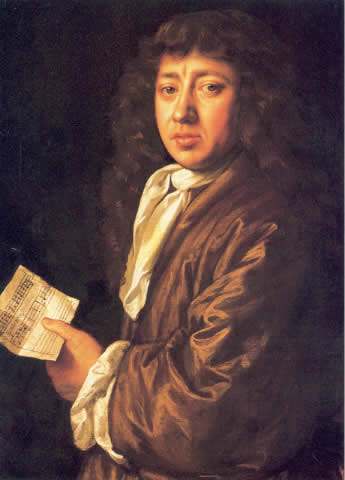
The other night, in the midst of my ceaseless toil blogging on behalf of all you ungrateful little guttersnipes, I took a brief half-hour's respite by dipping into Pepys.

The half hour grew to two hours before I even thought to look up at the clock, so subsumed was I in the hustling world of Pepys, in the squirrel-rushings of his thoughts, in the marvelous portrait he paints of his whole world, shifting with his inimitable idiosyncrasy from the most mundane details of daily life to the most important goings-on of court and country ... and all of it told with that chatty, totally human voice. Two hours fled like a snatch of dream.

And it got me wondering, as I so often do, about the whole act of re-reading books. A sizeable portion of all the reading I do is re-reading, and yet I've never been able to quite define what it is we DO when we re-read a book.

Some books are so complex and crammed that re-reading is virtually a necessary componant of enjoying them at all. Who entirely grasps Tale of Genji the first time through, or Vanity Fair, or Gravity's Rainbow? And certainly five or ten years between readings brings a very different US to the books we read once before - allusions that went over our heads the first time are now caught and savored.

But what about those books we re-read not only once but repeatedly? Further understanding a book you read once before makes perfect sense ... but how to explain re-reading a book you not only understand completely but quite often know virtually by heart? What's going on, when we're doing that?

I have a regular stable of authors I revisit in this way. Pepys. Chaucer. Ariosto. Kipling. Arthur Conan Doyle. Wodehouse. Herodotus. And of course more than any of them Horace. Almost every serious reader I've ever met has a comparable list, often broken up into specific needs, like we were talking about medicines in a cabinet ('so and so when I'm depressed, so and so when I need to forget the world,' etc).

So I'm opening the question to the assembled hordes of stevereads fans, especially the die-hard readers out there! How do YOU explain this thing we all do, this thing that after enough times can't really be called 'reading' in the normal sense of the word? Is it the intersection of reading and religion, or is it just creepy and compulsive?

And, of course: give me YOUR perennial authors/books. I know some for some of you but not all for all, so feel free to list 'em all!

Wednesday, September 27, 2006

in the penny press!


The trifecta of book review organs - the New York Review of Books, the London Review of Books, and of course the mighty Times Literary Supplement - are guaranteed to provide a solid hour of the highest quality mental stimulation when sat down and read in unison.

The highlight of the New York Review this time around, at least for me, was Joan Didion's forensic examination of Dick Cheney. She strikes an absolutely priceless tone (unintentionally, I assume), mandarin befuddlement threaded all the way through with deep distaste ... like a society doyenne hearing a loud, wet crunching sound and finding an unknown creature on the bottom of her shoe, half-crushed but still attempting to squirt venom.

She can't riddle him out into the light, of course. Morgoth is gone, but even his lieutenant Suaron is still largely incomprehensible to the minds of Men.

But in the process of her bafflement, she runs through the usual story with a wonderful, icey precision that's a joy to read.

The London Review of Books likewise had a highlight for me: Jerry Fodor's review of Michael Frayn's "The Human Touch: Our Part in the Creation of a Universe." It's a pan, but the peculiar combination of steep intellect and po-faced humor Fodor uses are more reminiscent of the TLS than the LRB:

As the blurb on the front of Frayn's book puts it:

'What would [the] universe be like if we were not here to say something about it? Would there still be numbers, if there were no one to count them? Or scientific laws, if there were no words or numbers in which to express them? Would the universe even be vast, without the very fact of our tininess and insignificance to give it scale?'

Why, yes, it would. (Frayne often treats rhetorical questions as though they were philosophical arguments; it's a bad tactic.) The universe would still be just the size it is even if there weren't astronomers to measure it. And water would still be H2O even if there weren't chemists to analyse it. And water would still run downhill, and there would still be hills for it to run down, even if none of us were here to take note of its doing so. You can't pin the natural order on me, Frayn; I'm not guilty. I didn't make the universe; I wasn't even there at the time.

But it's the TLS that really comes through, as always. For instance, Oliver Taplin reviews two new books on ancient Greece, and in the course of doing so, he lets his favorite editorial hobbyhorse out into its paddock:

My philhellenism outweighs my admiration for the BM (great though that is), so I shall make up for these omissions. The ultimate legal claim of the Museum, which bought the goods from Lord Elgin, sheltering behind an Act of Parliament, is a fortiori even dodgier than his claim to legality in dismantling large stretches of ancient masonry to get at the frieze and other sculptures. It is a tasty irony that the piranhas of the press cluster round the Getty and other newer Museums who are being hounded to return antiquities that were taken after a certain legalistic date, while the great museums of Europe complacently give pride of place to all the booty that was expropriated before the barrier came down. But there is a crucial and underappreciated point about the Parthenon Marbles, regardless of legal questions. Elgin hacked them off less than twenty years before the beginning of the War of Independence which would liberate the core of Greece from centuries of Ottoman rule. Even as the swell of Hellenism was rising throughout Europe, he took advantage of a declining regime that cared nothing for the heritage of Greece; he snatched them from the outstretching hand of freedom.

Sorry - no sale. The 'outstretching hand of freedom' in this case cared no more about Hellenistic treasures than the lazy old Ottomans did. Lord Elgin almost certainly SPARED the Parthenon friezes from destruction. And even if he hadn't, he still did the right thing.

The British Museum has nothing to apologize for. It spends millions every year on expert restoration, meticulous upkeep, and state of the art climate control for all of its archeological treasures. England's breathtaking cathedrals are guarded and upkept by a veritable army of caretakers. The same thing is true even moreso in the United States.

As far as I'm concerned, ANY country that can't say the same should cough up its art treasures. Those treasures, cultural or otherwise, belong to the whole world. Young children yet unborn deserve to experience root wonder-shock of looking up at the Great Pyramids. Hungrily sensitive artists who're only babies now deserve to stand in silence before every Vermeer there is.

Been to the Hermitage lately? Seen what the rampant smog and pollution (not to mention teenagers with spray-cans) have done to the Acropolis? Anybody know until how recently docents were allowed to smoke in the Sistine Chapel?

Send the big, Atlas-class medivac platform-helicopters to every corner of the globe, as far as I'm concerned. Pluck up every great building and work of art currently being dripped on or cluttered with McDonalds wrappers and deposit them in carefully manicured grounds in Japan, Switzerland, England, and the United States. If Egypt objects to the resulting big parking lot at Gizah, tell them they should have thought of that when they were looking the other way while kids on mopeds took runs half-way up the sides of the pyramids, or while drunken wedding parties were allowed to cavort deep inside them. Then tell them to shaddup. Tell you what - when you go to canopied, climate-controlled Sphinx Pavillion in the gorgeous country of Kent, you can have free admission with proof of your Egyptian citizenship.

Elsewhere in the issue, Eric Griffiths turns in a wonderful review of the new Royal Shakespeare production of 'Troilus and Cressida' - which, as many of you may know, is one of Stevereads favorite Shakespeare plays. At some point, every halfway creative type who's been heavily influenced by Homer feels the urge to take a whack at the master's material, and this is Shakespeare's (serving double duty as a reference to Chaucer as well, although it's best not to explicitly compare the two; great as Shakespeare is, he's no match for Chaucer when they're both working the same material at the height of their respective powers)(arguers feel free to Comment ... and of course any of you who feel like piping up in defense of the artistic merits of Troy War are welcome to do so)

Griffiths largely dislikes the new RSC production, but he has marvellous things to say about the play itself and its dynamics - all good stuff, like this:

Of all Shakespeare's works, 'Troilus and Cressida' is set furthest back in time, while it simultaneously bristles with idioms jazzy in their day.

Of course, with all this brilliance comes some trepidation as well. It turns out that virtually all of this edition's fiction reviews were devoted to historical fiction. This is where the ice water came into the afternoon's reading, because, as some of you know, I myself am that most improbable of beings, a historical novelist. And I can tell you this: we live in terror of two things: 1) some closeted, micro-obsessive expert calling us on some fact in our books ('it wasn't sunny on the 14th of May 1202'), and 2) the TLS (let's be honest: the only review organ that realistically could) taking us out behind the woodshed. Even seeing this happen to others produces not the faintest hint of schadenfruede.

One of the novels in question, C. J. Sansom's Sovereign, just barely gets a pass. It's a Tudor novel (again, a close call - I myself have written a Tudor novel), and although the reviewer, Michael Caines, calls it 'less demanding' than such Tudor-fiction classics as The Man on a Donkey or The Blanket of the Dark, he largely absolves it of blame, albeit grudgingly:

Sovereign is sore afflicted with outbreaks of humourless, barking laughter, sighs, frowns, raised eyebrows, and the setting of lips. It has a bad case of 'Jesu!' - the expletive for all occasions - and at least one impassioned cry of 'Fie!'. These are things to make the reader smile and read on.

Two of the other specimens under review are of particular interest to stevereads: Michael Cox's The Meaning of Night because we largely kinda-sorta liked it, and Diane Setterfield's The Thirteenth Tale because, as some of you may have noticed, Barnes & Noble has decided, for reasons known best to themselves, to strip down to its skivvies and hop into bed with this book - huge, eye-catching displays at the front of every B&N in the whole country, huge amounts of money spent to make this author the next Dan Brown (all based, one likes to believe, on one buyer's joyful reaction to the book, somewhere way back along the chain of evidence). Sheer human nature prompts a body to want the TLS to savage the book.

Sadly, the dice fall otherwise. Judith Flanders (a psuedonymn) doesn't exactly savage The Meaning of Night but she doesn't leave you any reason to go out and buy it either:

The Victorian elements are intensively researched - there are references to Evan's Supper Rooms, the Toxophilite Society in Regent's Park, mudlarks scavenging in the Thames - but throughout there is a sense of a list grimly being got through, each item ticked off and out of the way. Glyver does nothing at Evans's; he visits it simply so that it can be described.

On the other hand, Setterfield's book gets a sanctioned pass: "Setterfield is singularly successful in her aims." So those of us wanting to hate The Thirteenth Tale must hold our breath until we've actually read the book (I have, and I largely share the verdict of my esteemed colleague The Mama Chan: it's hyperventilated boilerplate, not entirely without literary merit but two fat fingers' worth away from actually being good).

Our final item? Druin Burch's good-cop/bad-cop review of David Wooton's Bad Medicine and Katrina Firik's Brain Matters.

Burch loves the first, and it quickly becomes apparent that he's going to USE that love to jump up and down on Firlik's book, in absolutely delightful fashion:

Katrina Firlik's Brain Matters makes a stimulating change from all this compelling originality and provocative thoughtfulness. If you have ever suspected that pushing a finger into the soft goo of another person's brain leads to fresh and startling conclusions about human life, this is the book to disillusion you. Firlik is full of breathless enthusiasm; so full of it, unfortunately, that other qualities are kept at bay. She wants to tell you about her life as a neurosurgeon, and her best point is her infectious eagerness. The style is reminiscent of a teenage essay on 'what I did during my neurosurgical training', and the insights are at roughly the same level. She reveals that sick patients are people too, 'not just a collection of clinical data'; she lets us into the fact that 'life is not a dress rehearsal', and that 'you can't judge a person's intelligence by his outward appearance'.

Initially, it's hard to pin down exactly why her thoughtless and cliched anecdotes are so insufferable. Blind adoration is appealing in its way, but Frilik seems to worship even the most stupid and destructive aspects of the American hospital system. Teaching by humiliation, pointlessly long hours and the infliction of needless operations on damaged patients are all held up for praise. But the source of the real chill gradually becomes apparent. It is Frilik's conviction of her own superiority, and her misguided overestimation of her own dull, workplace thoughts. At the end of 'Brain Matters' she invites us to marvel with her at the superlative intelligence of a group of her colleagues. 'What might be accomplished,' she asked, awed at the qualities of people like herself, 'if the same group lent their collective brain power to, say, improving public health education or homeland security?' Both books demonstrate the dangers of doctors who think too much of themselves.

Hee.

And that's all we have for you at this moment in the penny press ... sure, there's news tonight of a marauding bobcat out in Grafton - and the consequent bobbling-newshead paundering about the THREAT TO OUR SUBURBS, but nevertheless: reading-wise, that's all you need to worry about.