Showing posts with label new york review of books. Show all posts

Saturday, November 05, 2011

Sheer Virtuosity in the Penny Press!


Granted, the Penny Press might let me down from time to time - but the main reason I love it is on full display at the newsstand this week. Clever people writing prose on deadline can be (present company of course excepted) moved to write the damndest things, and if you root through a huge swath of periodicals every week the way I do, you're therefore of a certainty going to encounter your fair share of crapola. At which point, if you're an old fan of the Penny Press as I am, you'll do what comes naturally: you'll fire off a peppery letter to the editor, tear out and archive the pieces that move you favorably or otherwise (always only a small fraction of the whole - most deadline writers being alarmingly forgettable), and move on. After all - infamously - magazines like The New Yorker tend to just keep coming, so if you pause for even a moment, you'll be pulled to the dirt like an impala in the middle of a lion pride.

So you keep reading, hoping for the best. And the last two decades of the 20th century have spilled into the first two decades of the 21st an amazing inheritance: we live in an age of great literary journalists, people who routinely do fantastic work even though they're working on deadline for money.

Take last week's New Yorker - it featured a fantastic, sumptuously detailed review by Daniel Mendelsohn of Stephen Mitchell's new translation of Homer's Iliad, complete with shrewd insights into both the poem's history and the art of translation in general. Or take The New York Review of Books, in which Gary Wills rounds off a fascinating little chunk of his smart new book Verdi's Shakespeare and makes a fine short essay out of it - an essay that's frustratingly short on Verdi but delightfully long on Shakespeare:

There are many signs of Shakespeare's crafting roles for particular boys. In three plays of the late 1590s, A Midsummer Night's Dream, Much Ado About Nothing, and As You Like It, he had one boy who was short and dark and another who was tall and fair. The contrast was so striking that Shakespeare made his lines play on it. He began with particular boys' talents, and then wrote his scenes around them. He must have had a boy from Wales when he wrote I Henry IV, in which a woman speaks and sings in Welsh. One of the experienced boys, in As You Like It, was good enough for Shakespeare to create his second-longest woman's role for him - Rosalind (686 lines).

True, even the NYRB has its idiosyncracies (NO idea how long they're going to let Robert Darnton keep writing about his cockeyed and retrograde dream of a National Digital Library, for instance), but oh! they fade into the background when put alongside something as flat-out wonderful as Helen Vendler's Olympian review of the new Penguin Anthology of Twentieth-Century American Poetry, edited by Rita Dove. Her review is titled "Are These the Poets to Remember?" - and her answer is a resounding 'no.' I myself dipped into the Penguin anthology with mixed feelings. Dove is a bad poet - a creation entirely of gender and demographics rather than even a shred of actual literary talent - but literature is full of great anthologies assembled by bad poets, so it's no confirmed impediment. But I was immediately struck by huge problems in the works selected, and Vendler puts it better than I could:
Multicultural inclusiveness prevails: some 175 poets are represented. No century in the evolution of poetry in English ever had 175 poets worth reading, so why are we being asked to sample so many poets of little or no lasting value? Antologists may now be extending a too general welcome. Selectivity has been condemned as "elitism," and a hundred flowers are invited to bloom. People who wouldn't be abl to take on the long-term commitment of a novel find a long-for release in writing a poem. And it seems rude to denigrate the heartfelt lines of people moved to verse. It is popular to say (and it is in part true) that in literary matters tastes differ, and that every critic can be wrong. But there is a certain objectivity bestowed by the mere passage of time, and its sifting of wheat from chaff. Which of Dove's 175 poets will have staying power, and which will seep back into the archives of sociology?

The issue had a larger-than-average amount of great stuff (the letter exchange in the back between Peter Singer and Herbert Terrace is alone almost worth the price of the thing - and will certainly lead to a second round), and reading it all and rejoicing in it all very handily compensates for tepid weeks and dunderheaded deadline stuff - which we all on occasion write, alas.

Sunday, October 23, 2011

Insults Large and Small in the Penny Press!


It's been a rough couple of weeks for New York magazine here at Stevereads. Last week there was that noxious, fawning travesty of a piece by Evan Hughes titled "Just Kids," a gushing piece of hagiography that tried to get its readers to shudder with veneration for those literary titans, Jonathan Franzen, David Foster Wallace, Mary Karr, and Jeffrey Eugenides. The article tries over and over to elicit frissons of retroactive horror that once upon a time, bookstore clerks and reading audiences didn't recognize the greatness in their midst, these scruffy, unassuming kids who were, unbeknownst to all, the greatest writers to ever walk the Earth. I read the thing with white knuckles, trying hard not to bunch it up and hurl it at the nearest basset hound - my nerves no doubt strained by the fact that I only just read the exact same article in Vanity Fair - only that article was written by one of the literary titans, and it was a different group of demigods, the group right after the one Hughes writes about.

I'd no sooner calmed down from reading Hughes' piece than I saw the cover article of the following week's issue, "The Kids are Actually Sort of Alright" written by Noreen Malone. The piece springboards from the ongoing "Occupy Wall Street" farce to an analysis - such as it is - of the second-half of the "Millennial" sub-generation, the kids the issue's cover claims are 'coming of age in post-hope America.' The article itself makes for fantastic reading (Malone is one hell of a writer, if this is any indication), but it's hard to care about that when the subject is such an inherent waste of time. The young people profiled by Malone (she repeatedly characterizes herself as one of them, but I'm free to doubt it - if she's not making very good money freelancing features for Vanity Fair inside of three years, I'm the Shah of Persia) have been let down by a cratered economy, yes - but they're also, quite apart from any economy - insufferably feckless, pampered, arrogant, and brainless. And like their smelly compatriots in Zuccotti Park, each and every one of them is a walking talking chunk of pure hypocrisy. When unwashed young people marched and sat in and protested in the 1960s, they were marching and protesting and sitting in against actual things - mainly an obscene, illegal war in Southeast Asia, but also vicious, backward racial policies at home. And although those unwashed young people were every bit as insufferable as their modern-day counterparts, they at least weren't big fat liars: there certainly wasn't anything anybody could do to make them suddenly embrace the war in Vietnam, or fire-hoses in Alabama.

Nothing could be further from the truth about Occupy Wall Street and the zombie-liars effecting it today. These young people drone about the radical distribution of wealth in this country, about the evils of greed and the miseries of poverty. But not only are they not poor (every occupier I've seen on the news has in his hands a nicer computer than mine - I've lost count of how many iPads I've spotted ... I don't have an iPad)(and the iconic cover photo of this issue features a 'street performer' named Kalan Sherrand, 24, who looks to be a two-pack-a-day tobacco addict - that's hundreds of dollars a month in New York, which is certainly more extra cash than I have), but they're not sincere - if you walked up to any one of these kids when they weren't grand-standing for Youtube and offered them $4 million, they'd promptly take it. They aren't angry with the so-called 1% for their rampant, unseemly greed - they're angry at the 1% for sucking up all the money before they themselves got out of high school and had a fair chance to suck it up themselves.

I turned to a jam-packed issue of the New York Review of Books in search of a little relief, and of course in that issue I turned first to Daniel Mendelsohn, since in this issue he reviews Alan Hollinghurst's fantastic new novel The Stranger's Child. One of our very best literary journalists - who just happens to be gay - reviewing one of our very best novelists - who just happens to be gay - a perfect match, I thought, and perhaps a perfect anecdote to the rather disappointing reviews of this book I've been reading all over the place since it reached this country. The grumpy part of me has been overheard saying the reason for this is as simple as it is deplorable: that the critical community has been so ravaged by the mental scurvy of post-modern crapola that it's no longer inclined to lay out the effort to grapple with an honest-to-gosh real adult novel. Surely, I thought, that won't be the case with Mendelsohn, who, in addition to his extreme stylistic finesse, is also (along with Anthony Lane) one of our smartest working critics.

And I wasn't wrong - about that part of the review, anyway. Mendelsohn is very observant and very funny, and although he manufactures reasons to rein in his praise of the book (like lots of critics, he ends up faulting it for the very central thing Hollinghurst is intentionally doing in the book, which is a lot like having critics fault Ulysses for being "ulimately non-traditional" or Brideshead Revisited for being "a bit elegiac"), he treats it with very becoming intelligence.

Until I got to his footnote. Here it is:
I may as well mention here, not without dismay, another lapse into an old British literary habit. Daphne's marital history seems intended to suggest a descending arc: her second, untitled husband is a bisexual painter who is killed in World War II, and her third and final spouse is a certain "Mr. Jacobs," a small-time manufacturer who did not, apparently, fight in the war. This seems to be a marker of the "plain Sharon Feingold" sort. In this context it's worth mentioning that in the 1920s section of the book, the irritating photographer who plagues the Valances - he represents the distressingly crass "modern" world of publicity and celebrity - is called Jerry Goldblatt.

Naturally, I was horrified at the suggestion, and in this one case, I hope the lie authors always tell about never reading their own reviews is true, otherwise Hollinghurst has by now read himself called an anti-Semite in the New York Review of Books. It's absolutely no mitigation whatsoever to try gentrifying this kind of thing by putting it in a footnote, and it helps not at all to couch that footnote in the kind of semi-involuntary rhetoric Mendelsohn uses - it's an odious thing to suggest no matter how you do it. The names are utterly immaterial here (as a critic so expert at seeing beneath surfaces should bloody well have known) - it's the sentiment that's important, and the sentiment being imputed to Hollinghurst here is entirely absent not only from this book but from all his others. In other words, it's a cheap shot. Not the sort of thing to pick up my mood at all, especially since it was done by a writer I like to a writer I like. Talk about a no-win situation.

There was a small glimmer of hope, however, as there usually is in the Penny Press. In the 24 October New Yorker  (the second one in a row featuring a sublime cover by Barry Blitt), there's a winningly odd piece by Elif Batuman about birding in Turkey - yes, birding in Turkey - that's just bound to end up in all of those 'Best Magazine Writing of the Year' volumes in due time. The piece is classic New Yorker, everything we long-time readers come to the magazine hoping to find: an irresistibly told tale of something odd and semi-poetic. And it featured a quick, classic exchange that shows perfectly why the rest of the world finds Americans so inexplicable. At one point Batuman is being told about bird-watching contest held in Turkish wilderness, in which contestants drove around like mad and made lists of all the birds they saw. They weren't required to take pictures:
When I asked what prevented people from cheating, Cagan stared at me with ravaged eyes. "Who would cheat at a bird-watching contest?"

The answer, of course, is "your average American," but Batuman is too kind to offer it.

Saturday, October 08, 2011

Some High Notes in the Penny Press!


I've fallen frightfully behind - not in my Penny Press reading (as so many slackers might) but in my Penny Press reporting: issue after issue cascades by, and I read and absorb them all, but then I get caught up in making lists or fighting pointless gender battles (not to mention fighting my own phlegm and mucus, which may be more than you wanted to hear), and the analysis doesn't happen. And the unforgiving thing about the Penny Press is its relentless timeliness - it just doesn't feel right to be chronicling my reactions to something that's three weeks old.

Nevertheless, I myself am a literary journalist, so I can't let some great bits go by unpraised! Just a quick few, to bring us at least partially up to speed:

From the 26 September issue of The New Yorker (an otherwise entirely pointless "Style" issue), the great Peter Schjeldahl (by a wide margin our best working writer about art, and in my opinion the finest such that America has ever produced) writing about the decidedly un-great Willem de Kooning:
The show [at MOMA, of course] demolishes a canard that the artist's work declined after the nineteen-fifties. Only his fame did. Out of fashion, and almost to the last, de Kooning made extraordinary art.

From the 3 October New Yorker (an issue which also features a long article trying - and failing, of course - to account for the deeply confounding appeal of IKEA), David Denby writing about "Moneyball" and making a point I'd never considered before:
He [Brad Pitt in most of his roles] simply couldn't convey thinking, which is not a sign of stupidity, just a failure of technique.

From Mark Danner's quietly shattering essay on the current torture-enabling American "state of exception" in the 13 October New York Review of Books, talking here specifically about how the torturers contracted by the CIA used Cold War scenarios crafted to help captured US pilots deal with being tortured by the Soviets:

We see here perhaps the prime example of the improvisation inherent in the state of exception. First, the critical security bureaucracies in the US government - the CIA and the military - derived their "enhanced interrogation procedures" from a cold war-era pilot training program that had been intentionally designed to reproduce illegal techniques. They then placed before government attorneys the through-the-looking-glass task of proving that those interrogation techniques are perfectly permissible under the tenets of international and domestic law that they were expressly designed to violate.

From the 30 September letters page of the TLS (the same issue that features a duly terrifying long literary profile of Alice Munro, about which said, the less the better), this tart response from one Gregory Currie of the University of Nottingham:
Constantine Sandis argues that we do better to rely on Henry James for insights into the mind than on brother William and the other academic psychologists, for "many competing psychological theories have come and gone" since their time. I believe he has hit on a powerful form of argument. Here's another application of it: Newton thought space infinite, but Einstein disagreed. Far better we rely on the cosmology of Genesis.

Anthony Lane's great, insightful line from his review of "The Ides of March" in the otherwise-useless 10 October "Money" issue of The New Yorker:
This film is full of great actors, but not enough people.

And finally, from Daniel Soar's anxiety-inducing great piece on Google from the 6 October London Review of Books:
Google knows or has sought to know, and may increasingly seek to know, your credit card numbers, your purchasing history, your date of birth, your medical history, your reading habits, your taste in music, your interest or otherwise (thanks to your searching habits) in the First Intifada or the career of Audrey Hepburn or flights to Mexico or interest-free loans, or whatever you idly speculate about at 3:45 on a Wednesday afternoon. Here's something: if you have an Android phone, Google can guess your home address, since that's where you phone tends to be at night. I don't mean that in theory some rogue Google employee could hack into your phone to find out where you sleep; I mean that Google, as a system, explicitly deduces where you live and openly logs it as 'home address' in its location service, to put beside the 'work address' where you spend the majority of your daytime hours.

Lots more besides, but those little quotes will have to serve - they'll sketch an attempt to bring us up to speed, so that next week's Penny Press can be represented in what the kids these days call "real time."


Monday, September 12, 2011

A Return to Form in the Penny Press!


Well, having felt like I'd been suckled in a creed outworn, it certainly came as a relief - and didn't take long - to have glimpses that would make me less forlorn in the Penny Press, and that relief came from the same source it so often does: The New York Review of Books.

It didn't immediately feel so, as I opened the latest issue over a steaming platter of food this afternoon. There were many stumbles out of the gate, from Claire Tomalin's astonishing declaration "[H. G.] Wells's name is probably less well known among readers today than Henry James's" (more people read The War of the Worlds in one year than have read all of James' works combined in the last hundred years) to the pissy-contentious tone Eric Segall takes in his interview with Judge Richard Posner to the groan-inducing typo that kicks off the very first paragraph of Colin Thubron's appreciation of Patrick Leigh Fermor, in which we're told that "he was sometimes fancifully compared to Lord Byron or Sir Philip Sydney" (as long as we're in the land down under, maybe Fermor's paintings should be compared to those of William Hobart?).

But the consolations, when they came, came aplenty. There was Frederick Crews' wonderful piece on the great American doctor (and utterly lamentable dog-torturer) William Stewart Halsted and his pioneering use of  - and ensnarement by - powerful drugs like cocaine and morphine. As is true in the best reviewers, Crews writes as well (or, the reader suspects, better) as his authors about their own subjects, as in the drugs at hand here:
... when cocaine lies within reach of its daily users, no drug produces more reckless craving or more irrational behavior. Occasional recreational users, however, can get by without it when it is unavailable. Moreover, its withdrawal symptoms are much less severe than those of morphine. Thus we see why the partially reformed Halsted, while capable of postponing his cocaine holidays until he was away from Baltimore, needed to inject morphine every single day.

And Crews displays another trait of a really good reviewer - he's willing to call out the experts on their own oversights:
Oddly, however, both Imber and Markel grant only slight attention to an intriguing and possibly important topic: Halsted's sexuality. On the evidence they supply in isolated passages, there can be little doubt that the great surgeon was homosexual.

Elsewhere in the issue, David Cole's piece on the political aftermaths of 9-11 is equally sharp, although mighty damn depressing. But the standout joy of this issue comes toward the end: it's Daniel Mendelsohn's review of two new books on his current definitive subject, the great Greek poet C. P. Cavafy, in this case a collection of the correspondence between Cavafy and E. M. Forster and a selection of Cavafy's prose works - both volumes made by Peter Jeffreys.

To say that Mendelsohn demolishes both the volumes and Jeffreys' professional reputation is to considerably understate the air-raid devastation the piece wreaks. But although that savaging certainly made me smile from ear to ear (so few mainstream critics really let rip anymore), the real pleasure came from Mendelsohn's prose itself. He's one of our most insightful working critical reviewers, and he's our most elegant. The steadfast Michael Dirda plops down across the dining hall table from you, piles his notes and source-books in front of him, and proceeds with an utterly unpretentious and winningly earnest discussion - he is our perpetual undergraduate, always searching for connections, always underestimating how much he can teach us. Reading the literary journalism of Clive James is completely different: he brushes aside the books and notes (no need for them now that he's here!), pours a tall pint for you and a couple for himself, and proceeds to hold forth - he's as wide-ranging as a bespectacled polymath and as erudite as an Oxford don, but what you remember most is his beefy arm around your shoulder and his hearty laugh in your ear. And there are many others - perhaps a dozen more of these titans working among us, this snickering, bawling, jobbing crowd of pilgrims accompanying us to that literary Canterbury that's always just around the next bend in the road. In this company Mendelsohn has always presented his own tone - sharp and bright with learning, but somehow still nerve-open to both disappointment and wonder. There are only a couple of working critics who'd be confident enough to let an opening paragraph carefully descend like this one, octave by octave, from facts to speculation to questions even the critic himself can't answer:
When E.M. Forster sailed to Alexandria in the autumn of 1915 to take up a post as something called a "searcher" - a Red Cross functionary whose job it was to interview wounded soldiers about those still missing - he cannot have guessed at the magnitude of what he ended up finding. It certainly wasn't what he was looking for officially; nor was it quite what he may have been seeking privately, even subconsciously.

I read something like that, and I'm completely restored to my poor estranged Penny Press. A piece like this is utterly faith-rejuvenating - unless you're Peter Jeffreys.

Saturday, September 11, 2010

The End of Tony Judt in the Penny Press?


A little exchange happens in the new New York Review of Books that's simply too choice not to mention here. In response to a piece by Tony Judt the journal ran last time around, Sam Abrams writes:
It is truly discouraging to see, in a column by Tony Judt about sensitivity to language, “inchoate” used as a synonym for “chaotic.” Although this solecism is quite common, it still pains the ears of those few of us who are sensitive to the etymological resonances of English words. Didn't Professor Judt learn Latin at the fancy school he went to?

Abrams closes his letter, rather enigmatically, with a quote from Tom Paine, but even without such a flourish, readers were no doubt cringing by this point, since Judt died in early August, which is pretty much the only thing he could have done to make this letter look even sillier. Or so you'd think! Turns out before he died he had time for one last Parthian shot:
Like most people of your kind, you assume too much: regarding both what I wrote and what you are qualified to infer. “Inchoate” means: “Just begun, incipient; in an initial or early stage; hence elementary, imperfect, undeveloped, immature” (OED). And that is just what I meant – the words begin to form but do not complete. If I had meant to say that they were “chaotic” I would have said so.

At the “fancy school” I attended (my education cost precisely nothing from the age of five to twenty-four: what about yours?) I was taught Latin, but also how to distinguish between knowledge and pedantry. I am glad to say that forty years later I can still smell the difference at fifty yards.

Hee. I miss him more than ever.

Saturday, May 29, 2010

A Tale of Two Echoes in the Penny Press!


It’s become entirely natural to bump into correspondences between Open Letters and the rest of the book-review world. After all, publicists want every critic to read their pet books and rave about them (they want it so badly they’re willing to risk the alternative, when a book hits a critic on the wrong day and gets savaged about the head and neck for 700 words). They send advance copies of those pet works to as many critical journals as possible, hoping for a bite – or, if Santa’s been very good to them this year, a cascade-effect.

Consequently, a week doesn’t go by when I don’t see a long review in The American Scholar or The New Republic or the London Review of Books and think, “Hey, I know that book! Almost had a reviewer for it, but …” and then, usually, one of the following conclusions: a) the freelancer talked the talk but ended up declining to walk the walk, b) the ‘review’ turned out to be written by the book’s author’s pining (or furious) ex-lover – or worse, by one of those ever-hopeful publicists, or c) the editor in question reads the book first and decides against running a review of it before it ever gets considered for a freelancer (if, say, the book is the tenth in a murder-mystery series, or about post-Industrial Revolution finial design, or just plain bad).

If Option C ever applied to the author Andre Aciman, it certainly doesn’t anymore: he proved himself to be noticeably, memorably talented with his previous novel, Call Me By Your Name, and his new novel, Eight White Nights, is a stylistic tour de force plopped right onto the same bookshelves as Vince Flynn and Nora Roberts. It was just barely possible to think of Call Me By Your Name as something of a ‘hidden’ classic, a slim, unhyped novel flying below the radar and yet accomplishing things fiction critics wish a lot more writers would try. That’s not possible with Eight White Nights – this novel clearly marks Aciman’s entrance into the Big Leagues.

I thought it was poetic, irritating, almost disturbingly insightful, and wildly, extravagantly good. Naturally, I kept an eye out for what kind of critical reception it got.

So my proverbial heart was in my proverbial throat when Open Letters’ own Sam Sacks decided to review it. There’s a reason Sacks’ fiction reviews are starting to appear everywhere: he misses nothing that an author does on the page – which is good news because he’s sure to see all the work the author put in, all the subtlety perhaps missed by other critics, but it’s also bad news, because their failures and shortcomings and deceptions will likewise come under that same level of invasive scrutiny. And to make things even worse (or better?), Sacks virtually never simply eviscerates a bad author – instead, he wraps the anvil in layer upon layer of gorgeous, velvety prose before he drops it on their head. They still end up crushed, but they almost feel like thanking him.

So when I read the latest New York Review of Books and saw that Michael Dirda, their foremost critic of contemporary fiction, had a review of Eight White Nights, I was doubly curious. Not only was Dirda reviewing the same book Sacks reviewed back in April, but Dirda himself had been reviewed by Sacks way back in 2007, and not entirely favorably (“Far too often, Dirda writes with propitiating caution, as though he thinks that a single lapse into complexity and his entire audience will start playing cell-phone Tetris,” etc.).

But Dirda’s piece is as safely anodyne as everything else the man writes – and for what it’s worth (at least something, to me: it’s a frustrating thing to like a book nobody else likes), he likes Eight White Nights a great deal. In fact, much of what he wrote about it struck familiar chords. In his initial notes of praise, he of course catches the requisite Russian echoes:
Eight White Nights is a bravura recreation of all the feints and counter-feints, yearnings and frustrations, of modern courtship. It possesses the psychological acuity and intensity one associates not just with Proust but also with Dostoevsky (its title and serial structure pay homage to “White Nights,” his story of overly tentative love).

Back in April, Sacks caught those same notes, in just a slightly different register:
the narrator leaves the Christmas Eve party in the small hours and sits in a nearby park experiencing a euphoria so strong it could melt the snow around him. The novel’s title and premise is evidently borrowed from an early Dostoyevsky story called “White Nights”; but here I thought of Tolstoy. After Levin learns in Anna Karenina that Kitty loves him, he wanders Moscow in dizzy ecstasy, transfiguring all the mundane, even grubby, sights with supernatural radiance: “Two children going to school, some pigeons that flew down from the roof, and a few loaves put outside a baker’s window by an invisible hand touched him particularly. These loaves, the pigeons, and the two boys seemed creatures not of this earth.”

(In fairness to Aciman’s literary acumen, it should be pointed out that almost no effort is required to prompt Sacks to say, “I thought of Tolstoy” … an average trip through the supermarket aisles will elicit it at least once)(writers and their go-to favorite writers! Feh! Glad I don't do that!)


Dirda paints a picture of a critic trying to resist the intoxicating, saturating enchantment Aciman is trying to weave from his novel’s first paragraph:
By the second or third of the white nights, I could still see all the things that bothered me about Aciman’s writing, but they began to seem increasingly unimportant. I was caught up by the unfolding story.

Back in April, Sacks also found himself falling under that spell:
It seems a bit much. And in truth, in the cold light of day about 95 percent of Eight White Nights seems a bit much. But Aciman’s refusal to allow in any of the emotional ambivalence that is the modern-day hallmark of realism is crucial to the spell he’s trying to cast.

I couldn’t agree more, with both of these critics (although as usual, Sacks’ piece is itself beautifully written, whereas most of Dirda’s reads like deadline prose), and I was hugely relieved at that. No feeling quite as rotten as loving a book and then having heavyweight critics cudgel it into the mud.

On a much lesser note of coincidence, this same issue of the NYRB has an ad for the latest title in their stellar reprint series – none other than The Murderess, byAlexandros Papadiamantis! So for once, when I praise an obscure title here at Stevereads, you’ll have easy, push-button access to it!

Friday, December 04, 2009

The Latest NYRB in the Penny Press!


My happy involvement over at Open Letters (the new December issue of which is up and ready for your delectation!) has given me a ringside seat at the creation of a first-rate literary journal - the work, yes, but also the wonder, the confusion, the unexpected humor of dealing with some very talented writers and some very personal and very abstruse subject matter. You learn a lot about your colleagues, a lot about your own writing, and (inevitably, one would hope!) a lot about the whole process of putting out a great product every month. There aren't many such journals in the world - the real front-runners, the ones that aren't hobbled by provincialism, warped by some extra-literary ideology, or impressed with inanity - perhaps a dozen, and from its first issue, the New York Review of Books has been in that number.

When Open Letters was first beginning, I worried that doing the work of creating such a journal would destroy my ability to enjoy reading such journals, but that hasn't happened - I still open an issue of the NYRB with unalloyed eagerness. But one thing has changed, and really there was no way it couldn't: I read these essays reflexively thinking how they'd have fared as OLM submissions.

In the current lingo, you always want a piece to pop. You want it to know it's an essay, to be confident not only in its material but also in its own performance. You want it to be thought-provoking, omniscient on its facts but appealingly questioning in its searching. You want it to have well-turned phrases, perhaps even a few stunners, and it would be nice if there were some good jokes in the mix too. It's impossible, of course - experts sometimes drone, dilettantes sometimes stumble over easy stuff, and anybody can lose their way in the course of 2000 words - but you still hope for it, every issue, every piece. And after hoping for that in all these issues of Open Letters, I now find myself hoping for them all the more when I read a journal like the NYRB.

I'm in luck this week because the 17 December 'Holiday Issue' is a particularly strong NYRB - this is full-length arts reviewing as it should be done. Even the annoying bits are often pleasantly annoying.

One of the aforementioned thrills in doing this kind of work is reading pieces that teach you new ways of looking at old subjects - of having your mind sometimes forcibly opened to new perceptions. Take Nabokov, for instance, an author I loathe for his prurient laziness. In this NYRB, John Lancaster by dint of great prose forces me to wonder if I haven't been too hard on the author. He's writing about the tiny literary fragment Nabokov's son Dmitri has decided to publish (even though his father wanted it destroyed), and the whole thing opens with this breezy little overview:

Nothing, but nothing, causes more posthumous difficulties for a writer's heirs and friends than a request to burn a manuscript after death. It is a crystalline case of being damned if you do and damned if you don't. The interested public wants one thing, and the departed loved one has demanded another. Adding to the complexity of the question is the hard-to-dispel thought that if the writer had, in the deepest recesses of her being, wanted to burn the manuscript, she would have done so herself. So the choice is between different kinds of betrayal, of the writer's wishes or of the readers who are, now, that writer's last chance of life. To burn the manuscript is to help the writer die. But is that what she wanted ...?

Lancaster draws an amusing distinction between authors who have readers and authors who have fans (I would argue that Nabokov has only ever had the latter), and he makes some very sensitive observations about the deeper meaning of this pathetic little literary fragment and the decision to publish it:

Nabokov, a man who made a point of seeming psychologically and artistically invulnerable, and who clung to so much through his memory and his insistence on pattern, was as deeply mired in the sense of loss as any artist of the twentieth century. It would have been hard to inflict another posthumous loss on him.

(Lancaster also gets the Best Cheap Shot award for this issue, with this hilarious aside about Hermann Broch's The Death of Virgil: "a strong candidate for least readable alleged masterpiece in the European canon." Hee. An understandable sentiment, though I disagree!)

Then there's the aforementioned irritating pieces, as in Christopher Ricks' impossibly hysterical three-page denunciation of Jane Campion's new film "Bright Star" about Fanny Brawne and John Keats. He stiffly informs us that "the film does not respect John Keats" (in the movie, pint-sized pock-faced cherub Keats is played by the angularly sultry Ben Wishaw - we should all be so disrespected), and the entire piece reads like the outraged cry of a teenage girl when seeing her favorite book transposed to film: "They didn't DO it right! They RUINED EVERYTHING!"

Ricks' objections boil down to preferring one medium over another, though you'd never get him to admit that:

When he [Keats] what he writes in a letter finds itself staged explicitly as a "poetry class" (a tutorial, indeed) for Fanny, there is an infidelity to his manners, his voice, his humor, and his art not only as a poet but as one of the very greatest of letter-writers. "If Poetry comes not as naturally as the Leaves to a tree it had better not come at all": it was one thing for him to write this to his friend John Taylor (February 27, 1818), it is another for him to trot it out priggishly at Fanny in Campion's film. Elsewhere, voice-over is overused, as though none of us would have the patience to read for ourselves a few sentences from a letter that is before our eyes.

Alternately, it could be a movie, in which the director might not want people reading letters, might even have the temerity to think her voice-overs serve some artistic purpose (and you gotta love that "February 27, 1818" - wouldn't it be so much fun to see this movie with Ricks?). It's one thing to prefer a seminar on Keats to a movie dramatizing part of his life, but it's quite another to voluntarily go to that movie and then spend the whole time angrily saying, "This is not a seminar!"


But then, you see that quite often in putting together an issue like this. Often reviewers will be angry about something and not quite know it, and often that anger will be misplaced. Untangling things like that is one of the luckless tasks of editors, and when I read a journal like the NYRB, I often wonder about the delicacy involved in performing such psychic surgery on reviewers who are also experts in their fields. Take Stephen Greenblatt, for instance: he's got a review in this issue of the great Jonathan Bate's new biography of Shakespeare, Soul of an Age, and he himself is also one of the deans of Shakespearean studies, a recognized authority. What's an editor to do when caught between such a Scylla and such a Charybdis? Greenblatt has a tricky job to do - he respects Bate as a writer and scholar, but he didn't like Soul of an Age. And he didn't like it for reasons that could just as easily be held against his own biography of Shakespeare - mainly that it perforce traffics in surmise. Greenblatt sympathizes, but only up to a point:

Where does this leave the beleaguered biographer? In a no-man's-land of swirling hypotheticals and self-canceling speculations; stillborn claims that expire at the moment they draw their first breath. Here is a brief sampling: "It is not outrageous to imagine ..." "Could it have been at the same age ...?" "Could he be the voice not only of Guy but of William ...?" "Could he have been Shakespeare's apprentice in the acting company ...?" "It seems more than fortuitous that ..." "It is unlikely to be a coincidence that ..."

And so forth, perhaps to the editor's dismay. After all, a diligent reader could come up with a similar list from every biography of Shakespeare - including Greenblatt's. So what do you do? Point out that this is a crippling bit of hypocrisy and ask that it be removed? Or tactfully stand aside while on giant in the field administers a chastising love-tap to another giant in the field?

So much easier (though perhaps not as much fun!) when everybody's in agreement! That's certainly the case with Ingrid Rowland's as-always comprehensive and fascinating contribution to the issue, this time on the great architect Palladio, of whom she writes, "Palladio's architecture is never simply a matter of load and support; it is all about directing huge forces, physical, political, and spiritual." Or her pithy observation: "An architect who grasps the separation of surface areas with Palladio's insight is also likely to put the sink in the right place."

Likewise there's Neal Acherson's approving review of A.S. Byatt's new novel The Children's Book, which, he notes, has had a rocky time of it with the critics: "Some readers of The Children's Book in Britain, where it was first published, grew mutinous about all this omniscience [on Byatt's narrator's part]." Entirely true - readers (and reviewers!) in America tended to have the same reaction, bewailing in Byatt what they praise in Henry James. Acherson's defense is spirited and spot-on:

But she knows what she is doing, in supplying these rich backgrounds of politics and culture to the enthusiasms and delusions of her characters. And none of these passages entirely deserts those characters. On the contrary, the close-up tracking of their feelings would grow clautrophobic if they were not from time to time released into the broad context of their times.


Part of the task of first-rate journals like the NYRB is to take this kind of critical stand against the massed, mutinous mutterings of the reading class, occasionally to say "we know you all think X about this author, but the truth is closer to Y." And in the course of pursuing that task - and getting an issue out on time at every deadline - there's an odd phenomenon you can't help but notice: some authors invite, even demand, that kind of regular revisiting. When a publisher announces a forthcoming new biography of, say, Edith Wharton or Beaumarchais, the result is a tremor of interest. But when a new biography of one of those lightning-rod figures appears (Rimbaud comes to mind, and those wild-animal Bronte sisters), freelancers of all stripes will line up to write about it. And one of the foremost of those figures, at OLM anyway - and obviously at the NYRB - is John Donne. In a hugely enjoyable way, we never seem to be quite sure of him. In this issue, Mark Ford does the honors, ostensibly reviewing a recent biography but really just taking the opportunity to talk about the author, sometimes wonderfully:

As so often in Donne, it is the weird fusion of a complex, indeed outlandish train of reasoning with a jaggedly particular concrete image that delivers such an unexpected shock to the nervous system.

Going from the sublime to the oft-ridiculed, the issue also features Robert Darnton's level-headed update on Google's bid to digitally scan every book in the world (and Google's unspoken, unverifiable, totally unofficial guarantee not to then become a gigantic, ruthless, money-grubbing, book-hoarding chokehold monopoly). The piece is full of useful information and Darnton's usual doses of common sense, and by sheer coincidence, the accompanying photo of the gorgeous Rose Reading Room of the New York Public Library features, if you look closely, a shot of ... an Open Letters editor! Ironic enough, isn't it, given that Open Letters sits squarely on the fault-line between print and virtual media: we're entirely, hopelessly in love with books and print culture, but we publish only online, and we charge nothing for the great journal we produce. No idea how the future of print books will unfold now that Google is so heavily involved, but Darnton's bulletins from the front are invaluable (and his new book - on books, of course - is pretty damn enjoyable too).


In fact, of course, the NYRB is itself invaluable - these highlights represent only about half this issue's jam-packed contents: there's a good 90 minutes of reading here - my copy is underlined all to heck and gone, and yours will be too, if you're the annotating kind!

Tuesday, December 09, 2008

Great Caesar's Ghost in the Penny Press!


A large part of the joy that comes from seeing a trained academic excel at book-reviewing comes from how antithetical those two endeavors are. Yes, in their purest forms, both are trying to teach people something, but given the necessary brevity of even the longest periodical piece, pedagogical aspirations must be narrow. And given the length and cost of school terms, academics expect to get more than one shot at getting their teaching done.

Not so the book reviewer! He has just those 2000 words (if that - so rarely more!) to cover a field, synopsize a book, and make a point about the two ... is it any wonder so many of them fail so miserably? And even those few who manage to succeed - can we really expect that in addition to everything else, they'll also be fun to read? It seems cruel.

So all hail the mighty Mary Beard, who manages to be both a genuine Oxford scholar of the Classics and one Hell of a good book reviewer! In the latest New York Review of Books, she takes a look at three recent books on our old enemy Gaius Julius Caesar, and even for those of you who haven't read the books in question, it's a safe bet Beard's piece makes better reading than any of them (I have read all three, and it does).

And as in so many families, it's the middle child who gets it the worst: the second of her three subjects, Philip Freeman's Julius Caesar, takes it on the teeth for any number of mistakes it's not wise to make in the presence of a Classics don. Beard sums up the choices open to prospective Caesar biographers:

"Caesar: good or bad?" is the question only just under the surface here. Modern commentators might express a similar dilemma somewhat differently. Where on the political spectrum between John F. Kennedy (who is part of the inspiration for Steven Saylor's Caesar, in his detective novels set in ancient Rome) and Robert Mugabe does Caesar most plausibly belong?

Having so elegantly set the terms, she then starts in on Freeman:

Where Freeman must resort to speculation, he tends to be liberal with his cliches (years "dawn," tribesmen are "fearless" or "fiercely independent," blood flows in "torrents"). And he is often inaccurate with the background details, large and small. I know of no evidence, for example, that Romans stored their boots and shoes in the vestibulum (entrance hall) of their houses, or that the pool of water regularly found in the atrium was intended as a fish pond.

But it's when Freeman refers to Caesar as a "boy from the slums of Rome who had fought his way to the top of the political ladder" that he draws Beard's sharpest ire:

This is preposterous. You might possibly tell some such story about Caesar's contemporary Cicero, who really was a "new man" on the Roman political scene - though even he had a comfortable background among the country gentry, rather than among the festering slums. No successful Roman politician in the first century BCE was poor, least of all those who championed the cause of the disadvantaged in the city. Caesar's career, and his rise to power, only make sense if you see him as a man endowed with all the hereditary prestige and advantages of old money. Smart and snobbish Julii, Caesar and his father (who had himself, after all, reached the praetorship, the second-highest office in Rome, after the consulship) would be appalled at Freeman's picture of their lowly background.

Nothing quite so bracing, is there, as a purely British-style 'This is preposterous'!

The same NYRB issue had lots and lots of other good stuff in it, though nothing quite so good as this (although the subject matter may bias me!) ... we'll have to cover more of it, in the days to come!

Thursday, April 17, 2008

In the Penny Press!


Sometimes, the penny press will turn in a banner week on almost no issues, and this is one of those weeks. Sometimes, we here at Stevereads will take the cullings of our interns, hole up in our office, and read through the most wretched pile of doo-doo imaginable, all of it coming from a dozen periodicals (and before you ask, yes, sometimes the problem is the interns - hence our policy of random mass-firings, to keep herd-turnover at a steady simmer). But every so often, a mere handful of titles will yield a bounty of great stuff.

In this case, a mere two periodicals, the New Yorker and the New York Review of Books. Both were jam-packed with interesting, irritating, and noteworthy things, but even amidst such a cornucopia, one piece stands out: of course we're referring to Nick Paumgarten's lamentably titled New Yorker piece "Up and Then Down," all about elevators. It's a joyful tour de force, one of the best pieces of periodical literature we've read in years. Everything you'd ever want to know about elevators is here set down in pithy, compelling prose, starting with all the juicy stuff:

Still, elevator lore has its share of horrors: strandings, manglings, fires, drownings, decapitations. An estimated two hundred people were killed in elevators at the World Trade Center on September 11, 2001 - some probably in free-fall plunges, but many by fire, smoke, or entrapment and subsequent structural collapse.

But our favorite quote - in a piece full of great quotes - has to be from Rick Pulling, spokesman for Otis elevators:

To the age-old half-serious question of whether a passenger barrelling earthward in a runaway elevator should jump in the air just before impact, Pulling responded, as vertical-transportation professionals ceaselessly must, that you can't jump up fast enough to counteract the rate of descent. "And how are you supposed to know when to jump?" he said. As for the alternate strategy - lie flat on the floor? - he shrugged: "Dead's dead."

Cheery guy - just what you'd expect from an elevator specialist.

The piece isn't perfect only because it isn't comprehensive. Speed is duly mentioned, but not the great elevator sequence in Poseidon; elevator shaft deaths are mentioned, but the out-of-the-blue shaft-demise of scheming, evil Roz on L.A. Law isn't evoked - and most glaringly, the turbo-lifts of Star Trek don't come up at all: elevators that are voice-activated and can go horizontal as well as vertical? The world had never seen the concept before Star Trek debuted it.

We here at Stevereads remember vividly the first time we rode on an elevator. It was a deeply unpleasant feeling of helplessness, and we have not often repeated it since (we take the stairs, and now we require all our wretched interns to do likewise). If you are somebody who routinely trusts these infernal machines, Paumgarten's piece will give you grave doubts about ever doing so again. But in a good way - in the best way, as all great essays do.

The issue has other high points - Lynne Cox's piece on swimming the Northwest Passage is wonderfully constructed, and Caroline Alexander's piece on the few remaining tigers in the wild will both inform and infuriate. In any other New Yorker issue, either of these pieces would have carried the day with top honors. But nothing really beats a good elevator piece, as we all know.

The latest New York Review of Books had fewer clear-cut winners. The great Frank Kermode tries to do something with Ezra Pound, which we here at Stevereads can tell you is an utterly hopeless endeavor; Pound was a spineless Nazi collaborator whose works should be studiously ignored by everyone for that reason. Trying to say anything more about him or his work, trying to make it anything more than the work of such a person, is both pointless and vaguely traitorous. Certainly Michael Chabon has more luck examining Richard Price's latest book Lush Life, largely to useful issue. Chabon is a very bright writer who really ought to be doing book reviews for a living, instead of writing hithertofore slightly disposable novels, and his review of Price - an author who, decades ago, broke out the exact same case of tricks Chabon currently uses (Chabon should view Price as the ultimate cautionary tale, and yet in his piece he persistently refuses to do so ... perhaps in private, we can only hope).

His piece on Price is good. He regularly delivers good stuff:

It ought not to strike us as amazing that a novelist as gifted as Price can write black characters (nor, God knows, that he simply dares to write black characters). Price succeeded with Strike - as he would go on to do, turning the tables, with the black detectives in Freedomland and Samaritan - by writing him not as a black character but as a Richard Price character, half-assed, sharp-witted, a dreamer of vague and unremarkable dreams, filled with shame and remorse toward his mother and his straight-arrow brother, cursed with into his own useless superiority t0 those around him, too smart for his own good, and too hampered by conscience and scruple to succeed at any of the things his world offered him as means to success. Things are tough for a Price protagonist, it turns out, on either side of the color line, on both sides of the Hudson.

We have all taken a communal vow to like Chabon, so it behooves us not to point out the considerable number of problems with that paragraph (and lots of paragraphs like it), choked as it is with tautologies ("shame and remorse," or "useless superiorty" and "too smart for his own good"), red herrings (that nonsense about white writers not daring to write black characters), and pueriley circular argumenting (Price writes black characters by not writing black characters?). No, the important thing to remember is the undeniable enthusiasm with which Chabon sets about his task - and that enthusiasm is abundant, although it must be said that the piece as a whole lacks the verve (not to mention the impeccable gravitas) that Open Letters' presiding genius Sam Sacks brings to the same subject. Merely avail yourselves of the link to the right, and you'll see what we mean. The comparative proses speak for themselves.

The always-reliable Tim Flannery turns in a piece on two books about insects that's largely very enjoyable. He offers the drolly understated line "I have known a few spider curators in my time, and they can on occasion be troublesome" - which alone is worth the price of the piece. Flannery speculates most enjoyably on the seemingly cellular hatred humans have for spiders:

Hillyard believes that arachnophobia commences in childhood. Infants are not usually afraid of spiders, but as they get older their fears increase. Paradoxically, as adults, many recover from their fears. One could deduce from this that at some time in our evolutionary history considerable mortality was inflicted on children, as they played in the sand and mud, by a venomous spider. That spider, of course, would have to have lived in Africa, where we evolved. Is there any evidence for the existence of such a creature? Extraordinarily, there is.

Of course, there are low points too - one of them predictably provided by high-profile hack Joyce Carol Oates, reviewing - in that's the word - Keith Gessen's All the Sad Young Literary Men, the current crown jewel of the literary-masturbatory circle. Oates fruitlessly kicks the thing around for a while (wretched and disastrous comparisons to F. Scott Fitzgerald hover around the piece's peripheries) , unintentionally damns it in all the direct quotations she chooses, and finishes with the fatuous and mendacious assertion that if the book is faulty, it's the AGE that must be at fault:

In this debut novel there is much that is charming and beguiling, and much promise; if there is not, in these candid and unpretentious pages, the old Fitzgeraldian magic, one must concede that this is not an era hospitable to literary magic.

How to even categorize all that's wrong with those two slim lines, all the corner-cutting, all the prevarications, all the shim-shammery at which Oates so specializes? Let's leave aside the redundancy (we guess old dogs are as susceptible to it as young ones) of 'charming' and 'beguiling,' and passing over in gentlemanly silence the cowardly writerly manuever of fake substitution: are there passages of charm and beguilement, or aren't there? There cant be both, no matter how much you'd like there to be in order to get you off the hook - indeed, that hook is supposed to be the defining discomfort of all real reviewers: if you're blogging about something, that's one thing, but if you're actually reviewing it, you have to say things. Oates is clearly enamored of Gessen's admittedly impressive young literary journal n + 1, but that doesn't diminish her responsibility to call bad or weak writing bad, or weak.

Still, the week in the Penny Press fully validates itself in terms of quality. We'll see what next week brings around.

Monday, October 23, 2006

In the Penny Press! Darwin on the shortlist!


Our tour of the Penny Press today begins with the New Yorker, of course (some of you will know that I very annoyingly read the New Yorker on Fridays, religiously, which invariably means I want to talk about it long after those few of you who read it have forgotten what you skimmed).

It couldn't possibly equal last week's jam-packed issue, and it didn't - but it was damn close. Another wonderful issue.

The biggest surprise was a second consecutive week of my LIKING the fiction - usually, I hate the New Yorker's timid, pallid, plotless fiction. But this week's short story, "Stairway to Heaven" by Aleksandar Hemon, was pretty good (despite the young-author enabling validation of smoking).

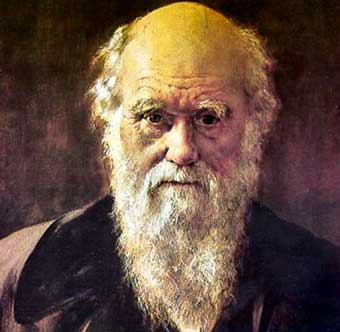
By far the best thing in this issue was Adam Gopnik's "Rewriting Nature" piece about Charles Darwin and On the Origin of Species.

Gopnik is a problematically sporadic writer, for a fairly simple reason: on the one hand, he's an impeccably refined prose stylist. And on the other hand, he's a feckin liar.

In a civilized society (you know, one with some legal equivalent of habeas corpus), this wouldn't work out to a problem - the lying would overcompensate for any amount of writing-skill, and the author would be out-of-hand condemned.

But this isn't a civilized society - it's Byzantium: corrupt beyond redemption, choked by religious zealotry, and threatened on all sides by barbarians with an iron lock on eventual victory.

So we can forgive Gopnik for being a feckin liar - we can like his prose despite the fact that in every piece he writes, he includes at least one howling wopper.

This time around, it's one little tossed-off phrase in his review of From So Simple a Beginning edited by Edward O. Wilson:

And Wilson's collection, read right through, shows that Darwin really was one of the great natural English prose stylists.

'Wilson's collection,' in this case, is a 2,700 page volume that includes The Voyage of the HMS Beagle, On the Origin of Species, The Descent of Man, and The Expression of Emotions in Man and Animals.

In other words, that 'read right through' is pure unadulterated codswollop. When Gopnik insinuates that he read 2,700 pages of Darwin's prose style, I'm tempted to offer him Rumpole's response: Pull the other one, it's got bells on it.

Still, the article itself is pure gold. Here's Gopnik on the essential dilemma Darwin faced:

He sensed that his account would end any intellectually credible idea of divine creation, and he wanted to break belief without harming the believer, particularly his wife, Emma, whom he loved devotedly and with whom he had shared, before he sat down to write, a private tragedy that seemed tolerable to her only through faith. The problem he faced was also a rhetorical one: how to say something that had never been said before in a way that made it sound like something everybody had always known.

Gopnik concentrates on what he calls 'the single most explosive sentence in English' ("We thus learn that man is descended from a hairy quadruped, furnished with a tail and pointed ears, probably arboreal in its habits, and an inhabitant of the Old World.") - he comes back over and over to the novelistic bravura Darwin brings to all of his prose:

Analogy is avoided, and then the most unsettling analogy of all is grandly asserted, and without apology. They're us; we're them.

Over in the New York Review of Books, Paul Kennedy reviews Niall Ferguson's The War of the World to largely favorable conclusions. I myself have written a review of said book, and it's clear to me now that the forum for which that review was intended isn't going to run it. So I'll get to work on transcribing it here as soon as possible, so that all you worshipful Stevereads acolytes can drool over it.

At one point in his review, just before launching on a shortlist of other notable histories of the 20th Century, Kennedy writes: "All shortlists are artificial creations" ...

... which might be true of all OTHER, LESSER shortlists, but which, as I'm sure you'd all agree, certainly ISN'T true here at Stevereads. Our shortlists are so authoritative as to be oracular.
For instance:

Top Five Science Fiction Movies of All Time:

5. Silent Running
4. Blade Runner
3. Starship Troopers
2. Pitch Black
1. Alien

Or what about this:

Top 5 Most Consistently Well-Written Star Trek Characters:

5. Bones McCoy
4. Worf
3. Captain Janeway
2. Trip Tucker
1. Quark

See? Oracular!

Sunday, October 08, 2006

In the Penny Press! Darwin and others!


The latest New Yorker has two pieces of interest - and one that most decidedly AIN'T.

The AIN'T piece is a little thing called 'What is a Novelist?' by Milan Kundera, and it's broken up into many nonsensical parts which, taken all together, go a long way toward proving that Kundera is a few transepts short of a cathedral. Calling these confused ramblings fragments would insult every jigsaw puzzle in Christendom. If only the piece had been called 'What is a Good Novelist?' - that way, Kundera would have been disqualified and we might have heard from somebody who DOESN'T have a bunch of little burrowing worms in his head.

Fortunately, the other two pieces of note were compensurately good. The first was a short story called 'Landfill' that was one of the best stories I've read in the New Yorker in quite a while. Which is noteworthy, but not half so noteworthy as the author - hold onto your hats, boys and girls:

JOYCE CAROL OATES.

Yes, it's true, and nobody's more amazed than yours truly: I actually LIKED a short story by the odious, self-referential, theatrically mandarin Joyce Carol Oates. And only a little while ago in the New Yorker, I actually liked a short story by Martin Amis. What's the world coming to?

The second piece was a nonfiction article about repeat prison-escapee Richard McNair by Mark Singer, and it's a picture-perfect example of the way reporting that's really well done makes you interested in things you'd otherwise ignore. I love that quality in the best journalism, and this piece is steeped in it.

Singer's main source of joy in the piece is the fact that at one point a police officer actually stopped McNair to question him about the fact that he very nearly matched the description of this wanted fugitive everybody was looking for - and the entire encounter is caught on the video camera operating in the cop's car, so the whole world can marvel at the cop's stupidity:

McNair is a convicted murderer. The bulletins in the wake of his most recent escape - his third - noted that he should be considered 'exremely dangerous.' His encounter with the police officer in Louisiana, however, which lasted about ten minutes and happened to be recorded by a video camera mounted on the dashboard of the officer's cruiser, hardly suggested this. Within two hours of receiving instructions to be on the lookout for a freshly escaped prisoner, the cop spotted a man jogging along a railroad track who turned out to be carrying no identification and who roughly matched a description of the fugitive. Yet, somehow, the men's conversation ended with the jogger saying, 'You have a good day now,' and the cop replying, 'Be careful, buddy,' and sending him on his way. Only by wrestling the officer to the ground and seizing his weapon could McNair have demonstrated more literally what it means to be disarming. By the time his new friend had grasped whom he'd been talking to, McNair was miles away.

'The general drift is that Barney Fife would have made the collar. It's easy to imagine the recording being appropriated as police-training instructional material, a concise depiction of how to be bamboozled by a sociopath: cop stumbles upon fugitive, has good reason to take him into custody, yet, astonishingly, lets him go. Having watched it now more than twenty times, I find myself at moments talking back to the screen ('Hey! Carl! Eye on the ball!')'

A charitable interpretation of this episode is that Bordelon [the cop] inadvertently saved his own life. Had he been more aggressive or skeptical, McNair might well have reacted violently; one man wore a gun, but the other was plainly in a superior state of readiness. 'I think he was really lucky,' Lieutenant Clay Brister, of the Rapides Parish Sheriff's Department, said of Bordelon. 'Knowing what I know now about McNair, I think he would've killed him. He's just a cool, calm guy. He used everything to his advantage.' ... Within twenty minutes of assuring McNair that he'd be on duty 'till we find this son of a gun,' Bordelon, back in his patrol car, happened upon a pair of B.O.P. employees, told them about his conversation, showed them the tape, and - dang.

Hee.

The sarcastic laughs keep on coming over in the latest TLS, where the ever-reliable J.C. weighs in on syrupy America:

Over the past year or two, many American novelists have felt obliged to hitch their narratives to the events of 9/11 (cf Paul Auster, Jay McInerney, Richard Ford, John Updike, Claire Messud), with mixed results. So here we make a plea to poets not to follow. If a demonstration of what lies that way is required (and it's not, really), read Babylon Burning: 9/11 five years on, edited by Todd Swift. after doing so, let us know if Joe Ross has eased your pain:

I wake up too early
and want to tell my too young son
that the world is fucking up
again.

Hee. The thing I love most about really bad poetry is how unreasonably it haunts the minds of poets who are actually good. My young friends Tyron and Sebastian are both very good poets, and they're both secretly terrified of turning out something like the above, even though there's no chance whatsoever they actually would. I guess that's the service ALL bad art provides to good art.

Alas, the bell-note of this TLS, its most memorable piece, is not only negative but personally, alarmingly so.

John Turner takes the opportunity of reviewing The Richness of Life, a new collection of the writings of the late Stephen Jay Gould, to take a hacksaw to Gould's very existence.

Turner's piece starts off with some carefully measured praise of Gould - so carefully measured that even while I was appreciating it, I was tensing up at what I increasingly felt was coming. But Gould was such an amiable figure, I couldn't guess how bad it would be.

Turner deplores Gould, and once he's done with his perfunctory bit of praise, his blows land fast and hard all over the man's life and work and psychology.

During the years when I worked at the late great Cambridge bookstore Wordsworth, I had occasion to traverse Harvard Yard twice every day, and I often ran across Gould. The first time I did so, I did the stereotypical thing: I thanked him, for all the hours of reading pleasure he'd given me over the years. I routinely do this with authors I meet face to face, and their reactions span the spectrum; Evangeline Walton visibly flinched, Eudora Welty patted my hand and said (with dubious prophetic ability) 'you'll do it too,' Julia Child grabbed me into a truly all-enveloping bearhug and said 'I simply NEVER tire of hearing that!', and the less-and-less immortal Dot Parker wonderfully quipped, 'well! You'll never get into a lady's panties with fresh talk like THAT'

Gould's reaction was intensely typical: utter, arrested seriousness. He stopped in his tracks, pushed back the shock of hair that always seemed to need pushing back, looked me straight in the face, and said, 'well thank you. I know what that's like, so thank you.'


After that, whenever we'd meet in the Yard, I'd ask him questions about whatever topic was the lead in the Globe that morning, or he'd ask me what was 'hot' at the bookstore. It wasn't in much of a way personal - if you dug up Gould and asked him, I'm sure he'd say he doesn't remember me. But it was enough of a connection for me to wince when Turner brought the sledgehammers out:

Gould generally 'knows the man his neighbor knows'. His literary quotations are familiar to the point of being patronizing. Like every successful popular writer, he has judged his readership perfectly, and most of the time tells them only a little more than they want to hear. His conclusions, though beautifully packaged, are too often trite. Hence he tackles big moral questions - the roots of evil, the responsibility of science - without offering more than platitude and reassurance; and he never frightens the horses.

Turner is a proponent of a recent pseudo-scientific wrinkle called 'evolutionary psychology,' and the fact that Gould was not apparently rates him fair game.

Of course it doesn't hurt that Turner, like SO many other people (most certainly NOT including Gould), deeply misunderstands the very nature of evolution by natural selection. Just listen to this vindictive windbag:

Gould agonizes about his career-long struggle of conscience over the theory of natural selection. Like Alfred Russel Wallace and George Bernard Shaw, he perceived its cruelty: nature might well be red in tooth and claw, but if we ourselves have evolved by natural selection, the claws are ours. Any evolutionary biologist who can think has at some time had to confront the applications of natural selection in, successively, social Darwinism, eugenics, and the Holocaust.

Well, no ... not so much. It is, in fact, entirely possible to think about evolution by natural selection without thinking about eugenics or the Holocaust - it certainly isn't necessary to think of them all at the same time. Eugenics and the Holocaust were intentional creations, ideological creations with long-term goals in mind. 'Any evolutionary biologist who can think' should be able to see a difference between an intellectual construct of man and a natural phenomenon.

Natural selection, it apparently bears repeating, isn't cruel. Breeding creatures seize on mutations and specific attributes that have immediate, practical applications to their day-to-day lives. They see a potential mate who's found a unique food source, or who leaps higher, or whose fur is pale enough to blend in against a snowy backdrop, and they compete and mate accordingly - and all of it done in complete blindness, as to the long-term future. No plan, no grand design - which is, in my opinion, the REAL problem control-freak Christians have with evolution.

The end result is not a master-race. The end result is the wild, beautiful, endless diversity of the living world. That living world includes both opportunistic omnivores like the coyote and extremely vulnerable specialists like the tree sloth. There is no cruelty - only age-old choioces that have wither worked out or not. No right or wrong, no good or evil ... just happenstance. Happenstance and time - no wonder evolution strikes so many people as unpalatable or incomprehensible.

Turner keeps slapping away, always around the edges:

...in fighting monsters he had run the risk of himself becoming a monster. He could be a lot more radical when addressing excited students in the 1970s than he ever was in his essays. The editor's introduction reports with no hint of shame that E. O. Wilson, the founder of evolutionary psychology, was sufficiently distressed about getting in the lift to go past Gould's floor (they shared a building in Harvard) that Wilson was nicknamed - in print - 'the ghost in the elevator'. Around the launch of evolutionary psychology, things got fairly nasty: analogous to the kind of religious persecution that Gould excoriates in his essay on the Defenestration of Prague. And while Gould himself did not, I think, behave badly, he failed to distance himself from those who did.

You reach a point, in reviews like this, when you realize that the fix is in, that the SUBJECT of the review is never, in fact, going to get a fair shake. It's ultimately distracting:

Gould the historian evaluates Gould the scientist; Gould the scientist muddies the historical record. In The Mismeasure of Man, his history of the I.Q. controversy, he was so keen to show that male and female brains might be the same size that he applied the same statistical correction (age and its encroaching pathology) twice to obtain the result - exactly the sort of bias for which he shames the nineteenth-century pioneers. His overall conclusion about male and female intelligence is probably correct, but in science 'right for the wrong reason' still counts as wrong.

The affronted schoolmarm tone of all this (that is NOT the way we do things here at the Prentiss Institute, Master Gould) is all but unbearable, and the simple truth is, Stephen Jay Gould is not only not well-served by this huffery but not well-represented by it either. It's shameful that the TLS gave this space to Turner's vituperation - we'll have to hope that the volume's eventual stateside publication elicits more appreciative evaluations of the man and his work.

Nevertheless, the capstone to this edition of In the Penny Press isn't this graceless hack-job done on a man so many wish still alive (something that can't, one suspects, be said about Turner himself).

No, we must give the capstone to Jason
Epstein himself, over in the New York Review of Books. He writes a wandering, stuffshirt review of a handful of new books about Google and the rise of electronic library media (this is the very dictionary definition of the EVILS of omnibus reviews ...if it's not about ALL of the books, individually, it's really about none of them).

In the process of this weird, unedited rambling, he uncorks a sentence that needs to be enshrined forever in the Bulwer-Lytton archive of truly horrendous writing, a single sentence that is SO BAD it actually manages to blight an entire review of some 15,000 words. Here it is, boys and girls, from the pen of man who ought to know better:


Spurred by Google's initiative and by lower costs, higher profits, and immense reach of unmeditated digital distribution, book publishers and other copyright holders must at last overcome their historic inertia and agree, like music publishers, to market their proprietary titles in digital form either to be read on line or, more likely, to be printed on demand at point of sale, in either case for a fee equal to the publishers' normal costs and profit and the authors' contractual royalty, thus for the first time in human history creating the theoretical possibility that every book ever printed in whatever language will be available to everyone on earth with access to the Internet.


There you have it, boys and girls - the single worst single sentence in the written record of the last calendar year! Written by a man who's simply too old and too busy to THINK much about what he's writing (except that any well-educated person, Jew or Gentile, should know that Adam was not expelled from a 'prelapsarian' Eden ... by necessity, in fact). It's no great pleasure to report it in this tawdry place, but it serves as a cogent reminder: everybody, all of us, need an editor or two - friends, confidants, beloved wives .. otherwise, sentence-things like this escape us.

Wednesday, September 27, 2006

in the penny press!


The trifecta of book review organs - the New York Review of Books, the London Review of Books, and of course the mighty Times Literary Supplement - are guaranteed to provide a solid hour of the highest quality mental stimulation when sat down and read in unison.

The highlight of the New York Review this time around, at least for me, was Joan Didion's forensic examination of Dick Cheney. She strikes an absolutely priceless tone (unintentionally, I assume), mandarin befuddlement threaded all the way through with deep distaste ... like a society doyenne hearing a loud, wet crunching sound and finding an unknown creature on the bottom of her shoe, half-crushed but still attempting to squirt venom.

She can't riddle him out into the light, of course. Morgoth is gone, but even his lieutenant Suaron is still largely incomprehensible to the minds of Men.

But in the process of her bafflement, she runs through the usual story with a wonderful, icey precision that's a joy to read.

The London Review of Books likewise had a highlight for me: Jerry Fodor's review of Michael Frayn's "The Human Touch: Our Part in the Creation of a Universe." It's a pan, but the peculiar combination of steep intellect and po-faced humor Fodor uses are more reminiscent of the TLS than the LRB:

As the blurb on the front of Frayn's book puts it:

'What would [the] universe be like if we were not here to say something about it? Would there still be numbers, if there were no one to count them? Or scientific laws, if there were no words or numbers in which to express them? Would the universe even be vast, without the very fact of our tininess and insignificance to give it scale?'

Why, yes, it would. (Frayne often treats rhetorical questions as though they were philosophical arguments; it's a bad tactic.) The universe would still be just the size it is even if there weren't astronomers to measure it. And water would still be H2O even if there weren't chemists to analyse it. And water would still run downhill, and there would still be hills for it to run down, even if none of us were here to take note of its doing so. You can't pin the natural order on me, Frayn; I'm not guilty. I didn't make the universe; I wasn't even there at the time.

But it's the TLS that really comes through, as always. For instance, Oliver Taplin reviews two new books on ancient Greece, and in the course of doing so, he lets his favorite editorial hobbyhorse out into its paddock:

My philhellenism outweighs my admiration for the BM (great though that is), so I shall make up for these omissions. The ultimate legal claim of the Museum, which bought the goods from Lord Elgin, sheltering behind an Act of Parliament, is a fortiori even dodgier than his claim to legality in dismantling large stretches of ancient masonry to get at the frieze and other sculptures. It is a tasty irony that the piranhas of the press cluster round the Getty and other newer Museums who are being hounded to return antiquities that were taken after a certain legalistic date, while the great museums of Europe complacently give pride of place to all the booty that was expropriated before the barrier came down. But there is a crucial and underappreciated point about the Parthenon Marbles, regardless of legal questions. Elgin hacked them off less than twenty years before the beginning of the War of Independence which would liberate the core of Greece from centuries of Ottoman rule. Even as the swell of Hellenism was rising throughout Europe, he took advantage of a declining regime that cared nothing for the heritage of Greece; he snatched them from the outstretching hand of freedom.

Sorry - no sale. The 'outstretching hand of freedom' in this case cared no more about Hellenistic treasures than the lazy old Ottomans did. Lord Elgin almost certainly SPARED the Parthenon friezes from destruction. And even if he hadn't, he still did the right thing.

The British Museum has nothing to apologize for. It spends millions every year on expert restoration, meticulous upkeep, and state of the art climate control for all of its archeological treasures. England's breathtaking cathedrals are guarded and upkept by a veritable army of caretakers. The same thing is true even moreso in the United States.

As far as I'm concerned, ANY country that can't say the same should cough up its art treasures. Those treasures, cultural or otherwise, belong to the whole world. Young children yet unborn deserve to experience root wonder-shock of looking up at the Great Pyramids. Hungrily sensitive artists who're only babies now deserve to stand in silence before every Vermeer there is.

Been to the Hermitage lately? Seen what the rampant smog and pollution (not to mention teenagers with spray-cans) have done to the Acropolis? Anybody know until how recently docents were allowed to smoke in the Sistine Chapel?

Send the big, Atlas-class medivac platform-helicopters to every corner of the globe, as far as I'm concerned. Pluck up every great building and work of art currently being dripped on or cluttered with McDonalds wrappers and deposit them in carefully manicured grounds in Japan, Switzerland, England, and the United States. If Egypt objects to the resulting big parking lot at Gizah, tell them they should have thought of that when they were looking the other way while kids on mopeds took runs half-way up the sides of the pyramids, or while drunken wedding parties were allowed to cavort deep inside them. Then tell them to shaddup. Tell you what - when you go to canopied, climate-controlled Sphinx Pavillion in the gorgeous country of Kent, you can have free admission with proof of your Egyptian citizenship.

Elsewhere in the issue, Eric Griffiths turns in a wonderful review of the new Royal Shakespeare production of 'Troilus and Cressida' - which, as many of you may know, is one of Stevereads favorite Shakespeare plays. At some point, every halfway creative type who's been heavily influenced by Homer feels the urge to take a whack at the master's material, and this is Shakespeare's (serving double duty as a reference to Chaucer as well, although it's best not to explicitly compare the two; great as Shakespeare is, he's no match for Chaucer when they're both working the same material at the height of their respective powers)(arguers feel free to Comment ... and of course any of you who feel like piping up in defense of the artistic merits of Troy War are welcome to do so)

Griffiths largely dislikes the new RSC production, but he has marvellous things to say about the play itself and its dynamics - all good stuff, like this:

Of all Shakespeare's works, 'Troilus and Cressida' is set furthest back in time, while it simultaneously bristles with idioms jazzy in their day.

Of course, with all this brilliance comes some trepidation as well. It turns out that virtually all of this edition's fiction reviews were devoted to historical fiction. This is where the ice water came into the afternoon's reading, because, as some of you know, I myself am that most improbable of beings, a historical novelist. And I can tell you this: we live in terror of two things: 1) some closeted, micro-obsessive expert calling us on some fact in our books ('it wasn't sunny on the 14th of May 1202'), and 2) the TLS (let's be honest: the only review organ that realistically could) taking us out behind the woodshed. Even seeing this happen to others produces not the faintest hint of schadenfruede.

One of the novels in question, C. J. Sansom's Sovereign, just barely gets a pass. It's a Tudor novel (again, a close call - I myself have written a Tudor novel), and although the reviewer, Michael Caines, calls it 'less demanding' than such Tudor-fiction classics as The Man on a Donkey or The Blanket of the Dark, he largely absolves it of blame, albeit grudgingly:

Sovereign is sore afflicted with outbreaks of humourless, barking laughter, sighs, frowns, raised eyebrows, and the setting of lips. It has a bad case of 'Jesu!' - the expletive for all occasions - and at least one impassioned cry of 'Fie!'. These are things to make the reader smile and read on.

Two of the other specimens under review are of particular interest to stevereads: Michael Cox's The Meaning of Night because we largely kinda-sorta liked it, and Diane Setterfield's The Thirteenth Tale because, as some of you may have noticed, Barnes & Noble has decided, for reasons known best to themselves, to strip down to its skivvies and hop into bed with this book - huge, eye-catching displays at the front of every B&N in the whole country, huge amounts of money spent to make this author the next Dan Brown (all based, one likes to believe, on one buyer's joyful reaction to the book, somewhere way back along the chain of evidence). Sheer human nature prompts a body to want the TLS to savage the book.

Sadly, the dice fall otherwise. Judith Flanders (a psuedonymn) doesn't exactly savage The Meaning of Night but she doesn't leave you any reason to go out and buy it either:

The Victorian elements are intensively researched - there are references to Evan's Supper Rooms, the Toxophilite Society in Regent's Park, mudlarks scavenging in the Thames - but throughout there is a sense of a list grimly being got through, each item ticked off and out of the way. Glyver does nothing at Evans's; he visits it simply so that it can be described.

On the other hand, Setterfield's book gets a sanctioned pass: "Setterfield is singularly successful in her aims." So those of us wanting to hate The Thirteenth Tale must hold our breath until we've actually read the book (I have, and I largely share the verdict of my esteemed colleague The Mama Chan: it's hyperventilated boilerplate, not entirely without literary merit but two fat fingers' worth away from actually being good).

Our final item? Druin Burch's good-cop/bad-cop review of David Wooton's Bad Medicine and Katrina Firik's Brain Matters.

Burch loves the first, and it quickly becomes apparent that he's going to USE that love to jump up and down on Firlik's book, in absolutely delightful fashion:

Katrina Firlik's Brain Matters makes a stimulating change from all this compelling originality and provocative thoughtfulness. If you have ever suspected that pushing a finger into the soft goo of another person's brain leads to fresh and startling conclusions about human life, this is the book to disillusion you. Firlik is full of breathless enthusiasm; so full of it, unfortunately, that other qualities are kept at bay. She wants to tell you about her life as a neurosurgeon, and her best point is her infectious eagerness. The style is reminiscent of a teenage essay on 'what I did during my neurosurgical training', and the insights are at roughly the same level. She reveals that sick patients are people too, 'not just a collection of clinical data'; she lets us into the fact that 'life is not a dress rehearsal', and that 'you can't judge a person's intelligence by his outward appearance'.

Initially, it's hard to pin down exactly why her thoughtless and cliched anecdotes are so insufferable. Blind adoration is appealing in its way, but Frilik seems to worship even the most stupid and destructive aspects of the American hospital system. Teaching by humiliation, pointlessly long hours and the infliction of needless operations on damaged patients are all held up for praise. But the source of the real chill gradually becomes apparent. It is Frilik's conviction of her own superiority, and her misguided overestimation of her own dull, workplace thoughts. At the end of 'Brain Matters' she invites us to marvel with her at the superlative intelligence of a group of her colleagues. 'What might be accomplished,' she asked, awed at the qualities of people like herself, 'if the same group lent their collective brain power to, say, improving public health education or homeland security?' Both books demonstrate the dangers of doctors who think too much of themselves.

Hee.

And that's all we have for you at this moment in the penny press ... sure, there's news tonight of a marauding bobcat out in Grafton - and the consequent bobbling-newshead paundering about the THREAT TO OUR SUBURBS, but nevertheless: reading-wise, that's all you need to worry about.